
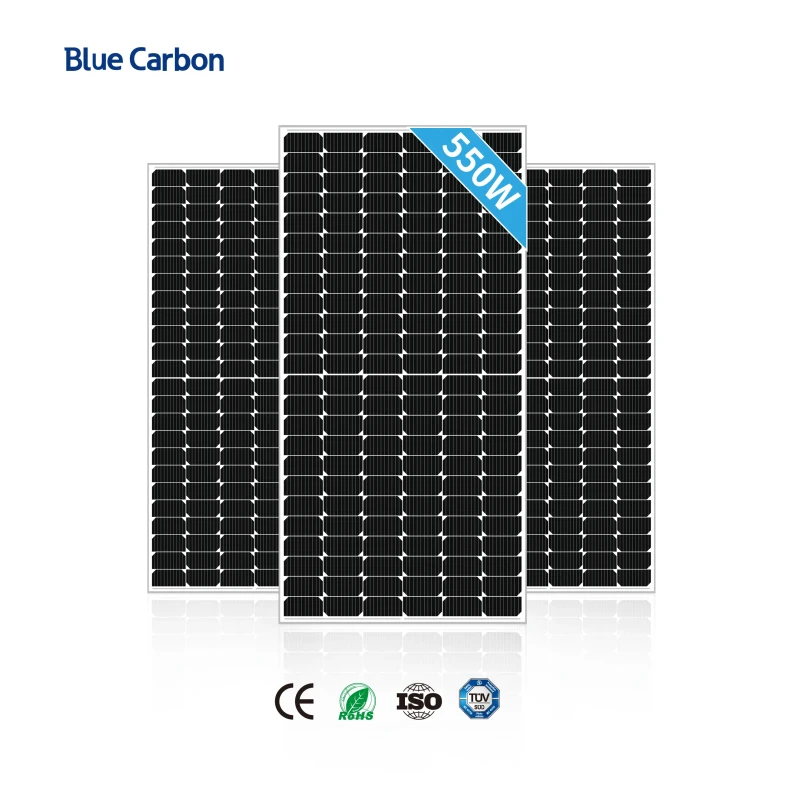
Residential Solar Installation Featuring Blue Carbon 6.5kW Inverter, 30kWh Lithium Storage and 7.8kWp Bifacial Solar Panels
Reliable electricity is becoming increasingly important for modern Nigerian homes. From air-conditioning and refrigeration to lighting, entertainment, internet connectivity, and home appliances, today's households depend on electricity for comfort, productivity, and convenience. However, frequent power interruptions and the rising cost of running petrol and diesel generators have encouraged many homeowners to explore cleaner and more sustainable alternatives.
To address these energy needs, KSOP Global Ltd has successfully completed another residential solar installation, featuring a combination of high-capacity solar generation, lithium battery storage, and a Blue Carbon hybrid inverter.
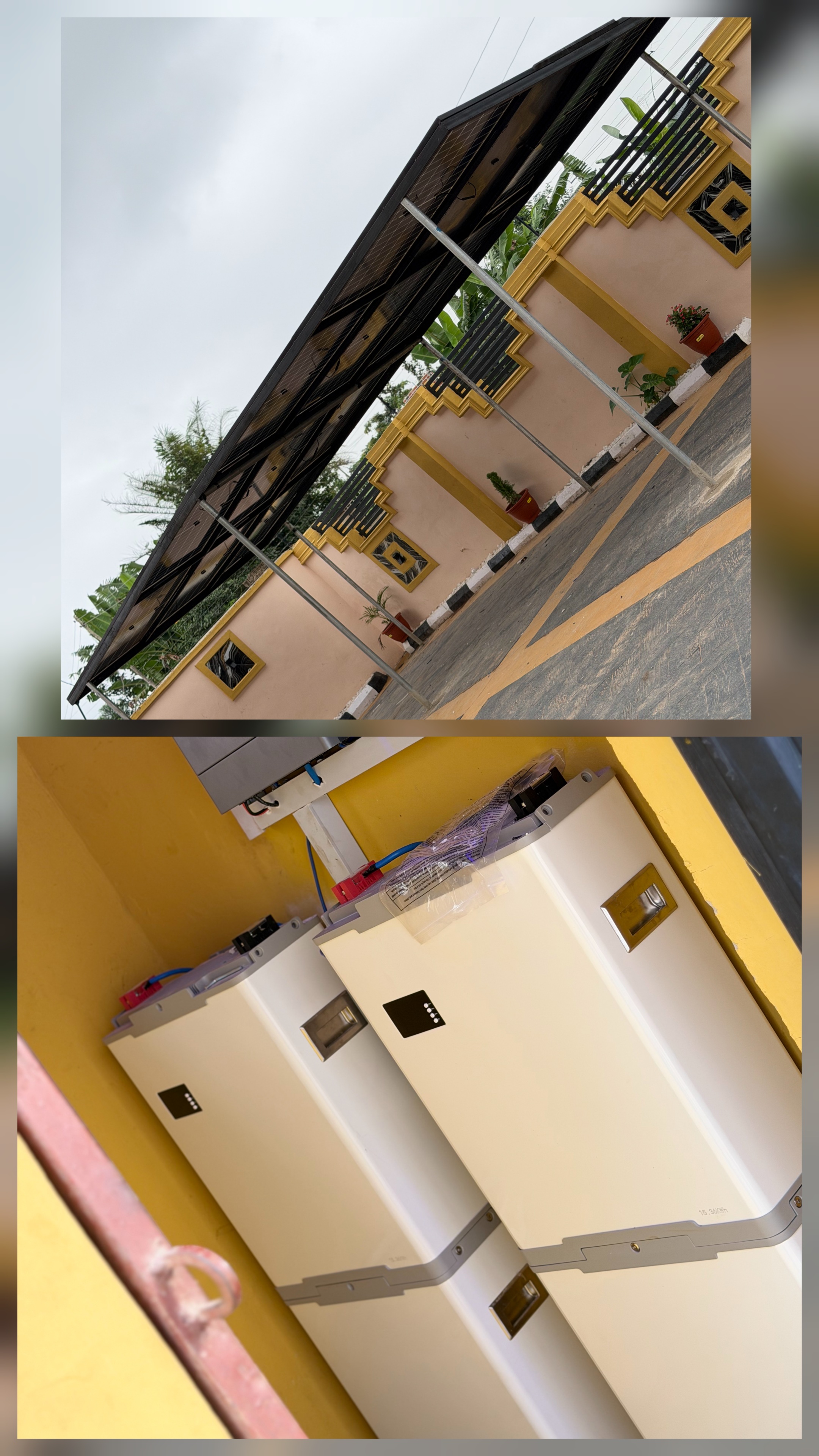
The newly completed system comprises one 6.5kW Blue Carbon inverter, two 15kWh 48V stackable lithium battery units with Smart BMS, and twelve 650W bifacial solar panels, giving the installation a total solar panel capacity of 7.8kWp and a combined nominal battery capacity of 30kWh.
The system was professionally designed for residential use and is intended to support two 1HP inverter air-conditioners alongside other energy-saving household appliances.
This project demonstrates how properly designed solar technology can provide homeowners with a practical way to improve energy reliability while reducing dependence on conventional generators.
---
Understanding the New KSOP Global Ltd Solar Installation
The installation combines several important components that work together to create a complete residential energy system.
The major components include:
1 × 6.5kW Blue Carbon inverter
2 × 15kWh 48V stackable lithium batteries
Smart Battery Management System (BMS)
12 × 650W bifacial solar panels
Professional solar mounting and electrical installation
Residential load management and energy-efficient appliances
The twelve 650W solar panels provide a combined nameplate capacity of:
12 × 650W = 7,800W or 7.8kWp
The two 15kWh lithium batteries provide:
15kWh + 15kWh = 30kWh nominal battery storage
This combination gives the homeowner substantial solar generation capacity and energy storage for managing household electricity demand.
---
6.5kW Blue Carbon Inverter
At the heart of the system is a 6.5kW Blue Carbon inverter.
The inverter is an essential component because solar panels generate DC electricity, while most household appliances operate using AC electricity. The inverter performs the necessary power conversion and manages the interaction between solar generation, battery storage, and household loads.
For a residential system like this, the inverter can play several important roles, including:
Converting solar-generated DC power into usable AC power
Managing energy from the solar panels
Charging the lithium batteries
Supplying power to household appliances
Managing available energy according to system configuration
Supporting backup power during grid interruptions
Correct inverter sizing is extremely important because an undersized inverter may struggle when multiple appliances operate simultaneously.
KSOP Global Ltd designed this installation around the customer's residential energy requirements, with particular attention given to the planned use of two 1HP inverter air-conditioners and other energy-saving appliances.
---
30kWh of Lithium Battery Storage
One of the major features of this installation is its 30kWh nominal lithium battery storage capacity.
The system uses:
2 × 15kWh 48V stackable lithium batteries
Stackable battery systems provide flexibility because additional battery capacity can potentially be incorporated into appropriately designed systems, subject to the manufacturer's specifications and system architecture.
Lithium battery technology has become increasingly popular for residential solar installations because of its combination of energy density, charging performance, low routine maintenance requirements, and suitability for repeated cycling.
The 30kWh nominal capacity gives the homeowner a substantial energy storage reserve.
However, actual usable energy depends on factors such as:
Battery state of charge
Recommended depth of discharge
Inverter efficiency
Battery operating temperature
Household load
Battery management settings
Manufacturer specifications
This is why professional system design is essential.
---
Smart BMS for Better Battery Management
The lithium batteries used in this project are equipped with a Smart Battery Management System (BMS).
The BMS is an important part of a lithium battery installation. It helps monitor and manage battery operating conditions and can communicate important battery information to compatible system components.
Depending on the battery's design and configuration, a BMS can monitor parameters such as:
Battery voltage
Current
Temperature
State of charge
Cell conditions
Charging and discharging conditions
Battery management helps provide an additional layer of protection and supports proper operation of the energy-storage system.
---
7.8kWp of 650W Bifacial Solar Panels
Another major feature of the installation is the use of 12 units of 650W bifacial solar panels.
Together, these panels provide a total rated capacity of:
7.8kWp
Bifacial solar panels are designed to generate electricity from light reaching both the front and rear sides of the panel, depending on the panel technology, installation configuration, reflective surfaces, and environmental conditions.
This can provide an opportunity to improve energy yield compared with relying solely on front-side irradiance, although the actual additional energy produced depends heavily on installation conditions.
Proper panel positioning, spacing, orientation, shading management, and mounting design are therefore important considerations.
---
Designed to Support Two 1HP Inverter Air-Conditioners
One of the key requirements of this residential project was the ability to support two 1HP inverter air-conditioners along with other energy-saving appliances.
Inverter air-conditioners can vary their compressor speed according to cooling demand rather than operating only at fixed full-power cycles. This can help reduce energy consumption compared with some conventional fixed-speed air-conditioning systems, although actual consumption varies according to the model, room size, insulation, temperature setting, usage pattern, and outdoor conditions.
The solar system was therefore designed with energy efficiency in mind.
Rather than simply installing a large solar system without considering how electricity would be consumed, KSOP Global Ltd designed the project around the customer's intended household loads.
---
Why Energy-Efficient Appliances Matter
Solar system performance is not determined only by the number of solar panels installed.
The appliances connected to the system also matter.
Energy-efficient appliances can reduce the amount of electricity required to perform everyday household tasks.
For example, homeowners can improve overall solar performance by using:
Inverter air-conditioners
LED lighting
Energy-efficient refrigerators
Efficient televisions
Low-energy fans
Energy-efficient water pumps
Smart energy management systems
Reducing unnecessary energy consumption means that more stored solar energy can be available when it is needed.
---
Professional System Design Makes the Difference
A solar installation should always begin with a proper assessment of the customer's energy requirements.
KSOP Global Ltd considers factors such as:
Load Requirements
The appliances that need to be powered determine the required inverter and battery capacity.
Energy Consumption
Daily electricity usage helps determine the required battery storage and solar generation capacity.
Peak Demand
Some appliances require higher starting or operating power, so peak demand must be considered during system design.
Solar Generation
The number and capacity of solar panels must be matched appropriately with the inverter and battery system.
Future Expansion
A customer may add additional appliances in the future. Proper planning can help determine whether the system should allow for future expansion.
---
The Importance of Proper Installation
Even premium solar equipment requires professional installation.
Poor installation can lead to:
Energy losses
Cable overheating
Equipment faults
Battery problems
Reduced system performance
Electrical safety risks
KSOP Global Ltd's installation process focuses on proper equipment placement, cable management, electrical protection, system configuration, and commissioning.
The goal is to ensure that the different components work together as an integrated energy system.
---
Benefits of This Residential Solar System
This installation offers several potential benefits to the homeowner.
1. Reduced Dependence on Generators
Solar and battery storage can reduce reliance on petrol or diesel generators for everyday electricity needs.
2. Energy Storage
The 30kWh nominal lithium battery bank provides stored energy that can be used when solar production is low or unavailable.
3. Renewable Energy Generation
The 7.8kWp solar array provides a substantial renewable energy generation source.
4. Support for Air-Conditioning
The system was specifically designed with two 1HP inverter air-conditioners among its intended household loads.
5. Quiet Operation
Unlike conventional generators, solar panels and batteries produce electricity without the engine noise associated with generator operation.
6. Reduced Fuel Consumption
Greater use of solar and battery energy can reduce the amount of fuel required for backup generation.
---
KSOP Global Ltd: Delivering Modern Residential Solar Solutions
This latest project highlights KSOP Global Ltd's approach to residential solar installations: understanding the customer's energy requirements, selecting suitable equipment, and combining solar generation with appropriate energy storage.
The project also demonstrates the growing role of lithium battery technology in modern residential solar systems.
With 7.8kWp of bifacial solar panels, 30kWh of lithium battery storage, and a 6.5kW Blue Carbon inverter, the installation represents a comprehensive renewable-energy solution designed around the homeowner's specific requirements.
---
A Smarter Approach to Residential Energy
Modern solar installations are no longer simply about putting panels on a roof.
A complete system can combine:
Solar panels + hybrid inverter + lithium battery storage + energy-efficient appliances + professional installation
When these components are correctly selected and integrated, homeowners can create a more resilient energy system for their properties.
This project by KSOP Global Ltd is an example of how technology can be used to provide a cleaner and more efficient approach to residential electricity.
Conclusion
KSOP Global Ltd has successfully completed another residential solar installation featuring a 6.5kW Blue Carbon inverter, two 15kWh 48V stackable lithium batteries with Smart BMS, and twelve 650W bifacial solar panels.
With a combined solar capacity of 7.8kWp and 30kWh of nominal lithium battery storage, the system was designed to support two 1HP inverter air-conditioners and other energy-saving household appliances.
The project demonstrates the importance of matching solar generation, inverter capacity, battery storage, and household energy consumption during system design.
For homeowners considering solar energy, the key lesson is clear: a successful solar installation starts with proper assessment, professional design, quality equipment, and expert installation.
KSOP Global Ltd continues to provide solar energy solutions designed around the individual requirements of homes, businesses, and other applications.
KSOP Global Ltd — powering homes with smarter, cleaner and more reliable energy solutions.
Residential Solar Installation Featuring Blue Carbon 6.5kW Inverter, 30kWh Lithium Storage and 7.8kWp Bifacial Solar Panels