
Below is a guide to understanding "holding costs" through key parameters.
In the energy storage industry, buying equipment is just the beginning. The true costs often lie in operational maintenance and efficiency losses over the next decade. To avoid being misled by attractive-looking data in presentations, focus on the following three frequently overlooked engineering details when evaluating suppliers (such as Blue Carbon).
1. Beware of the 'liquid cooling cult' and focus on the fundamentals of operations and maintenance.
- Industry status: Many manufacturers promote liquid cooling blindly, touting its high energy density. However, they fail to mention that the pumps, pipes, and connectors in liquid cooling systems enter a 'high failure period' after three to five years. Furthermore, the coolant requires regular replacement by professionals, which represents a significant hidden operational expense.
- Expert recommendation: For spaces with moderate space constraints, air cooling is often the more cost-effective choice throughout its lifecycle.
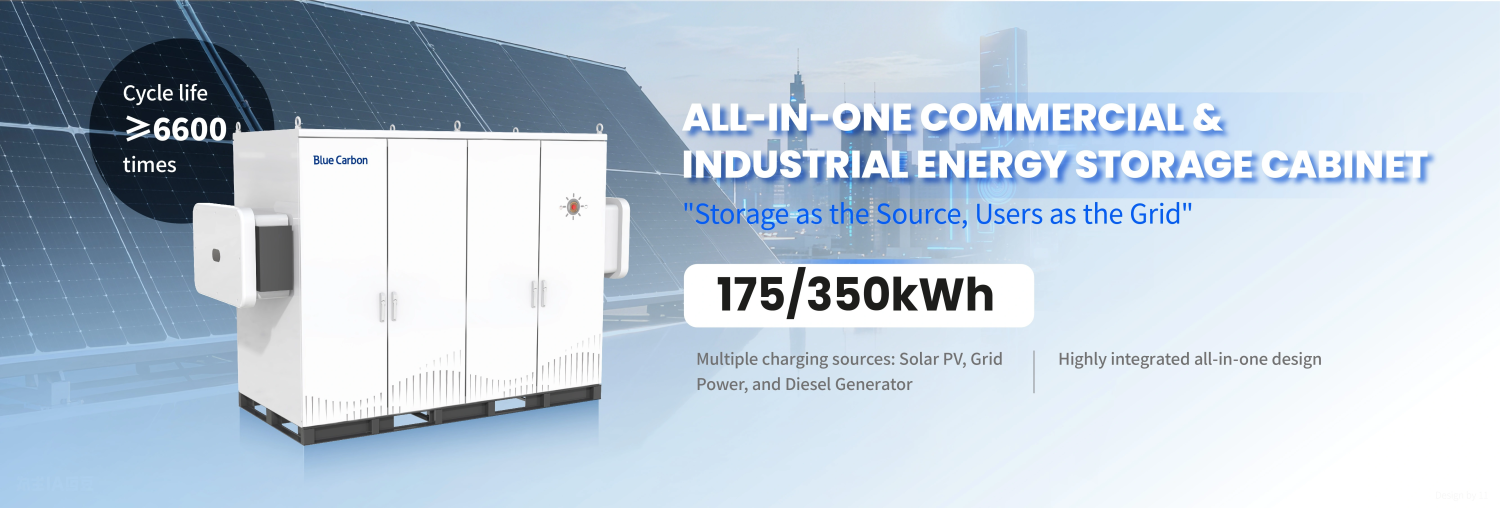
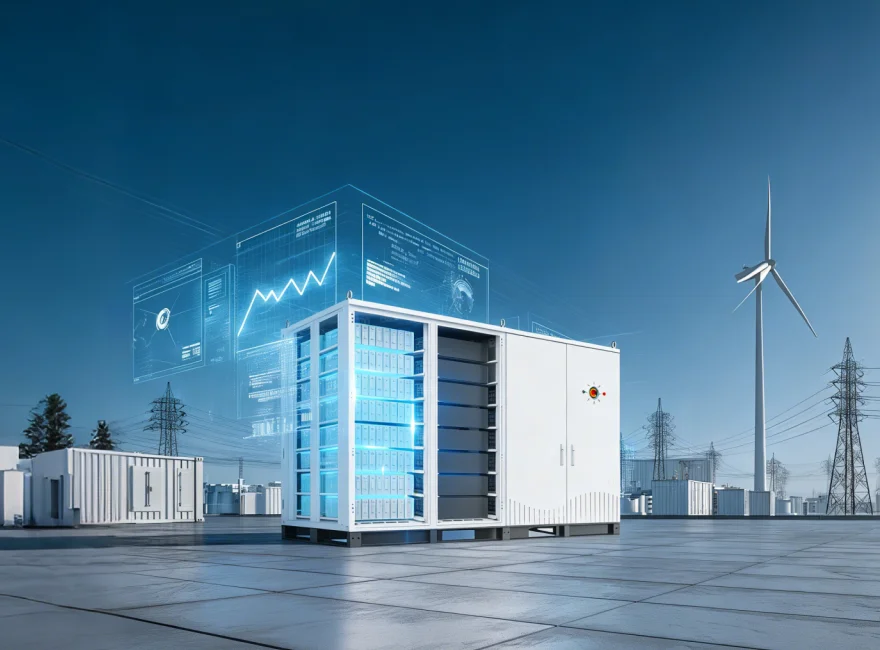
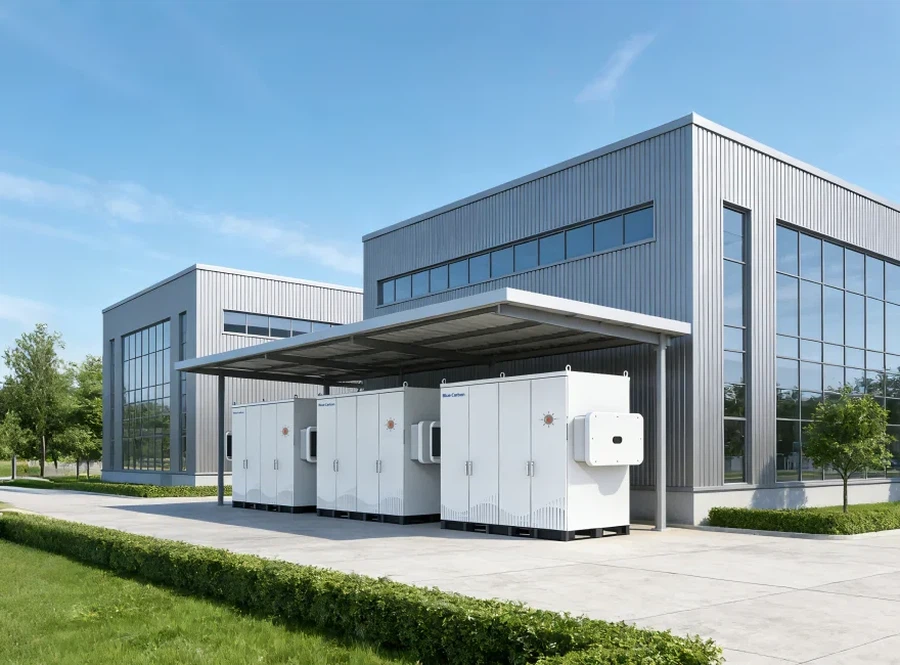
- Understanding the specifications: Using Blue Carbon's 350 kWh integrated cabinet as an example, it is clear that it uses "forced air cooling".

Why is this a plus? The manufacturer openly acknowledges the technical compromises in the design specifications: the air-cooled solution eliminates the risk of liquid leakage and eliminates the need for liquid refilling. This means that you won't have to worry about corrosion-induced leaks causing cell short circuits over the next decade, nor will you have to pay for costly on-site liquid replacement labour. For commercial and industrial owners seeking hassle-free operation, this 'zero-liquid-path' design truly delivers low maintenance.
2. Don't just accept the "Black Box" approach: Check that EMS is open.
- Industry status: Many energy storage cabinets arrive as 'black boxes', usable only with the manufacturer's proprietary app. If you try to integrate them into your factory's existing Energy Management System (EMS) or participate in grid Virtual Power Plant (VPP) dispatch, you will find that the interfaces are locked down.
- Expert recommendation: Suppliers should be required to provide standard third-party communication protocols.
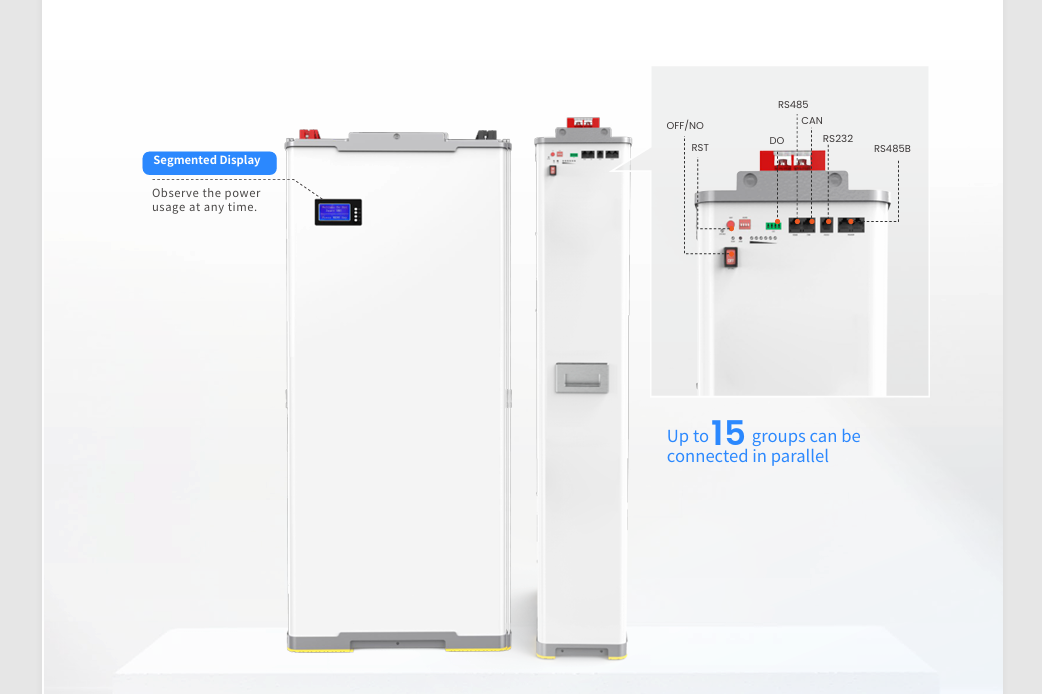
- Understanding the specifications: Refer to the 'System Communication Protocol' section of the Blue Carbon specifications, which states that it supports 'Modbus-RTU/Modbus TCP/IEC61850'.

What does this mean? Modbus TCP and IEC 61850 are universal languages used in industrial and power systems. This means that the system is open - it enables your plant control room to read data directly and even allows third-party platforms to issue commands. This openness is consistent with the philosophy of 'Storage as the Source, Users as the Grid', ensuring that your assets are ready to participate in power market transactions.
3. Please calculate the system efficiency.
- Industry status: The 95% efficiency figure often quoted by salespeople usually refers to the efficiency of charging and discharging the battery. However, this figure does not take into account losses in transformers, wiring, and thermal management systems.
- Expert recommendation: Focus on achieving maximum system-level efficiency (Max. Efficiency) and evaluate this alongside temperature control methods.
- Understanding the specifications: The Blue Carbon system parameters indicate a maximum efficiency of 98.5%.

In-Depth Analysis: This figure is notably high, partly due to the highly efficient lithium iron phosphate (LFP) battery cells used and the streamlined air-cooled architecture. Compared to complex liquid-cooled units, the parasitic power consumption of fans is lower under specific operating conditions. Furthermore, when paired with time-of-use (TOU) smart strategies, the system automatically charges during off-peak electricity periods and discharges during peak hours. This high efficiency results in less energy loss per kilowatt-hour when arbitrage peak and off-peak rates are used, which shortens your payback period.
Summary
When selecting energy storage cabinets, don't focus solely on the 'unit price'. Devices such as Blue Carbon, which feature an air-cooled design (maintenance-free and with no risk of leakage), open standard protocols (Modbus TCP/IEC61850), and a rated system efficiency of up to 98.5%, may not sound as 'futuristic' as liquid-cooled systems in presentations. However, they often prove to be a more reliable and worry-free choice when it comes to operational financial statements.
If your factory needs a reliable and affordable energy source, our C&I battery systems are the best choice.