
Why Blue Carbon Is the Best Lithium Battery Brand in Nigeria in 2026
Nigeria's transition toward renewable energy continues to accelerate in 2026. Across homes, offices, businesses, industries, schools, hospitals, hotels, farms, and other facilities, more Nigerians are turning to solar energy to reduce dependence on the national grid and fuel-powered generators.
However,
installing solar panels alone is not enough. For customers who want reliable
electricity during the night, cloudy weather, or grid outages, energy
storage is one of the most important parts of a solar system. This is why
lithium batteries have become increasingly popular in Nigeria.
Among the
growing number of lithium battery brands available in the Nigerian market, Blue
Carbon has positioned itself as a trusted provider of high-quality energy
storage solutions. With a focus on LiFePO₄ technology, Grade A battery cells,
long cycle life, safety, affordability, and customer support, Blue Carbon
lithium batteries are designed to meet the demanding energy requirements of
Nigerian customers.
This article
explains why Blue Carbon is a leading choice for lithium battery solutions in
Nigeria in 2026 and the factors customers should consider when selecting a
lithium battery for their solar installation.
The
Growing Demand for Lithium Batteries in Nigeria
The Nigerian
power sector continues to face challenges that make energy storage increasingly
important.
Businesses
and households often experience:
- Unstable grid electricity
- Frequent power interruptions
- Increasing electricity costs
- Rising generator fuel expenses
- High maintenance costs
associated with generators
- Increasing demand for
uninterrupted power
Solar energy
provides an alternative, but the availability of electricity after sunset
depends heavily on battery storage.
A reliable
lithium battery allows users to store excess solar energy during the day and
use it when solar production is unavailable.
This makes
lithium batteries a critical component of modern solar systems.
Why
Lithium Batteries Are Becoming Popular
Lithium
batteries have several advantages over traditional lead-acid battery
technologies.
These
include:
- Longer cycle life
- Higher energy efficiency
- Faster charging
- Deeper usable discharge
- Lower maintenance requirements
- Compact design
- Better overall energy storage
performance
For
customers who use their batteries frequently, these advantages can translate
into significant long-term value.
Blue
Carbon's Focus on LiFePO₄ Technology
Blue Carbon
lithium batteries use Lithium Iron Phosphate (LiFePO₄) technology, a
battery chemistry widely used for stationary energy storage applications.
LiFePO₄
batteries are valued for their:
- Long cycle life
- Thermal stability
- Safety characteristics
- Efficient charging and
discharging
- Low maintenance requirements
This makes
the technology particularly suitable for solar energy systems that are expected
to charge and discharge regularly.
Grade A
Cells for Consistent Performance
One of the
key selling points of Blue Carbon lithium batteries is their use of Grade A
cells.
The quality
of the individual cells has a significant impact on the overall performance of
a lithium battery.
High-quality
cells can contribute to:
- Better consistency
- Stable voltage performance
- Efficient energy storage
- Improved durability
- Reliable daily operation
For
customers investing in a solar battery, cell quality should therefore be one of
the first factors considered.
Long
Cycle Life
Another
major advantage of Blue Carbon lithium batteries is their long cycle-life
capability.
Selected
Blue Carbon models are engineered for over 6,000 charge-discharge cycles
under recommended operating conditions.
A cycle
refers to a charging and discharging process. A long cycle life is especially
valuable for solar installations because batteries may be used and recharged
every day.
The actual
service life depends on several factors, including:
- Depth of discharge
- Charging conditions
- Operating temperature
- Installation quality
- Inverter compatibility
- Usage patterns
Following
the manufacturer's recommended operating conditions can help maximize battery
lifespan.
Intelligent
Battery Management System
A
high-quality lithium battery requires more than quality cells.
The battery
also needs an effective Battery Management System (BMS).
The BMS
monitors important battery parameters and provides protective functions such
as:
- Overcharge protection
- Over-discharge protection
- Overcurrent protection
- Short-circuit protection
- Temperature monitoring
- Cell balancing
This
intelligent monitoring helps protect the battery and supports reliable
operation.
Safety Is
a Major Priority
Battery
safety is extremely important when selecting energy storage equipment.
LiFePO₄
chemistry is widely recognized for its excellent thermal stability compared
with some other lithium-ion chemistries.
When
combined with a properly designed BMS, quality LiFePO₄ batteries can provide a
reliable and safe energy storage solution when correctly installed and
operated.
Customers
should always ensure that battery installation is performed by qualified
professionals.
High
Energy Efficiency
Efficiency
determines how much of the stored electricity can actually be used.
High-quality
lithium batteries can provide excellent charging and discharging efficiency,
helping customers maximize the energy produced by their solar panels.
This means
more usable electricity can be available for:
- Household appliances
- Business equipment
- Lighting
- Security systems
- Refrigeration
- Internet equipment
- Industrial loads
Better
energy utilization can also contribute to improved overall system economics.
Faster
Charging
Lithium
batteries can generally accept charging power efficiently when paired with
compatible charging equipment.
This is
particularly useful in Nigeria because available sunlight can vary
significantly throughout the day.
When
sunlight is available, an efficiently configured system can quickly replenish
battery storage and prepare it for evening and nighttime use.
Deep
Discharge Capability
One of the
benefits of LiFePO₄ batteries is their ability to provide substantial usable
energy without the same operating limitations associated with many traditional
lead-acid batteries.
This allows
solar system owners to make better use of their available battery capacity
while still following recommended operating limits.
Proper
configuration remains important to ensure long-term battery health.
Low
Maintenance Requirements
Traditional
lead-acid batteries can require regular maintenance depending on their design.
Lithium
batteries generally require considerably less routine maintenance.
Blue Carbon
LiFePO₄ batteries offer customers benefits such as:
- No routine electrolyte
topping-up
- Cleaner operation
- Minimal maintenance
- Reduced servicing requirements
This makes
them particularly attractive for homes and businesses that want a convenient
energy storage solution.
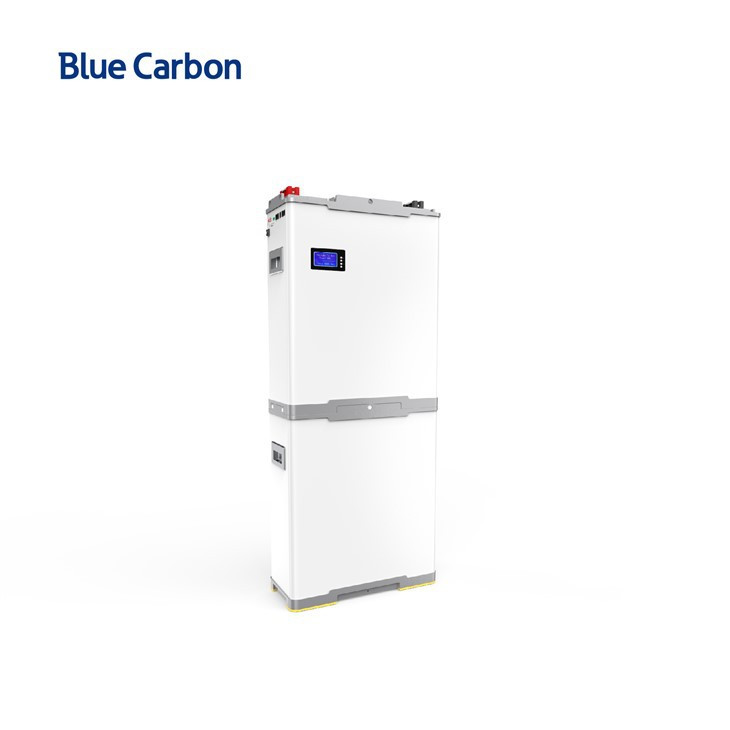
Blue
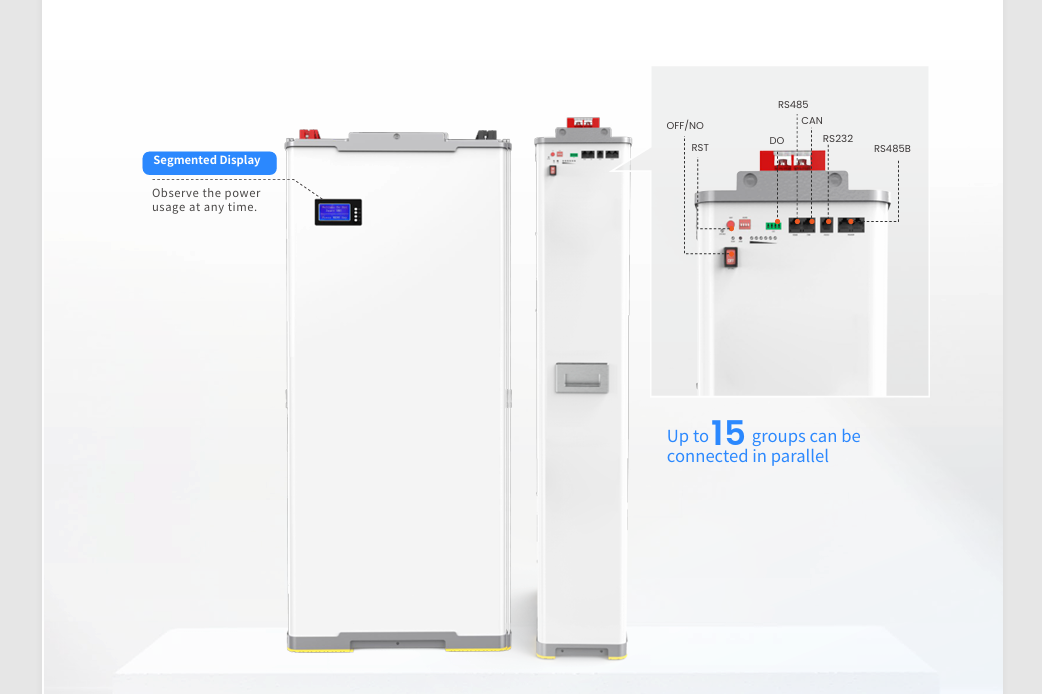
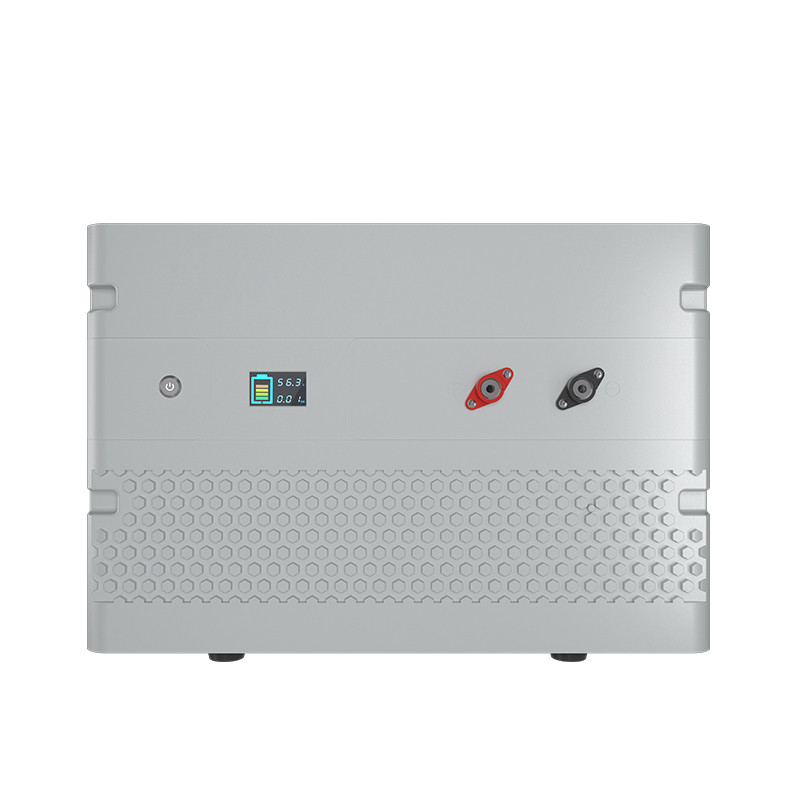
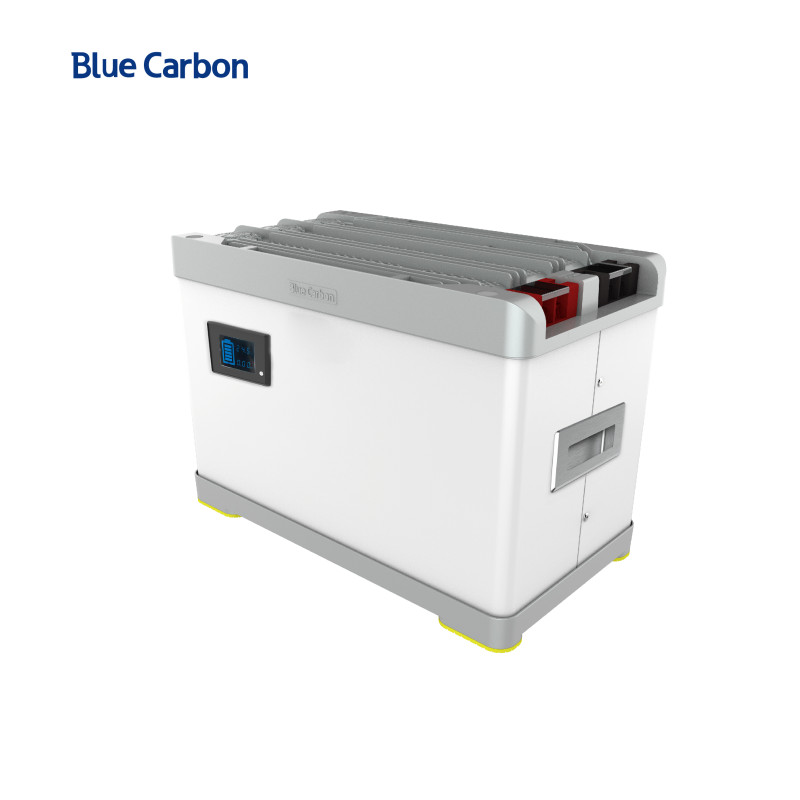
Carbon 15kWh Lithium Battery
One example
of Blue Carbon's energy storage solutions is its 15kWh lithium battery,
designed for applications requiring substantial energy storage capacity.
The battery
is built with Grade A cells and is promoted with a cycle-life capability of
over 6,000 cycles under specified operating conditions.
A 15kWh
battery can be useful for:
- Large residential properties
- Offices
- Commercial facilities
- Hotels
- Clinics
- Schools
- Small industrial applications
The
appropriate battery capacity should always be determined based on the
customer's energy consumption, peak load, desired backup duration, and solar
generation capacity.
Suitable
for Nigerian Homes
Blue Carbon
lithium batteries can provide reliable energy storage for residential solar
installations.
Depending on
system size, stored energy can support appliances such as:
- Refrigerators
- Freezers
- Televisions
- Fans
- Lighting
- Internet routers
- Security systems
- Computers
- Air conditioners
Proper load
assessment is essential before selecting the battery capacity.
Ideal for
Businesses
Businesses
cannot afford prolonged power interruptions.
Restaurants,
offices, supermarkets, hotels, pharmacies, salons, workshops, and other
businesses can use lithium battery storage to reduce their dependence on
generators and the grid.
Reliable
energy storage can help businesses maintain:
- Productivity
- Customer service
- Refrigeration
- Internet connectivity
- Security
- Lighting
- Essential equipment
Applications
in Industrial Projects
Industrial
facilities often have substantial energy requirements.
Lithium
battery storage can support applications such as:
- Manufacturing
- Warehousing
- Agriculture
- Food processing
- Cold storage
- Telecommunications
- Industrial offices
Larger
systems can combine multiple batteries to achieve greater storage capacity when
the products and system architecture support such configurations.
Compatibility
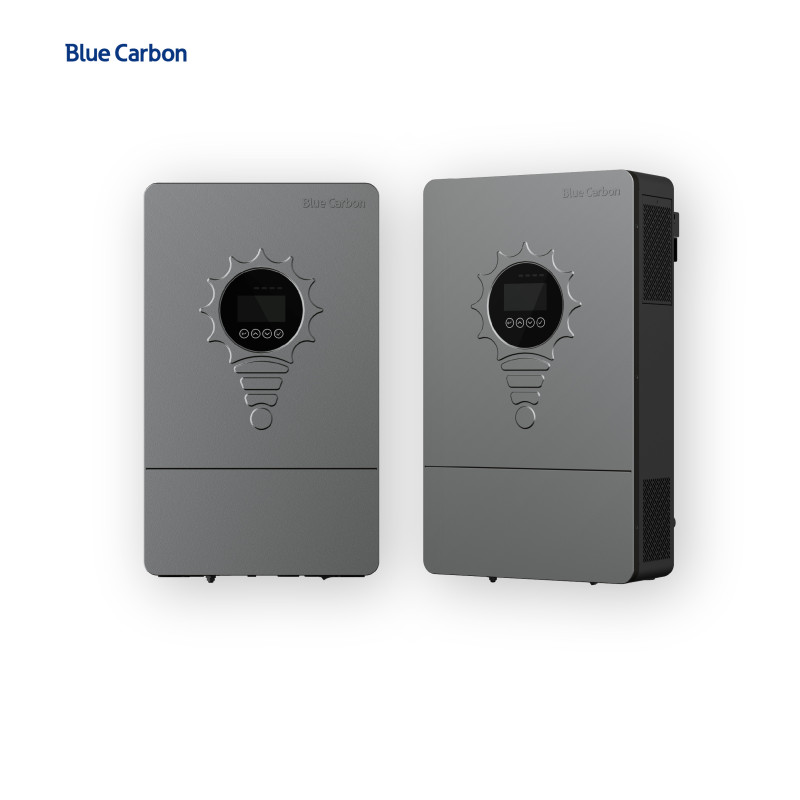
with Hybrid Inverters
A lithium
battery should not be selected independently of the inverter.
Compatibility
between the battery and inverter is essential for efficient operation.
Blue Carbon
lithium batteries can be integrated with compatible hybrid inverter systems,
allowing the inverter and battery to communicate where supported.
This can
enable:
- Intelligent charging
- Battery monitoring
- Energy management
- Protection coordination
- Improved system performance
Installers
should always verify compatibility and communication protocols before
installation.
Excellent
Long-Term Value
The cheapest
battery is not necessarily the most affordable battery.
Customers
should consider the total cost of ownership, including:
- Purchase price
- Installation
- Maintenance
- Efficiency
- Expected lifespan
- Replacement frequency
- Warranty
- Technical support
A battery
with a longer service life and better performance may provide greater value
over several years.
This is one
of the reasons customers consider Blue Carbon lithium batteries when looking
for a balance between quality and affordability.
Warranty
and Customer Support
A quality
battery should be supported by a reliable supplier.
Customers
should pay attention to:
- Warranty terms
- Warranty duration
- Authorized dealer status
- Technical support
- Availability of replacement
components
- Product documentation
Blue
Carbon's focus on customer support provides additional confidence for customers
investing in its energy storage products.
Always
confirm the specific warranty terms applicable to the battery model being
purchased.
Why
Customers Should Buy from the Right Source
The growing
popularity of lithium batteries has also created opportunities for counterfeit,
refurbished, or incorrectly represented products.
Customers
should purchase genuine Blue Carbon products from trusted and authorized
sources.
Before
buying, customers should verify:
- Product authenticity
- Model number
- Battery specifications
- Warranty documentation
- Supplier authorization
- Installation requirements
Buying from
the right source helps protect your investment and ensures access to
appropriate technical and warranty support.
Designed
for Nigeria's Growing Energy Needs
Nigeria's
energy requirements are changing rapidly.
As
electricity consumption increases, customers need energy storage solutions that
can:
- Store more electricity
- Operate efficiently
- Support daily cycling
- Reduce generator dependence
- Integrate with solar panels
- Provide backup power
Blue
Carbon's lithium battery portfolio is designed to address these evolving
requirements.
Why Blue
Carbon Is a Strong Lithium Battery Choice in 2026
Several
factors contribute to Blue Carbon's growing position in Nigeria's solar energy
market.
1. Grade
A LiFePO₄ Cells
High-quality
cells provide the foundation for reliable battery performance.
2. Long
Cycle Life
Selected
models offer over 6,000 charge-discharge cycles under recommended conditions.
3.
Intelligent BMS
Battery
management technology provides important monitoring and protection functions.
4. High
Efficiency
Efficient
charging and discharging helps maximize usable solar energy.
5. Low
Maintenance
LiFePO₄
technology requires minimal routine maintenance.
6.
Competitive Value
Customers
can obtain premium energy storage technology while considering the total cost
of ownership.
7.
Versatile Applications
Blue Carbon
batteries can serve residential, commercial, and industrial projects.
8.
Technical Support
Customers
can benefit from product guidance and technical assistance.
How to
Choose the Right Blue Carbon Lithium Battery
Before
purchasing a battery, consider:
Daily
energy consumption:
Determine how much electricity you use.
Peak
load: Identify
appliances that require high starting or operating power.
Backup
duration: Decide how
many hours of backup electricity you need.
Solar
panel capacity: Ensure
your solar array can adequately recharge the battery.
Inverter
compatibility:
Confirm that the inverter supports the battery's voltage, capacity, and
communication requirements.
Installation
environment: Follow
recommended temperature and ventilation requirements.
Future
expansion: Consider
whether your electricity requirements may increase.
A
professional solar installer can help calculate the appropriate system size.
Conclusion
As Nigeria's
solar energy industry continues to grow in 2026, reliable energy storage has
become more important than ever. A high-quality lithium battery can determine
how effectively a solar system stores and delivers electricity, especially
during nighttime, cloudy weather, and grid outages.
Blue Carbon
stands out as a strong choice in Nigeria's lithium battery market because of
its focus on Grade A LiFePO₄ cells, long cycle life, intelligent Battery
Management Systems, safety, efficiency, low maintenance, affordability, and
customer support.
With
solutions suitable for homes, businesses, commercial facilities, and industrial
projects, Blue Carbon provides customers with energy storage options designed
for modern Nigerian power requirements.
For anyone searching for a dependable lithium battery brand in Nigeria in 2026, Blue Carbon offers a compelling combination of quality, performance, technology, and value.
Tag: Blue Carbon lithium battery Nigeria, best lithium battery Nigeria 2026, LiFePO4 battery Nigeria, Grade A lithium battery, solar battery Nigeria
Recent Posts
Why Blue Carbon Products Have the Best Quality in the Nigerian Market: Making Blue Carbon the Most Preferred Choice
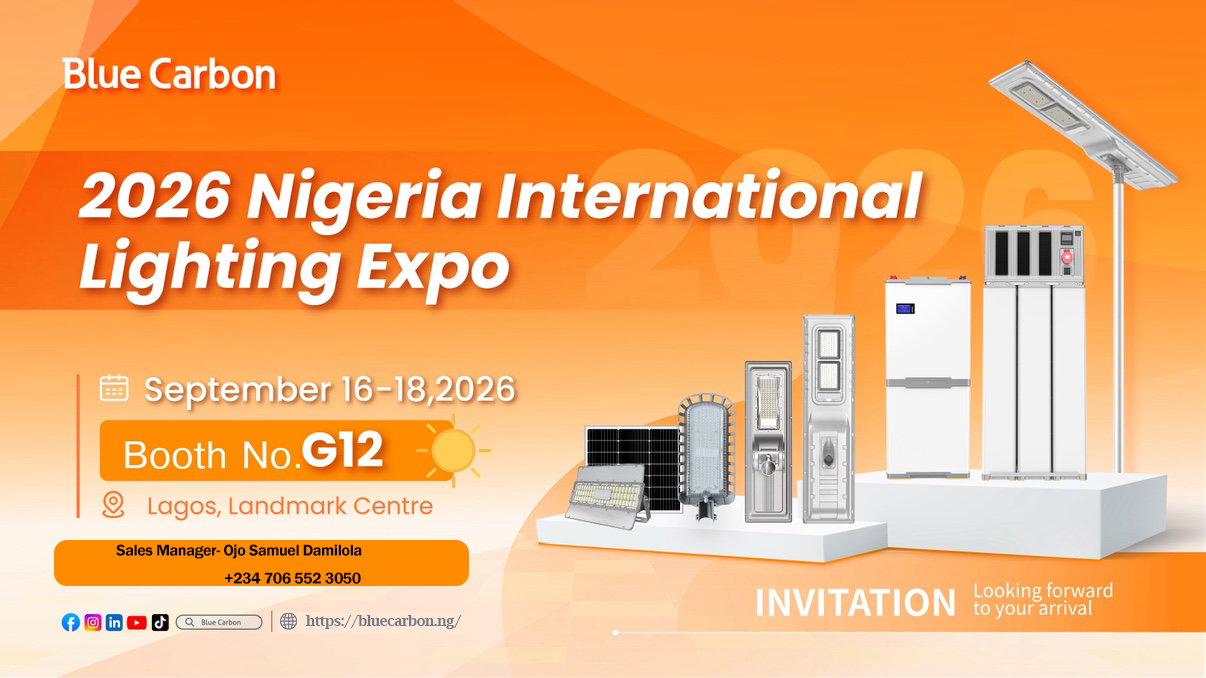
Blue Carbon Invites You to the 2026 Nigeria International Lighting Expo - September 16 - 18, 2026
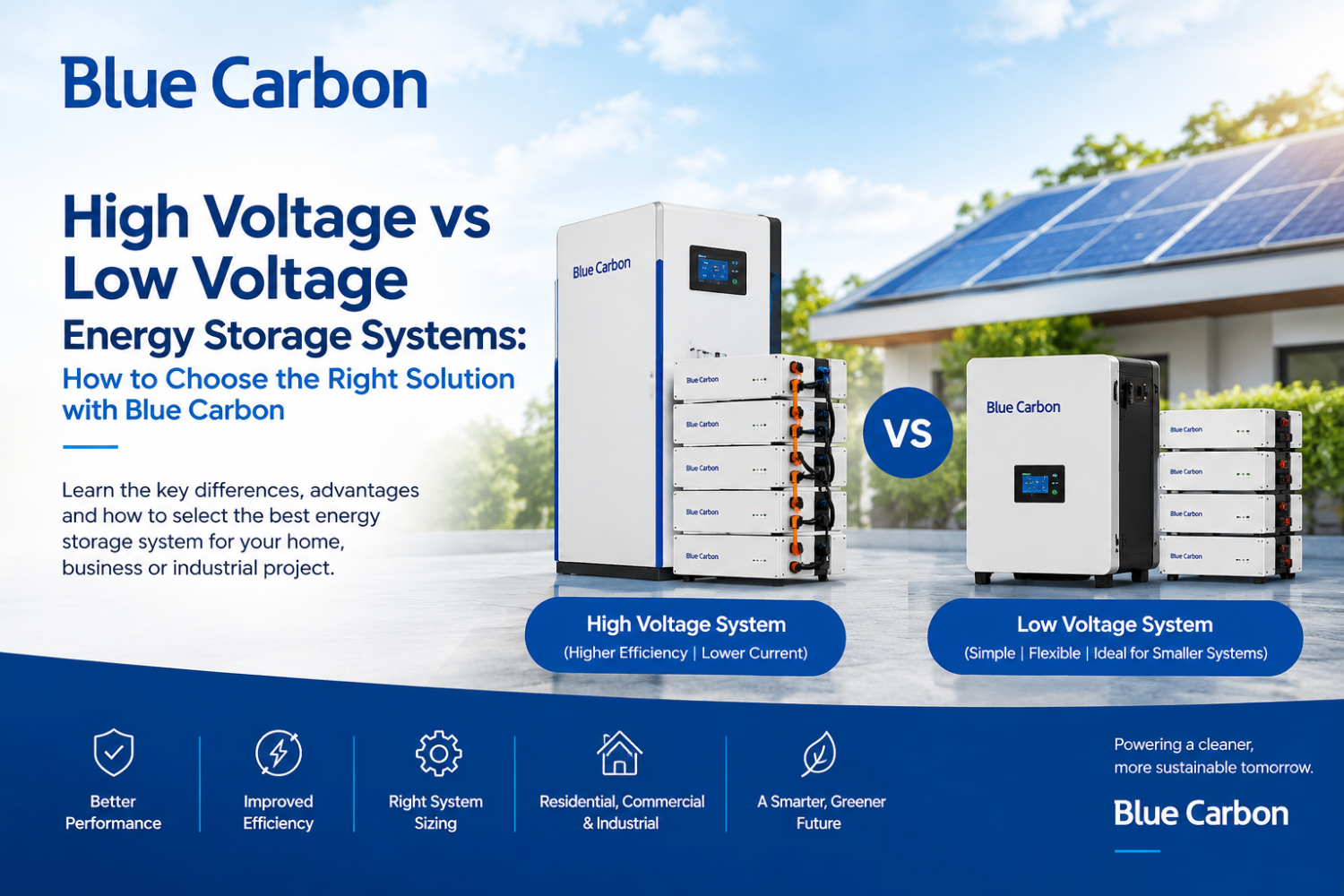
High Voltage vs Low Voltage Energy Storage Systems: How to Choose the Right Solution with Blue Carbon
Register Your Blue Carbon Product for Warranty to Gain Access to Warranty Support