
Signs Your Solar Battery Needs Replacement
Solar energy systems are designed to provide reliable and
sustainable electricity for homes and businesses. One of the most important
components of any solar power system is the solar battery. Solar
batteries store excess energy generated by solar panels so it can be used at
night, during cloudy weather, or when there is a power outage.
However, like all energy storage devices, solar batteries do
not last forever. Over time, their performance gradually declines due to
repeated charging and discharging cycles. If a battery becomes weak or damaged,
it can reduce the efficiency of your entire solar system.
Understanding the signs that your solar battery needs
replacement can help you maintain a reliable power supply and avoid
unexpected system failures. In this guide, we will explore the common warning
signs, the typical lifespan of solar batteries, and how to determine when it is
time for a replacement.
Why Solar Batteries Are Important
Solar batteries play a crucial role in solar energy systems.
Without batteries, solar panels can only provide electricity when the sun is
shining.
A properly functioning solar battery allows you to:
- Store
excess solar energy generated during the day
- Use
stored energy at night
- Maintain
electricity during power outages
- Reduce
reliance on grid electricity
- Improve
overall energy efficiency
Because of these benefits, ensuring that your solar battery
is functioning properly is essential for maintaining an effective solar power
system.
Average Lifespan of Solar Batteries
The lifespan of a solar battery depends on the type of
battery technology used.
Lithium Batteries
Lithium-ion batteries are widely used in modern solar
systems due to their durability and efficiency.
Typical lifespan:
- 10
to 15 years
- 4000
to 6000 charge cycles
Lead-Acid Batteries
Lead-acid batteries are older technologies that are still
used in some systems.
Typical lifespan:
- 3
to 5 years
- 500
to 1000 charge cycles
Although lithium batteries last significantly longer, they
will eventually degrade and require replacement.
10 Signs Your Solar Battery Needs Replacement
Recognizing the early warning signs of battery failure can
prevent energy disruptions and costly damage to other system components.
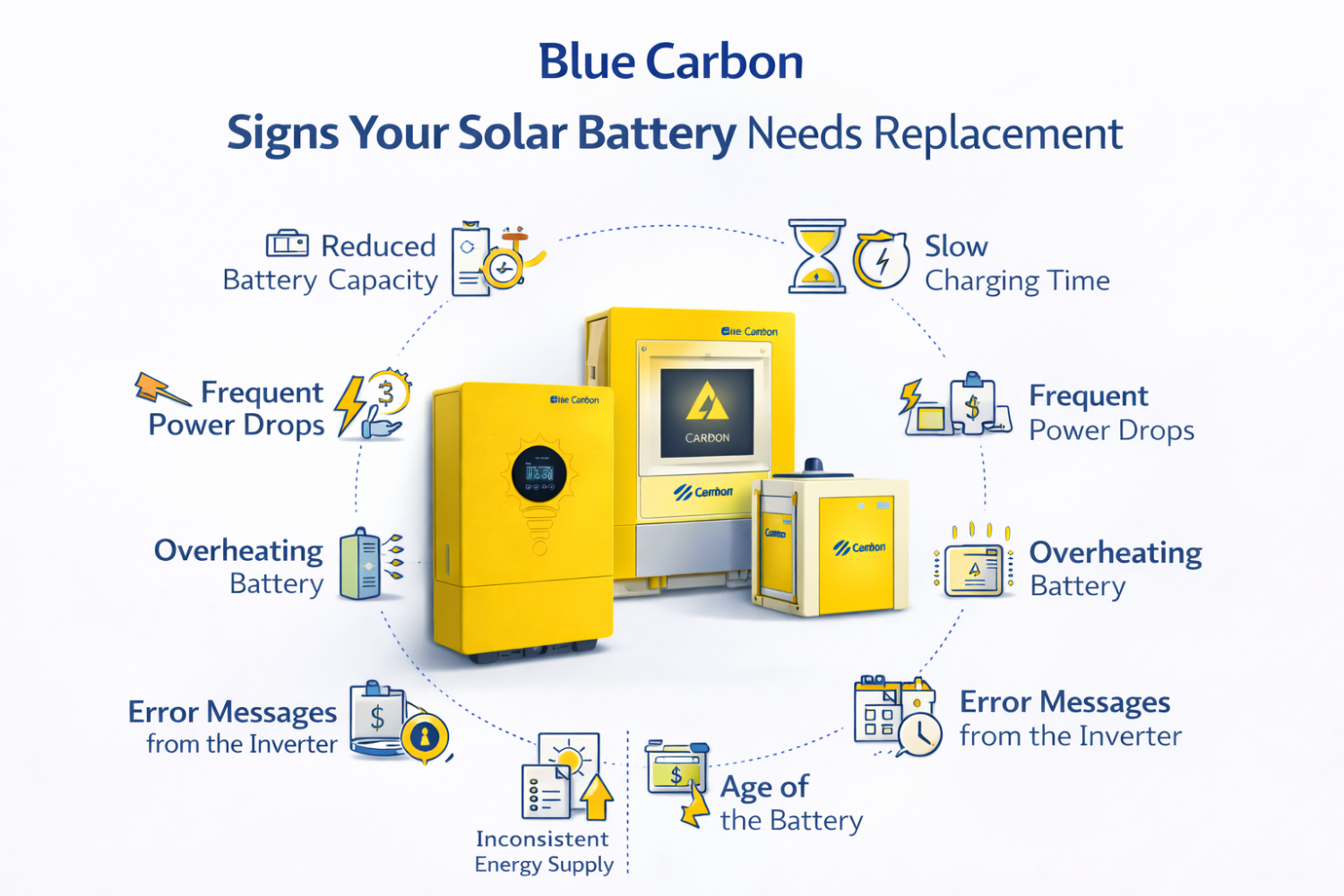
1. Reduced Battery Capacity
One of the most common signs of a failing solar battery is reduced
storage capacity.
You may notice that the battery no longer stores as much
energy as it used to. For example:
- Your
home runs out of power earlier at night
- Backup
power lasts for a shorter period during outages
- Appliances
shut down sooner than expected
This occurs because the battery gradually loses its ability
to hold a full charge.
2. Slow Charging Time
If your battery takes longer than usual to charge, it may
indicate internal degradation.
A healthy solar battery should charge efficiently when solar
panels generate sufficient energy. When charging becomes slow or inconsistent,
it often means the battery cells are wearing out.
3. Frequent Power Drops
Frequent power interruptions or sudden shutdowns can
indicate battery problems.
If your solar system suddenly switches off even though the
battery should still have stored energy, it could mean the battery can no
longer deliver stable power.
4. Overheating Battery
Solar batteries should operate within a safe temperature
range.
If you notice that your battery becomes unusually hot
during charging or discharging, this could indicate internal damage or
chemical imbalance.
Overheating batteries should be inspected immediately
because they can pose safety risks.
5. Physical Damage or Swelling
Visible physical changes in the battery are serious warning
signs.
Look for:
- Bulging
or swelling
- Cracks
or leakage
- Corrosion
around terminals
- Burn
marks or unusual discoloration
Any of these signs may indicate internal battery failure and
require immediate replacement.
6. Rapid Discharge
A healthy battery should discharge gradually as electricity
is used.
If your battery drains very quickly, even when few
appliances are running, it may no longer be able to hold energy effectively.
This often occurs when battery cells become worn out after
many charge cycles.
7. Error Messages from the Inverter
Modern solar systems include monitoring systems that display
battery status.
If your inverter frequently shows:
- Battery
warning alerts
- Charging
errors
- Battery
communication failures
this could indicate that the battery is no longer
functioning properly.
8. Age of the Battery
Sometimes the simplest indicator is the age of the
battery.
If your battery has exceeded its expected lifespan, its
performance will likely decline.
Even if it still functions, older batteries may operate
inefficiently and reduce the overall performance of the solar system.
9. Increased Electricity Bills
A failing solar battery may force your system to rely more
on grid electricity.
If you suddenly notice higher electricity bills despite
having a solar system installed, it may be because the battery is no longer
storing energy effectively.
10. Inconsistent Energy Supply
If your solar system delivers unpredictable power levels,
this may be linked to battery problems.
You might notice:
- Lights
dimming unexpectedly
- Appliances
turning off randomly
- System
switching between solar and grid power frequently
These symptoms may indicate that the battery is no longer
providing stable energy output.
What Causes Solar Batteries to Wear Out?
Solar batteries degrade naturally over time, but several
factors can accelerate this process.
Deep Discharging
Repeatedly draining batteries completely can shorten their
lifespan.
Extreme Temperatures
Very high or low temperatures can damage battery cells.
Poor Maintenance
Lack of regular inspection and maintenance can lead to
premature battery failure.
Improper Installation
Incorrect wiring or poor ventilation may cause overheating
and performance issues.
How to Extend Solar Battery Lifespan
Although batteries eventually need replacement, proper care
can significantly extend their lifespan.
Important maintenance practices include:
1. Avoid Deep Discharge
Try not to drain batteries completely before recharging.
2. Maintain Proper Ventilation
Ensure the battery area has adequate airflow to prevent
overheating.
3. Monitor Battery Performance
Regularly check system monitoring tools for abnormal
readings.
4. Keep Batteries Clean
Remove dust, moisture, and corrosion around terminals.
5. Schedule Professional Inspections
Periodic inspections by solar professionals can detect
issues early.
When Should You Replace Your Solar Battery?
Replacing your solar battery becomes necessary when:
- Battery
capacity drops significantly
- System
performance declines
- Safety
risks appear
- The
battery reaches its end-of-life cycle
Upgrading to modern lithium battery technology can
improve efficiency, reliability, and lifespan.
New batteries often offer:
- Higher
energy density
- Faster
charging
- Longer
lifespan
- Better
energy management systems
Benefits of Replacing an Old Solar Battery
Installing a new solar battery can restore the full
performance of your solar system.
Key benefits include:
Improved Energy Storage
New batteries store more energy for nighttime use.
Reliable Backup Power
Your system can provide stable electricity during outages.
Increased System Efficiency
Modern batteries improve overall solar performance.
Long-Term Cost Savings
Efficient energy storage reduces electricity bills.
Conclusion
Solar batteries are essential for storing energy and
ensuring consistent power supply in solar systems. However, like any
technology, they eventually wear out after years of use.
Recognizing the signs that your solar battery needs
replacement helps prevent system downtime and maintain optimal performance.
Common warning signs include reduced capacity, rapid
discharge, overheating, physical damage, and system error messages.
By monitoring battery performance and performing regular
maintenance, you can extend the lifespan of your solar battery and maximize the
benefits of your solar energy system.
When replacement becomes necessary, upgrading to advanced
battery technologies ensures reliable power, improved efficiency, and long-term
energy savings.
Investing in a healthy solar battery system ensures your
solar energy solution continues delivering clean, dependable electricity for
many years.
Recent Posts
Why Blue Carbon Products Have the Best Quality in the Nigerian Market: Making Blue Carbon the Most Preferred Choice
Blue Carbon Invites You to the 2026 Nigeria International Lighting Expo - September 16 - 18, 2026
High Voltage vs Low Voltage Energy Storage Systems: How to Choose the Right Solution with Blue Carbon
Register Your Blue Carbon Product for Warranty to Gain Access to Warranty Support