
Why You Need to Use the Appropriate Cable Capacity for Your Solar Installations to Avoid Fire Outbreak
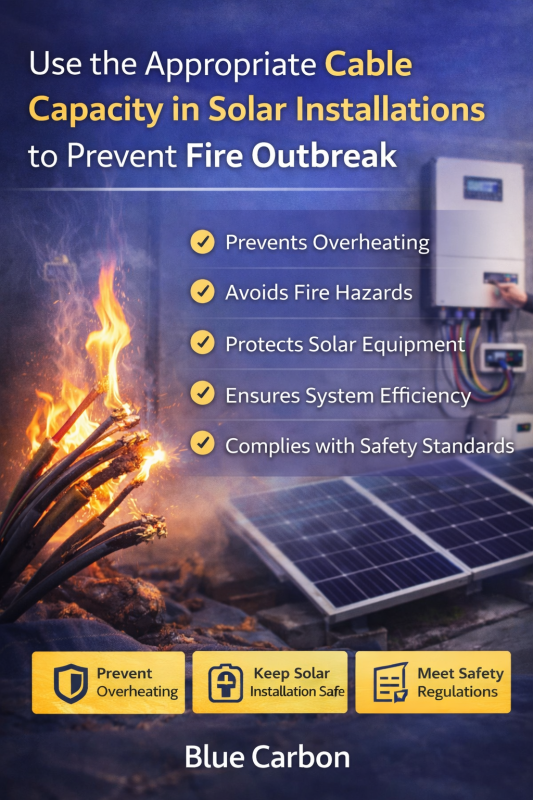
As solar energy adoption continues to grow across homes, businesses, factories, schools, and religious centers, one critical factor is often overlooked — using the appropriate cable capacity for solar installations. While many focus on solar panels, inverters, and batteries, the cables that connect the entire system are just as important.
Incorrect
cable sizing is one of the leading causes of solar system failure,
overheating, and fire outbreaks. A poorly sized cable can turn a clean
energy investment into a dangerous hazard.
In this
comprehensive guide, you’ll learn:
- Why cable capacity matters in
solar installations
- The dangers of undersized cables
- How overheating leads to fire
outbreaks
- Key factors to consider when
selecting solar cables
- Professional best practices for
safe installations
If you are
installing or planning to install a solar power system, this article could save
your property — and your life.
Understanding
Cable Capacity in Solar Installations
Cable
capacity, also known as current-carrying capacity (ampacity), refers to
the maximum amount of electrical current a cable can safely carry without
overheating.
In a solar
installation, cables connect:
- Solar panels to the charge
controller or inverter
- Charge controller to battery
bank
- Battery bank to inverter
- Inverter to distribution board
Each of
these connections carries different current levels. Using the wrong cable size
disrupts system efficiency and introduces serious safety risks.
What
Happens When You Use Undersized Cables?
When a cable
is too small for the current passing through it, the following occurs:
1.
Overheating
Electric
current flowing through a conductor generates heat. If the cable is too small,
resistance increases. Increased resistance leads to excessive heat buildup.
Over time,
this heat can:
- Melt insulation
- Damage connectors
- Weaken the conductor
- Ignite nearby materials
2.
Voltage Drop
Undersized
cables cause significant voltage drop, which results in:
- Reduced system efficiency
- Poor battery charging
- Inverter shutdown
- Appliance malfunction
Voltage drop
also increases current demand, worsening overheating issues.
3.
Insulation Breakdown
Excessive
heat damages cable insulation. Once insulation deteriorates:
- Bare conductors may touch
- Short circuits may occur
- Sparks can ignite combustible
materials
4. Fire
Outbreak
When
overheating continues unchecked, ignition can occur. Solar installations often
run for long hours daily, making sustained heat buildup extremely dangerous.
A small
cable mistake can result in:
- Property damage
- Equipment destruction
- Financial loss
- Risk to human life
Why Solar
Installations Are Especially Sensitive to Cable Sizing
Unlike
conventional grid wiring, solar systems have unique characteristics:
Continuous
Current Flow
Solar panels
generate power for many hours under sunlight. Cables carry sustained current
for long durations, which increases heat accumulation.
High DC
Current
Solar panel
arrays and battery banks operate on direct current (DC). DC systems are
particularly sensitive because DC arcs are harder to extinguish than AC arcs,
increasing fire risk.
Outdoor
Exposure
Solar cables
are exposed to:
- High temperatures
- UV radiation
- Moisture
- Dust
Poor-quality
or undersized cables deteriorate faster under these conditions.
Common
Causes of Cable-Related Solar Fires
Understanding
common mistakes helps prevent disasters.
1. Cost
Cutting
Some
installers reduce cable size to save money. While thinner cables are cheaper,
the long-term consequences are far more expensive.
2. Lack
of Load Calculation
Failure to
calculate:
- Total system current
- Surge current
- Inverter capacity
- Battery discharge rate
leads to
improper cable selection.
3.
Ignoring Future Expansion
Many systems
are later expanded. If cables were sized only for initial load, upgrades can
overload existing wiring.
4. Poor
Installation Practices
- Loose connections
- Improper crimping
- Mixing cable types
- Using indoor cables outdoors
All increase
fire risk.
How
Proper Cable Capacity Prevents Fire Outbreak
Using the
correct cable size ensures:
✅ Safe Heat Levels
Appropriately
sized cables operate within safe temperature limits.
✅ Reduced Resistance
Larger
cross-sectional area reduces resistance and minimizes heat generation.
✅ Stable Voltage
Correct
sizing reduces voltage drop, maintaining optimal system performance.
✅ Longer Equipment Lifespan
When cables
function correctly, inverters, batteries, and panels last longer.
✅ Insurance & Compliance
Protection
Professional
cable sizing ensures compliance with electrical standards, protecting you from
legal and insurance complications.
Key
Factors to Consider When Selecting Solar Cable Capacity
1.
Current Rating (Ampacity)
Calculate
the maximum current the cable will carry. Always add a safety margin (usually
25%).
2. Cable
Length
Longer
cables increase resistance. The longer the distance, the thicker the cable
required.
3.
Voltage Level
Lower
voltage systems (e.g., 12V or 24V) require thicker cables because current is
higher.
4.
Ambient Temperature
Higher
surrounding temperatures reduce cable ampacity. Installations in hot climates
require extra caution.
5.
Installation Method
Cables in
conduits, buried underground, or bundled together dissipate heat differently.
This affects sizing.
6. Type
of Current (AC or DC)
DC cables
require special consideration due to arc risks and continuous load
characteristics.
Example:
How a Small Mistake Becomes a Big Problem
Imagine a
5kW inverter system operating at 48V.
The current
required:
5000W ÷ 48V
= approximately 104A
If someone
installs a cable rated for 70A:
- It will constantly operate above
capacity
- Heat will accumulate
- Insulation will degrade
- Eventually, failure or fire may
occur
This simple
miscalculation can destroy an entire installation.
Signs
Your Solar Cables May Be Undersized
Watch out
for:
- Warm or hot cables
- Burning smell
- Melted insulation
- Discolored connectors
- Frequent inverter shutdown
- Reduced system output
If you
notice any of these, consult a qualified solar technician immediately.
Best
Practices for Safe Solar Cable Installation
✔ Always Work With Certified
Professionals
Qualified
installers understand load calculations and safety margins.
✔ Use High-Quality Solar-Rated Cables
Solar cables
should be:
- UV resistant
- Weatherproof
- Flame retardant
- Double insulated
✔ Apply Safety Margins
Never size
cables exactly at calculated current. Always oversize appropriately.
✔ Properly Terminate Connections
Loose
terminals create resistance points that generate heat.
✔ Conduct Regular Inspections
Routine
maintenance prevents small issues from becoming disasters.
The
Financial Cost of Ignoring Cable Capacity
Many
property owners focus on saving money during installation. However, improper
cable sizing can result in:
- Fire damage repairs
- Replacement of panels and
batteries
- Insurance claim denial
- Business downtime
- Legal liability
Investing in
proper cable capacity is far cheaper than recovering from a fire outbreak.
Solar
Safety Is Not Optional
Solar energy
is safe and reliable when installed correctly. However, every electrical system
carries risk if standards are ignored.
Cables are
the arteries of your solar system. If they are undersized, everything connected
to them is at risk.
Using the
appropriate cable capacity:
- Protects your investment
- Protects your property
- Protects your family or staff
- Ensures optimal system
efficiency
- Prevents avoidable fire
outbreaks
Conclusion
Choosing the
right solar panels and inverters is important — but selecting the correct cable
capacity is absolutely critical.
Undersized
cables cause overheating, voltage drop, insulation failure, and ultimately fire
outbreaks. Proper cable sizing ensures system efficiency, long-term durability,
and most importantly, safety.
When
planning your solar installation, never compromise on cable quality or
capacity. Work with professionals who prioritize electrical safety standards
and long-term reliability.
Your solar
system should bring peace of mind — not fire hazards.
Recent Posts
Why Blue Carbon Lithium Batteries Are Built for Long Life and Strong Performance
Why Blue Carbon Is the Best Lithium Battery Brand in Nigeria in 2026
Why Blue Carbon Has the Best After-Sales Support in Nigeria's Solar Energy Market