Why Earthing Is Very Important in Every Solar System Installation
As solar energy adoption increases across homes, businesses, and industries, attention is often focused on solar panels, inverters, and batteries. However, one of the most critical yet overlooked components of any solar power system is earthing (grounding).
Earthing plays a vital role in system
safety, performance, and longevity. Without proper earthing, even the most
advanced solar system can become dangerous, inefficient, and prone to failure.
This article explains why earthing is essential in every solar system
installation, how it works, and the serious risks of ignoring it.
What
Is Earthing in a Solar Power System?
Earthing, also known as grounding,
is the process of connecting electrical equipment and metallic components to
the ground using conductors and earth electrodes.
In a solar system, earthing
typically applies to:
- Solar panel frames
- Inverter casing
- Battery enclosures
- Charge controllers
- Mounting structures
- Distribution boards
- Lightning protection systems
The goal is to safely discharge
excess electrical energy into the earth, preventing damage or danger.
Why
Earthing Is Critical in Solar Installations
1.
Protection Against Electric Shock
One of the primary purposes of
earthing is human safety.
If a fault occurs-such as insulation
failure or damaged wiring-electric current can flow through exposed metal
parts. Without earthing, touching such equipment can result in severe electric
shock or electrocution.
Proper earthing:
- Redirects fault current into the ground
- Activates protective devices like circuit breakers
- Prevents current from passing through the human body
2.
Prevention of Equipment Damage
Solar systems operate under high
voltages, especially during peak sunlight hours. Voltage surges, short
circuits, or insulation breakdown can damage expensive components.
Earthing:
- Protects inverters, batteries, and controllers
- Prevents internal electronic failures
- Reduces the risk of fire and system breakdown
This is especially important in
Nigeria, where voltage instability and harsh environmental conditions are
common.
3.
Lightning and Surge Protection
Nigeria experiences frequent
thunderstorms and lightning activity, particularly during the rainy season.
Solar panels are often installed on
rooftops or open areas, making them vulnerable to lightning strikes.
Proper earthing:
- Safely directs lightning energy into the ground
- Protects solar panels and inverters from surge damage
- Works alongside surge protection devices (SPDs)
Without earthing, a single lightning
strike can destroy an entire solar system.
4.
System Stability and Performance
Earthing ensures a stable
reference voltage for the solar system.
Benefits include:
- Reduced electrical noise
- Stable inverter operation
- Accurate monitoring and communication
- Improved system efficiency
Poor earthing can cause inverter
errors, communication faults, and frequent shutdowns.
5.
Compliance With Electrical Standards
Professional solar installations
must comply with:
- National electrical codes
- Manufacturer installation guidelines
- Safety and insurance requirements
Most inverter and battery
manufacturers void warranties if systems are not properly earthed.
Proper earthing:
- Ensures regulatory compliance
- Protects warranties
- Supports safe certification and inspection
Key
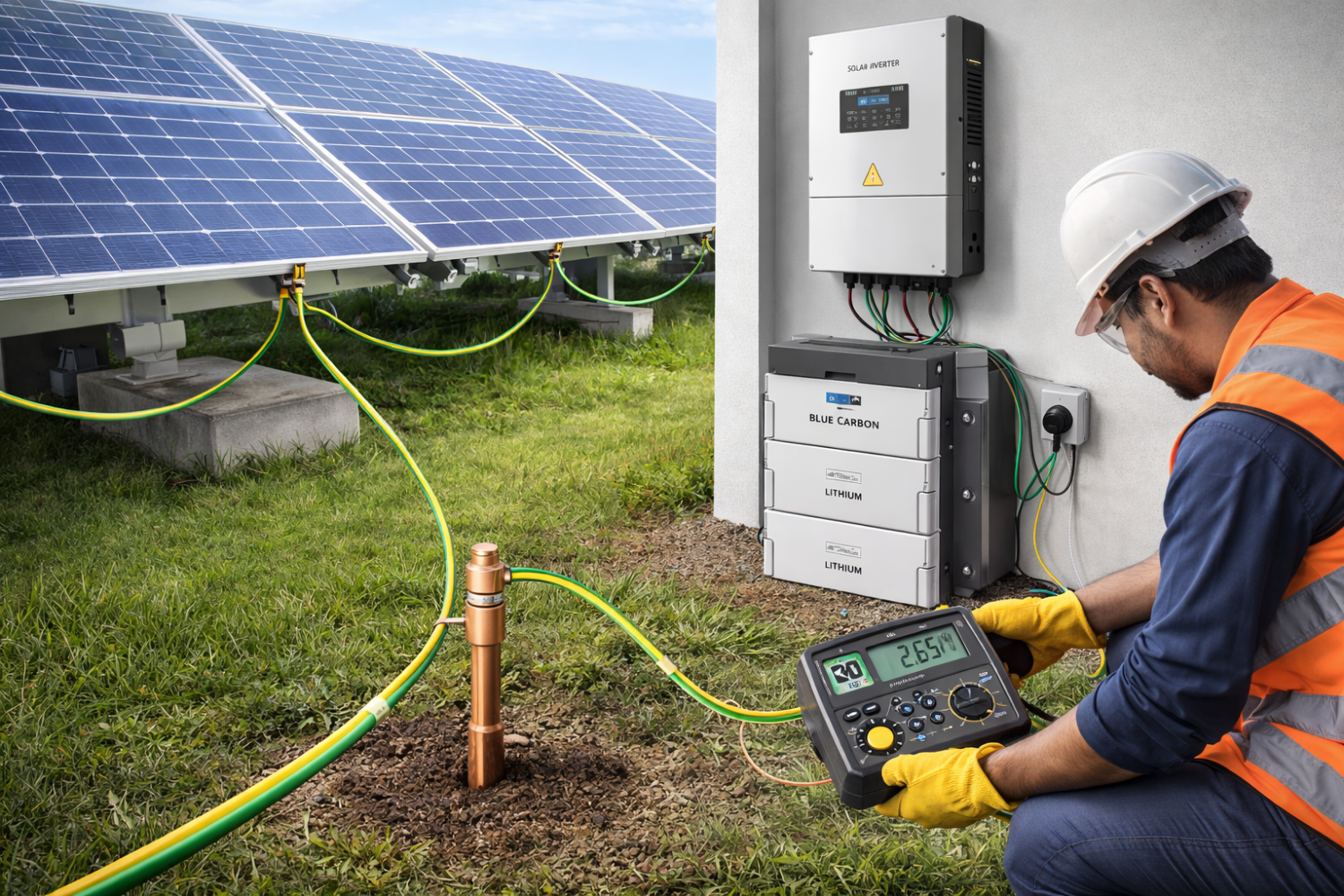
Components of a Solar Earthing System
1.
Earth Rod (Electrode)
A copper or galvanized steel rod
driven deep into the ground to create a low-resistance path to earth.
2.
Earth Conductor
Copper cables connect system
components to the earth rod.
3.
Earth Busbar
A common connection point for all
earthing conductors.
4.
Bonding of Metal Parts
All metallic structures, including
panel frames and mounting rails, must be bonded together and earthed.
Types
of Earthing Used in Solar Installations
1.
Equipment Earthing
Protects solar components and
enclosures.
2.
System Earthing
Provides a reference point for
voltage stability.
3.
Lightning Earthing
Dedicated earthing for lightning
arrestors and surge protection systems.
Dangers
of Poor or No Earthing
Failure to implement proper earthing
can result in:
- Electric shock hazards
- Fire outbreaks
- Equipment failure
- Battery damage
- Inverter malfunction
- Lightning destruction
- Insurance claim rejection
Best
Practices for Solar Earthing in Nigeria
- Use high-quality copper conductors
- Ensure low earth resistance (typically below 5
ohms)
- Separate lightning earthing from equipment earthing
where required
- Test earthing resistance periodically
- Follow manufacturer and professional installation
guidelines
Professional installers understand
soil conditions and grounding requirements specific to different regions.
Earthing
and Lithium Battery Safety
Modern lithium batteries, especially
LiFePO₄ systems, require stable grounding to:
- Prevent static discharge
- Protect Battery Management Systems (BMS)
- Ensure safe charging and discharging
Improper earthing can cause battery
faults and reduce lifespan.
Conclusion
Earthing is not optional-it is a critical
safety and performance requirement in every solar system installation. It
protects lives, preserves equipment, ensures compliance, and guarantees system
reliability.
No matter how powerful or advanced
your solar system is, without proper earthing, it remains incomplete and
unsafe. Investing in correct grounding is investing in long-term safety,
efficiency, and peace of mind.
Recent Posts
48V Lithium Battery in Nigeria: Prices, Capacity, Lifespan & Best Uses
10kWh Lithium Battery Price in Nigeria: Capacity, Backup Time & Cost
15kWh Lithium Battery Price in Nigeria: What You Need to Know Before Buying
Lithium Battery Price in Nigeria 2026: Complete Buying Guide