How Long Will a 15kWh Lithium Battery Last? Complete Guide for Nigerian Homes and Businesses
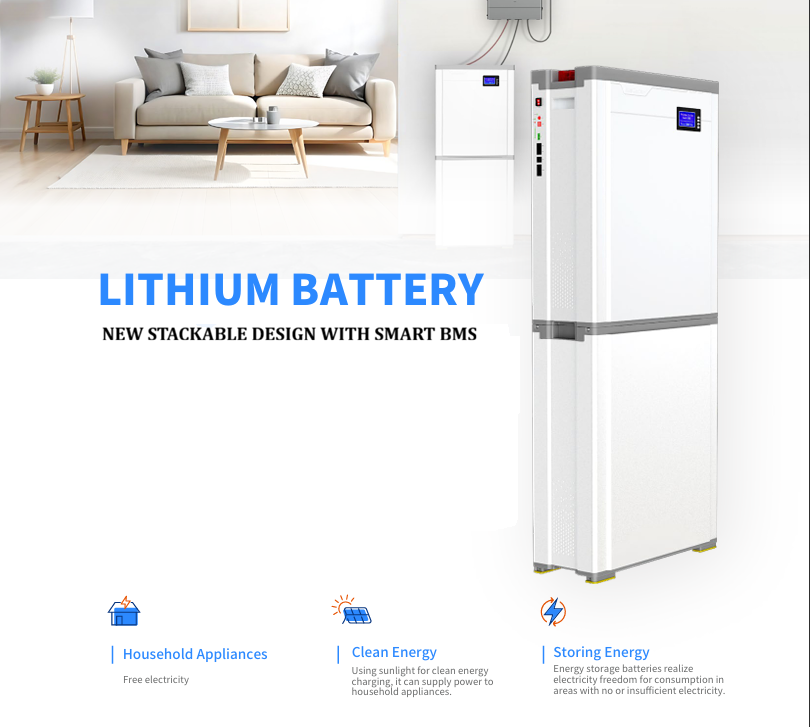
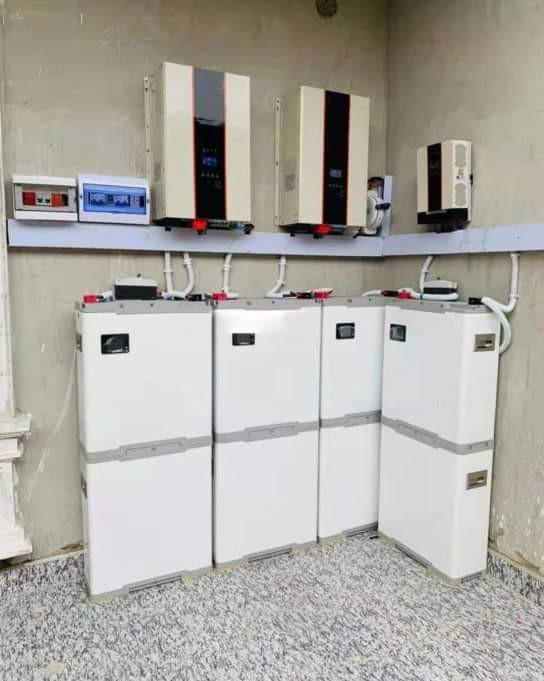
A 15kWh lithium battery can provide several hours of reliable backup power for a home, office or small business. However, how long it lasts depends on the appliances connected to it, their total power consumption, the battery's usable capacity and the efficiency of the inverter.
For Nigerian households dealing with unreliable electricity
supply, a 15kWh lithium battery can be an excellent energy-storage solution. It
can power essential household appliances, including televisions, refrigerators,
fans, lighting, computers and selected kitchen appliances.
But will it last 5 hours, 10 hours or an entire day?
Let's break it down with practical examples.
1. How Much Energy Does a 15kWh Lithium Battery
Store?
A 15kWh lithium battery has a nominal energy capacity of
approximately 15 kilowatt-hours (kWh).
This means it can theoretically supply:
- 1,000
watts (1kW) for 15 hours.
- 1,500
watts (1.5kW) for 10 hours.
- 2,000
watts (2kW) for 7.5 hours.
- 3,000
watts (3kW) for 5 hours.
- 5,000
watts (5kW) for 3 hours.
These figures are theoretical. Actual backup time is
usually shorter because of inverter losses, battery management limits and other
operating conditions.
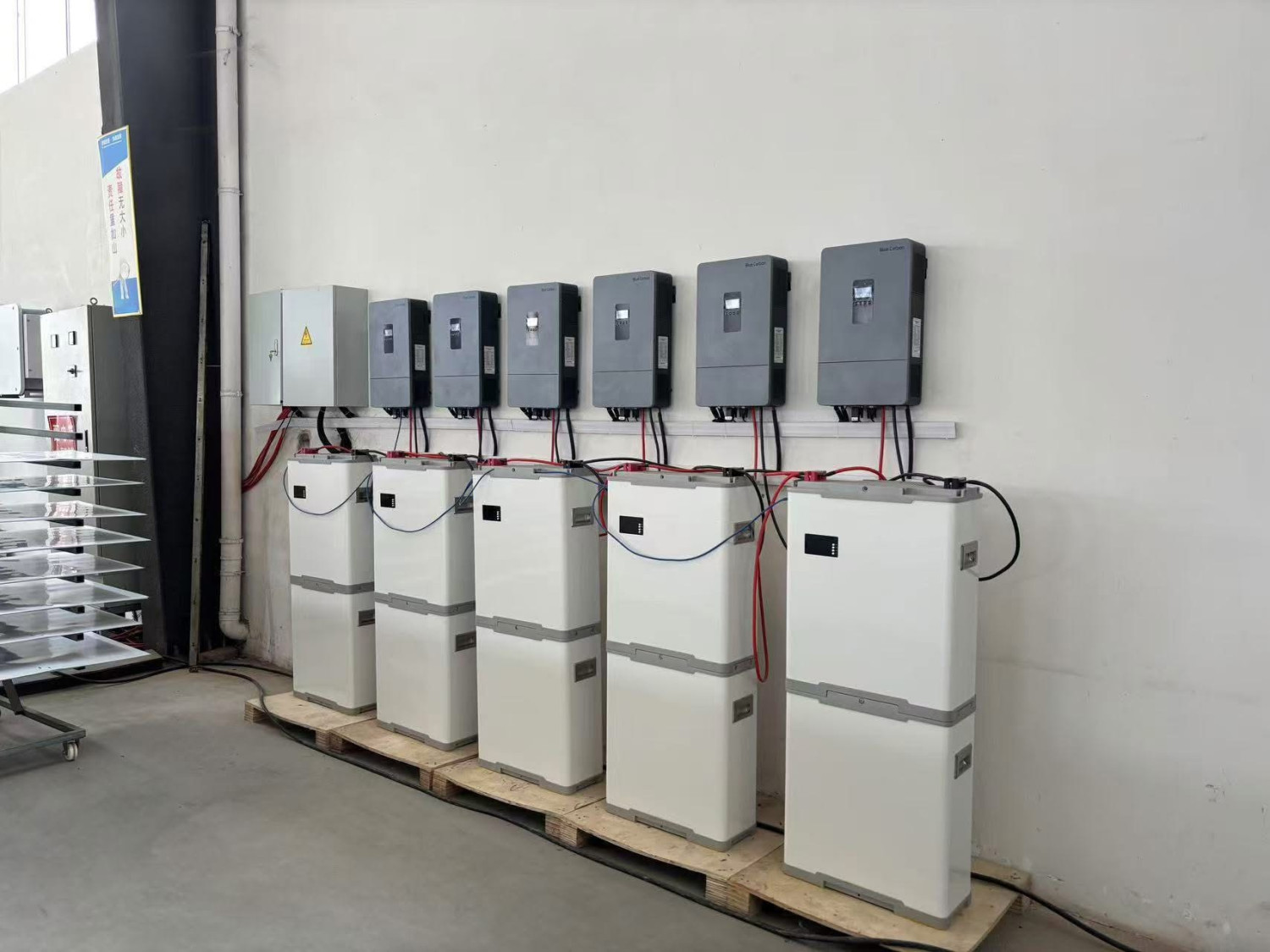
For example, a Blue Carbon 15.36kWh lithium battery has a
nominal capacity of 15.36kWh and a 48V-class configuration. Its actual usable
energy depends on the permitted depth of discharge and manufacturer
specifications.
2. How Long Will a 15kWh Lithium Battery Last?
The following table illustrates estimated backup time using
a 15kWh battery and an assumed 90% usable energy allowance.
Illustrative estimates, assuming approximately 13.5kWh
usable energy after battery limits, before additional inverter losses.
|
Total load |
Estimated backup time |
|
300W |
45 hours |
|
500W |
27 hours |
|
800W |
16.9 hours |
|
1,000W (1kW) |
13.5 hours |
|
1,500W (1.5kW) |
9 hours |
|
2,000W (2kW) |
6.75 hours |
|
3,000W (3kW) |
4.5 hours |
|
4,000W (4kW) |
3.4 hours |
|
5,000W (5kW) |
2.7 hours |
Actual runtime may be lower depending on inverter
efficiency, battery temperature, age, load fluctuations and appliance starting
surges.
3. How Long Can a 15kWh Battery Power Common
Household Appliances?
Let's consider a typical Nigerian home.
The following estimates use illustrative appliance
consumption figures. Actual consumption varies by appliance model, age and
operating conditions.
|
Appliance |
Estimated power |
Daily usage |
Energy used |
|
4 LED bulbs |
40W |
8 hours |
0.32kWh |
|
3 ceiling fans |
180W |
10 hours |
1.80kWh |
|
LED television |
100W |
6 hours |
0.60kWh |
|
Refrigerator |
150W average while running |
12 hours equivalent |
1.80kWh |
|
Laptop |
65W |
5 hours |
0.33kWh |
|
Wi-Fi router |
15W |
12 hours |
0.18kWh |
|
Decoder |
25W |
6 hours |
0.15kWh |
|
Total |
5.18kWh |
With this estimated daily consumption, a 15kWh battery
could theoretically support the appliances for more than two days without
recharging, depending on usable capacity and actual operating conditions.
This is why proper energy planning is important. Two
households with the same battery capacity may experience very different backup
times.
4. What If You Use an Air Conditioner?
Air conditioners are among the appliances that can
significantly reduce lithium battery backup time.
Consider these illustrative examples:
|
Appliance |
Estimated running power |
|
1HP air conditioner |
750–1,000W |
|
1.5HP air conditioner |
1,100–1,500W |
|
2HP air conditioner |
1,500–2,000W |
|
Chest freezer |
100–250W |
|
Washing machine |
400–1,000W |
|
Electric pressing iron |
1,000–2,000W |
|
Electric kettle |
1,500–2,200W |
Actual air-conditioner consumption depends on the model,
inverter technology, room temperature and cooling settings.
For example, if a 1HP air conditioner consumes an average
of 900W and operates for 8 hours:
\[ 900W \times 8h = 7.2kWh \]
That single air conditioner could consume more than half of
the illustrative 13.5kWh usable battery energy.
Important: High-power appliances such as electric cookers,
kettles, pressing irons and water heaters can drain a battery quickly. They may
also exceed the inverter's rated output if several operate simultaneously.
5. Factors That Determine How Long Your 15kWh
Battery Will Last
A. Total appliance consumption
The more appliances connected to your solar system, the
faster the battery discharges.
A home using only fans, lights, a television and a
refrigerator will generally enjoy longer backup time than a home running
multiple air conditioners and heavy electrical appliances.
B. Usable battery capacity
A battery's nominal capacity is not necessarily the amount
of energy available to your appliances.
The battery management system (BMS) controls charging,
discharging and protection limits. The manufacturer's permitted depth of
discharge determines how much of the rated capacity can be used.
C. Inverter efficiency
Energy is lost when the inverter converts battery DC power
into AC power for household appliances.
A good-quality inverter with suitable efficiency helps
minimise these losses.
D. Battery age and condition
Lithium batteries gradually lose capacity as they age and
go through charging and discharging cycles.
Operating temperature, charging practices, installation
quality and battery management also influence long-term performance.
E. Solar panel capacity
A 15kWh lithium battery connected to an appropriately sized
solar array can recharge during daylight hours.
This means your system may continue supplying power beyond
the battery's standalone backup duration, provided the solar panels generate
enough energy to support your loads and recharge the battery.
6. Can a 15kWh Lithium Battery Power an Entire
House?
Yes, a 15kWh lithium battery can power many residential
homes, but the result depends on the home's energy requirements.
It can be suitable for:
- Three-
to five-bedroom residential homes with managed loads.
- Homes
using televisions, fans, refrigerators and lighting.
- Offices
and small commercial establishments.
- Shops
and business premises.
- Homes
requiring backup for selected air conditioners.
- Solar
systems designed to reduce dependence on generators and the national grid.
However, a 15kWh battery is not automatically sufficient
for every household. Homes with several air conditioners, electric cookers,
electric water heaters and other heavy loads may require additional battery
capacity.
It is important to distinguish between battery capacity
(kWh) and inverter output capacity (kW or kVA). A battery may store enough
energy for several hours but still be unable to supply all appliances
simultaneously if the inverter is undersized.
7. How Many Solar Panels Do You Need to
Recharge a 15kWh Lithium Battery?
The solar panel capacity required depends on your location,
sunshine hours, daily household consumption, charging limits and system losses.
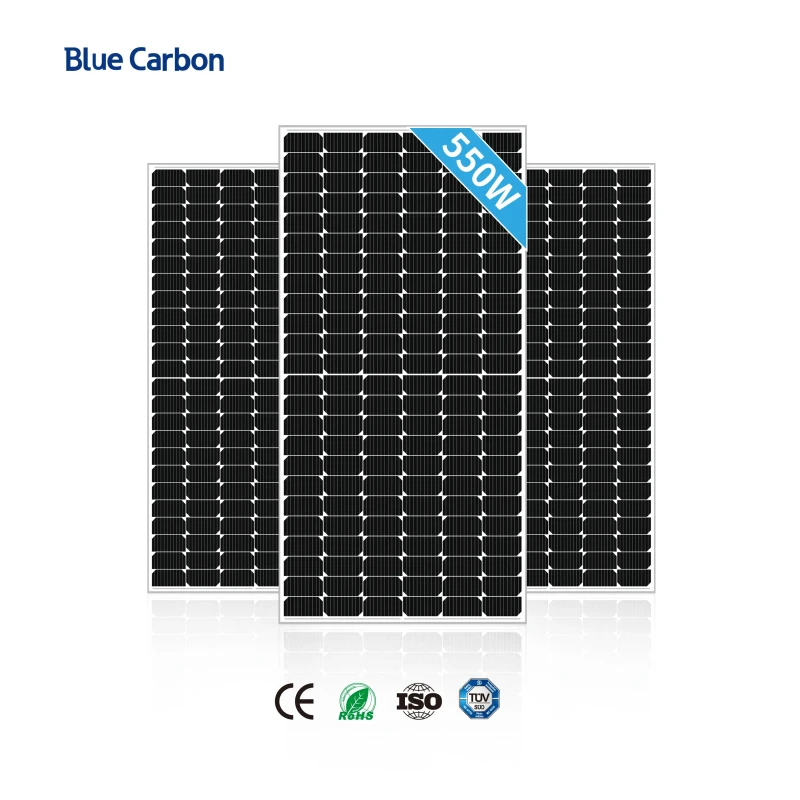
As a practical starting point, a solar array of
approximately 4.5kW–6kW may be considered for a 15.36kWh battery.
For example:
|
Solar panel rating |
Number of panels |
Total capacity |
|
550W |
9 |
4.95kW |
|
550W |
10 |
5.50kW |
|
650W |
8 |
5.20kW |
|
650W |
9 |
5.85kW |
|
650W |
10 |
6.50kW |
These are example array sizes, not guaranteed charging-time
recommendations. The inverter's maximum PV input voltage, current and power
limits must be checked before connecting the panels.
For Nigerian conditions, proper panel orientation, minimal
shading and suitable installation angles can make a significant difference to
energy production.
8. Is a 15kWh Blue Carbon Lithium Battery Worth
Buying?

The Blue Carbon 15.36kWh 48V stackable lithium battery with
Smart BMS is designed for energy-storage applications in residential and
commercial installations.
Its key considerations include:
- 15.36kWh
nominal storage capacity: Provides substantial energy storage for suitable
installations.
- 48V-class
battery configuration: Intended for compatible low-voltage inverter
systems.
- Smart
BMS: Helps manage battery voltage, current and temperature.
- Stackable
design: Supports system expansion where the specific battery model and
installation configuration permit it.
- Residential
and commercial applications: Suitable for appropriately designed backup
and solar-storage systems.
Before purchasing, confirm inverter compatibility,
communication protocol, charging and discharging limits, approved battery
configurations and the applicable warranty for the exact model.
You can learn more about the product here:
9. How Can You Make Your 15kWh Lithium Battery
Last Longer?
Here are practical ways to maximise your battery's backup
time:
- Use
energy-efficient LED lighting.
- Choose
inverter air conditioners where possible.
- Avoid
running multiple heavy appliances simultaneously.
- Switch
off appliances that are not in use.
- Ensure
your solar panels are correctly sized.
- Use
a compatible inverter and configure the battery according to the
manufacturer's specifications.
- Avoid
excessive battery discharge.
- Ensure
proper ventilation and installation.
- Have
your solar system inspected by a qualified technician.
- Monitor
your daily energy consumption to identify appliances using excessive
power.
10. Frequently Asked Questions
How many hours will a 15kWh lithium battery last?
It depends on your total load. At 1kW, a 15kWh battery can
theoretically provide 15 hours of power at full nominal capacity. Actual backup
time will be shorter after accounting for usable capacity and system losses.
Can a 15kWh battery power a 3-bedroom house?
Yes. It can power many three-bedroom homes, particularly
where the main loads are fans, lights, televisions, refrigerators and other
moderate-consumption appliances. Air conditioners and heavy appliances require
careful load planning.
Can a 15kWh lithium battery power two air conditioners?
Potentially, yes. However, the answer depends on the air
conditioners' actual power consumption, operating hours, inverter capacity and
other appliances connected to the system.
How long does it take to charge a 15kWh lithium battery?
Charging time depends on solar generation, inverter
charging capacity, battery charging limits and other loads. A 5.5kW solar array
does not necessarily deliver 5.5kW continuously throughout the day.
Can I expand my 15kWh battery system?
Some stackable battery models support expansion. However,
the batteries must be compatible, and the manufacturer-approved connection
arrangement and inverter limits must be followed.
How many years will a 15kWh lithium battery last?
Its service life depends on cell quality, usage,
temperature, charging conditions and BMS protection. Check the manufacturer's
cycle-life rating and warranty for the exact model rather than relying on a
general lifespan estimate.
Conclusion: Is a 15kWh Lithium Battery Enough
for Your Home?
A 15kWh lithium battery can provide reliable backup power
for many Nigerian homes and businesses. Depending on your energy consumption,
it may last several hours or more than a full day.
The most important factor is not simply the battery's
capacity but how efficiently you manage your electricity consumption.
For homeowners, businesses and commercial facilities
looking for dependable solar energy storage, BLUE CARBON offers lithium battery
and inverter solutions designed for different energy requirements.
Visit BLUE CARBON Nigeria to
explore available solar energy solutions.
For product enquiries, contact:
- Website:
https://bluecarbon.ng/
- Email:
enquires@bluecarbon.ng
- Phone: 09042103985
Tags: how long will a 15kWh lithium battery last, 15kWh
lithium battery in Nigeria, 15kWh battery backup time, Blue Carbon 15.36kWh
lithium battery, lithium battery for home in Nigeria
Recent Posts
How Long Will a 15kWh Lithium Battery Last? Complete Guide for Nigerian Homes and Businesses
BLUE CARBON Lithium Battery and Inverter Communication: Step-by-Step Guide
Best Solar Energy Company in Nigeria: What Should You Look For?