How Many Solar Panels Do You Need to Charge a 15kWh Lithium Battery?
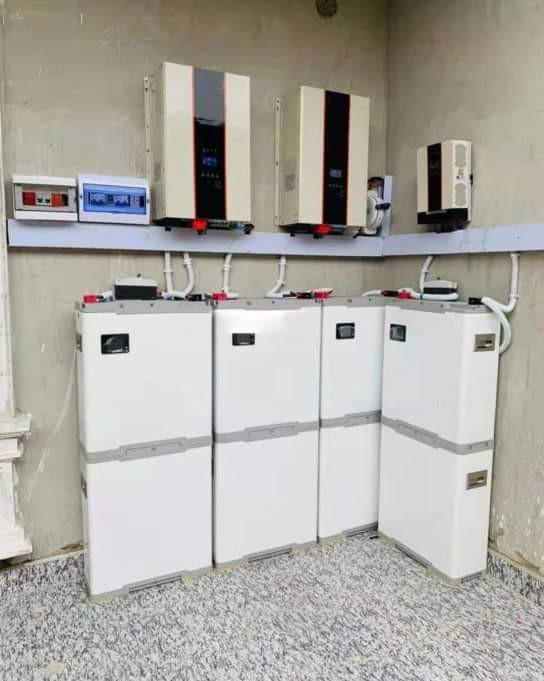
A 15kWh lithium battery is a suitable energy-storage option for larger homes, offices, commercial buildings and businesses that require more backup power. It can store electricity generated by solar panels during the day and supply energy when sunlight is unavailable or public electricity supply is interrupted.
But how many
solar panels do you need to charge a 15kWh lithium battery?
For a
typical 15kWh LiFePO₄ battery system in Nigeria, a solar array of approximately
4.5kW to 6kW is a useful starting point, depending on daily energy consumption,
sunlight conditions and the time available for charging.
For example:
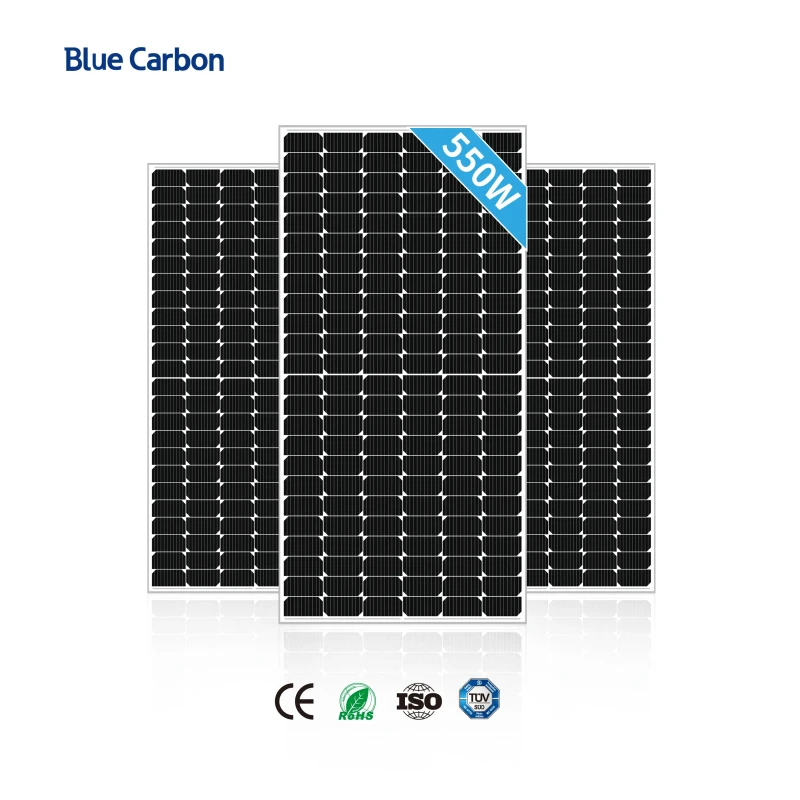
- 550W solar panels: approximately
9–11 panels.
- 650W solar panels: approximately
7–9 panels.
These
configurations provide approximately 4.95kW–6.05kW and 4.55kW–5.85kW
respectively.
However, the
correct number depends on more than battery capacity. You must also consider
solar panel performance, inverter specifications, battery charging limits,
daytime appliance consumption and seasonal weather conditions.
In this
guide, we explain how to calculate the required solar panel capacity, estimate
charging time and choose a suitable configuration for a BLUE CARBON 15kWh
lithium battery.
1.
Understanding a 15kWh Lithium Battery
A 15kWh
lithium battery has a nominal energy capacity of approximately 15
kilowatt-hours. This means it can theoretically store 15 units of electrical
energy.
For example,
a fully charged 15kWh battery could theoretically supply:
- 1,000W of load for 15 hours.
- 2,000W of load for 7.5 hours.
- 3,000W of load for 5 hours.
- 500W of load for 30 hours.
These are
simplified examples. Actual backup time will depend on usable battery capacity,
inverter efficiency, battery operating limits and the appliances connected.
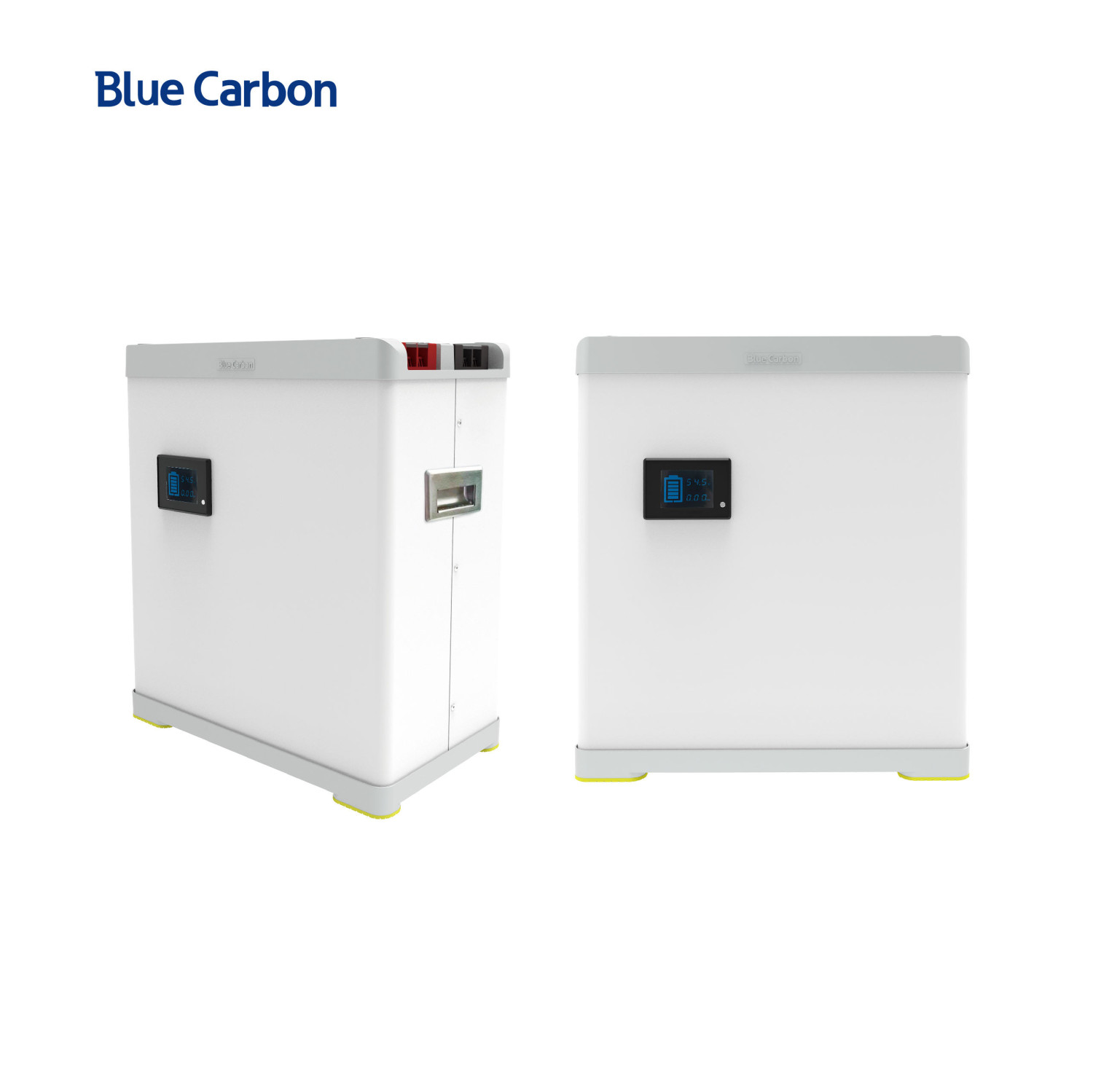
BLUE
CARBON's product range includes a 51.2V, 300Ah lithium battery configuration
with approximately 15.36kWh of nominal energy storage. This is commonly
described as a 15kWh-class battery.
Trusted
Source for Solar Energy Solutions+1
Its nominal
energy capacity can be calculated as follows:
\[ 51.2V
\times 300Ah = 15,360Wh \]
\[ =15.36kWh
\]
This is a
LiFePO₄ battery configuration designed for solar energy storage applications.
2. How
Many Solar Panels Are Needed for a 15kWh Lithium Battery?
The number
of solar panels depends on the wattage of each panel and the total solar
capacity required.
Here is a
comparison using 550W and 650W solar panels:
|
Solar
panel wattage |
Number
of panels |
Total
solar capacity |
|
550W |
6 |
3.3kW |
|
550W |
8 |
4.4kW |
|
550W |
9 |
4.95kW |
|
550W |
10 |
5.5kW |
|
550W |
11 |
6.05kW |
|
650W |
6 |
3.9kW |
|
650W |
7 |
4.55kW |
|
650W |
8 |
5.2kW |
|
650W |
9 |
5.85kW |
|
650W |
10 |
6.5kW |
For a
15.36kWh battery, a useful starting configuration is:
- 10 × 550W panels = 5.5kW
- 9 × 650W panels = 5.85kW
These
configurations provide a stronger charging capacity than smaller arrays and can
help replenish the battery while supporting some daytime electricity
consumption.
The final
design must still account for your location, weather conditions, daily loads
and inverter specifications.
3. How to
Calculate the Solar Panel Capacity Required
A useful
starting formula is:
\[
\text{Required Solar Capacity (kW)} = \frac{\text{Daily Energy Required
(kWh)}}{\text{Daily Solar Yield (kWh/kWp)}} \]
For example,
assume you want to replace 15.36kWh of battery energy and use an indicative
daily solar yield of 2.83kWh per installed kWp.
\[
\frac{15.36}{2.83}=5.43kW \]
This means
you would need approximately 5.43kW of solar panel capacity under those assumed
conditions.
A practical
configuration could be:
\[ 10 \times
550W = 5,500W = 5.5kW \]
Or:
\[ 9 \times
650W = 5,850W = 5.85kW \]
The
2.83kWh/kWp figure is an illustrative worst-month planning value for Ibadan,
not a guaranteed daily output. Solar conditions differ across Nigerian
locations and seasons.
ZEUS+1
Important:
The calculation assumes that the energy target is to replenish approximately
15.36kWh. If your appliances consume electricity during the day, the solar
panels must generate enough energy for both those appliances and battery
charging.
4. How
Many Hours Will It Take to Charge a 15kWh Battery?
Charging
time depends on the solar array's actual output, available sunshine, battery
state of charge and charging limits.
The
following table gives simplified estimates using 3.5 equivalent full-output
solar hours and the 15.36kWh nominal battery capacity.
|
Solar
configuration |
Total
capacity |
Simplified
charging estimate |
|
6 × 550W |
3.3kW |
4.4 hours |
|
8 × 550W |
4.4kW |
3.5 hours |
|
10 × 550W |
5.5kW |
2.8 hours |
|
11 × 550W |
6.05kW |
2.4 hours |
|
8 × 650W |
5.2kW |
3.0 hours |
|
9 × 650W |
5.85kW |
2.6 hours |
These are
theoretical energy-to-power estimates, not guaranteed real-world charging
times. They assume the array delivers its rated power for the stated equivalent
full-output hours. Actual charging time can be longer due to conversion losses,
temperature, clouds, battery charging limits and daytime loads.
A solar
installation should be designed to produce sufficient energy throughout the
day, rather than relying on peak panel output for a few minutes.
5. BLUE
CARBON 15.36kWh Lithium Battery: Specifications

BLUE
CARBON's official website lists a 15kWh-class lithium battery with the
following specifications:
|
Specification |
Published
details |
|
Product
model |
BCT-V-48-300 |
|
Nominal
voltage |
48V
(51.2V) |
|
Battery
capacity |
300Ah |
|
Nominal
energy |
15.36kWh |
|
Battery
chemistry |
LiFePO₄ |
|
Depth of
discharge |
Greater
than 80% |
|
Cycle life |
More than
6,000 cycles at the stated test condition |
|
Communication |
Depends on
model configuration |
|
Warranty |
Refer to
the applicable product documentation |
Source: BLUE
CARBON 15kWh Stackable Lithium Battery.
Blue
Carbon+2
The
battery's nominal energy capacity is calculated as follows:
51.2V times 300Ah = 15,360Wh
=15.36kWh
Its
published depth of discharge is greater than 80%. This means a substantial
proportion of its nominal capacity can be used, subject to the battery's
operating limits and settings.
For more
details, visit the official
BLUE CARBON 15kWh battery product page.
6.
Recommended Solar Panel Configurations for a 15kWh Battery
The
following configurations provide different levels of solar capacity for
customers considering a BLUE CARBON 15.36kWh lithium battery.
Recommended
starting option
Option A: 10
× 550W solar panels

5.5kW
Total
installed panel capacity
10 × 550W
A practical
configuration for a 15kWh-class battery where the system needs meaningful daily
charging capacity and may also support daytime appliances.
Option B: 9
× 650W solar panels

5.85kW
Total
installed panel capacity
9 × 650W
Provides a
similar but slightly higher rated capacity with fewer panels, potentially
reducing mounting space requirements.
Option C: 11
× 550W solar panels

6.05kW
Total
installed panel capacity
11 × 550W
Offers
additional solar generation capacity for systems with higher daytime
consumption or a need for more charging headroom.
These are
preliminary energy-sizing options, not automatic recommendations for every
inverter. Panel string arrangements must be checked against the inverter's
maximum PV voltage, MPPT operating range, maximum input current and permitted
PV power.
7. Can a
6kW Inverter Charge a 15kWh Lithium Battery?
Yes. A 6kW
inverter can be used with a 15kWh lithium battery if the battery voltage,
charging current, inverter specifications and BMS compatibility are suitable.
BLUE CARBON
also lists an all-in-one 6kW/15kWh solar power station with a 6kW inverter and
15kWh battery configuration. Its published specifications include a maximum PV
input power of 6,000W, an MPPT operating range of 120–450V and a maximum PV
open-circuit voltage of 500V.
Blue Carbon

This is a
useful example of a system in which the inverter and battery are offered as an
integrated solution.
However, do
not assume that every 6kW inverter supports the same solar panel configuration.
Always check the exact model's technical datasheet before connecting the
panels.
8.
Factors That Affect the Charging Performance of a 15kWh Battery
Even with a
large solar array, several factors can affect how quickly your battery charges.
1. Weather
conditions
Cloud cover
and rainfall reduce solar generation. This is particularly important during
Nigeria's rainy season.
2. Solar
panel orientation
Panels
should be positioned at an appropriate angle and orientation to maximise
exposure to sunlight.
3. Shading
Buildings,
trees and other obstructions can reduce panel output. Avoid unnecessary shading
when planning your installation.
4. Daytime
electricity consumption
If your
appliances are running during the day, part of the solar energy will be used
directly rather than stored in the battery.
5. Battery
charging limits
The
battery's BMS controls charging within its permitted voltage and current
limits. An oversized solar array does not mean the battery can accept unlimited
charging power.
6. Inverter
efficiency
Energy is
lost during electrical conversion and system operation. The inverter and charge
controller must be included in the overall design.
7. Solar
panel temperature and cleanliness
High panel
temperatures, dust and dirt can reduce energy production. Regular inspection
and cleaning help maintain performance.
9. Common
Mistakes to Avoid When Installing a 15kWh Solar Battery System
To achieve
reliable performance, avoid these common mistakes:
- Installing too few solar panels
for the required daily energy.
- Assuming advertised panel
wattage is the same as continuous power output.
- Ignoring the inverter's maximum
PV input voltage.
- Exceeding the inverter's maximum
solar input current.
- Connecting incompatible lithium
batteries and inverters.
- Failing to account for daytime
appliance consumption.
- Ignoring rainy-season
performance.
- Using unsuitable cables, circuit
breakers and protective devices.
- Assuming a 15kWh battery will
always deliver 15kWh of usable AC electricity.
A properly
designed solar system should consider the battery, inverter, solar panels,
cables, protection devices and expected electricity consumption as one
integrated installation.
10.
Frequently Asked Questions
How many
550W solar panels do I need for a 15kWh battery?
Ten 550W
solar panels provide 5.5kW of installed solar capacity. This is a useful
starting configuration for a 15.36kWh battery system. Eleven panels provide
6.05kW and offer additional generation capacity.
How many
650W solar panels do I need for a 15kWh battery?
Nine 650W
solar panels provide 5.85kW of installed capacity. This is another useful
starting configuration, subject to inverter compatibility and the site's solar
conditions.
Can six
550W panels charge a 15kWh lithium battery?
Yes. Six
panels provide 3.3kW of solar capacity and can charge the battery. However,
charging will generally take longer, and the system may not replace the full
battery energy every day, particularly during periods of reduced sunlight.
How many
units of electricity can a 15kWh battery provide?
A 15.36kWh
battery has 15.36 units of nominal stored energy. The amount available to
appliances is lower after applying the battery's permitted depth of discharge
and inverter conversion losses.
Can a
15kWh lithium battery power a 2HP air conditioner?
Yes,
depending on the air conditioner's actual electricity consumption, inverter
capacity and the number of hours of operation. You must also consider the
starting current and other appliances connected to the system.
Is a 5kW
solar array enough for a 15kWh battery?
It can
charge the battery, but whether it can fully recharge it daily depends on the
available sunlight, system losses and daytime electricity consumption. A larger
array may be necessary for more reliable daily replenishment.
Can I
expand my solar panels later?
Yes,
provided the inverter supports additional PV capacity and the existing string
configuration remains within the permitted voltage and current limits.
Conclusion:
Choose the Right Solar Panel Capacity for Your 15kWh Battery
A 15kWh
lithium battery requires an appropriately sized solar array to achieve reliable
charging and support your daily electricity requirements.
As practical
starting configurations:
- 10 × 550W panels = 5.5kW
- 9 × 650W panels = 5.85kW
- 11 × 550W panels = 6.05kW
These
configurations offer useful solar generation capacity for a 15.36kWh battery,
although the final design should be based on your location, daily consumption,
charging requirements and inverter specifications.
BLUE CARBON
provides lithium battery storage solutions, solar panels and solar inverter
products for residential and commercial applications.
Whether you
are planning a solar installation for your home, office, hotel, business or
industrial facility, choose a system that is properly sized to meet your
electricity requirements.
Contact BLUE
CARBON NIGERIA today for product information, technical guidance and
quotations.
BLUE CARBON
NIGERIA – Powering Your World, Building a Brighter Future.
- Website: https://bluecarbon.ng/
- Telephone: 09042103985
- Email: enquires@bluecarbon.ng
Tags: how
many solar panels for 15kWh battery, 15kWh lithium battery charging, 550W solar
panels Nigeria, 650W solar panels Nigeria, Blue Carbon 15kWh lithium battery
Recent Posts
BLUE CARBON Lithium Battery and Inverter Communication: Step-by-Step Guide
Best Solar Energy Company in Nigeria: What Should You Look For?