
Types of Solar Panels and Their Advantages
Solar energy has become one of the most reliable and cost-effective solutions for powering homes, businesses, and industries. At the heart of every solar power system are solar panels, the components responsible for converting sunlight into usable electricity.
However, not all solar panels are
the same. Different types of solar panels vary in efficiency, durability, cost,
and suitability for specific applications. Understanding these differences
helps users choose the right panel for maximum performance and long-term value.
In this article, we explore the main
types of solar panels and their advantages, helping you make an informed
decision when investing in solar energy.
What
Are Solar Panels and How Do They Work?
Solar panels are made up of
photovoltaic (PV) cells that capture sunlight and convert it into electrical
energy. When sunlight hits the PV cells, it excites electrons, creating a flow
of electricity known as direct current (DC). This DC electricity is then
converted into alternating current (AC) by an inverter for use in
appliances and equipment.
The type of PV cell used determines
the panel’s efficiency, appearance, cost, and durability.
Main
Types of Solar Panels
There are three primary types of
solar panels used globally:
- Monocrystalline solar panels
- Polycrystalline solar panels
- Thin-film solar panels
Each type has unique features and
advantages depending on usage requirements.
1.
Monocrystalline Solar Panels
Overview
Monocrystalline solar panels are
made from a single, pure silicon crystal. They are easily recognized by their
dark black appearance and uniform structure.
Advantages
of Monocrystalline Panels
High
Efficiency
Monocrystalline panels have the
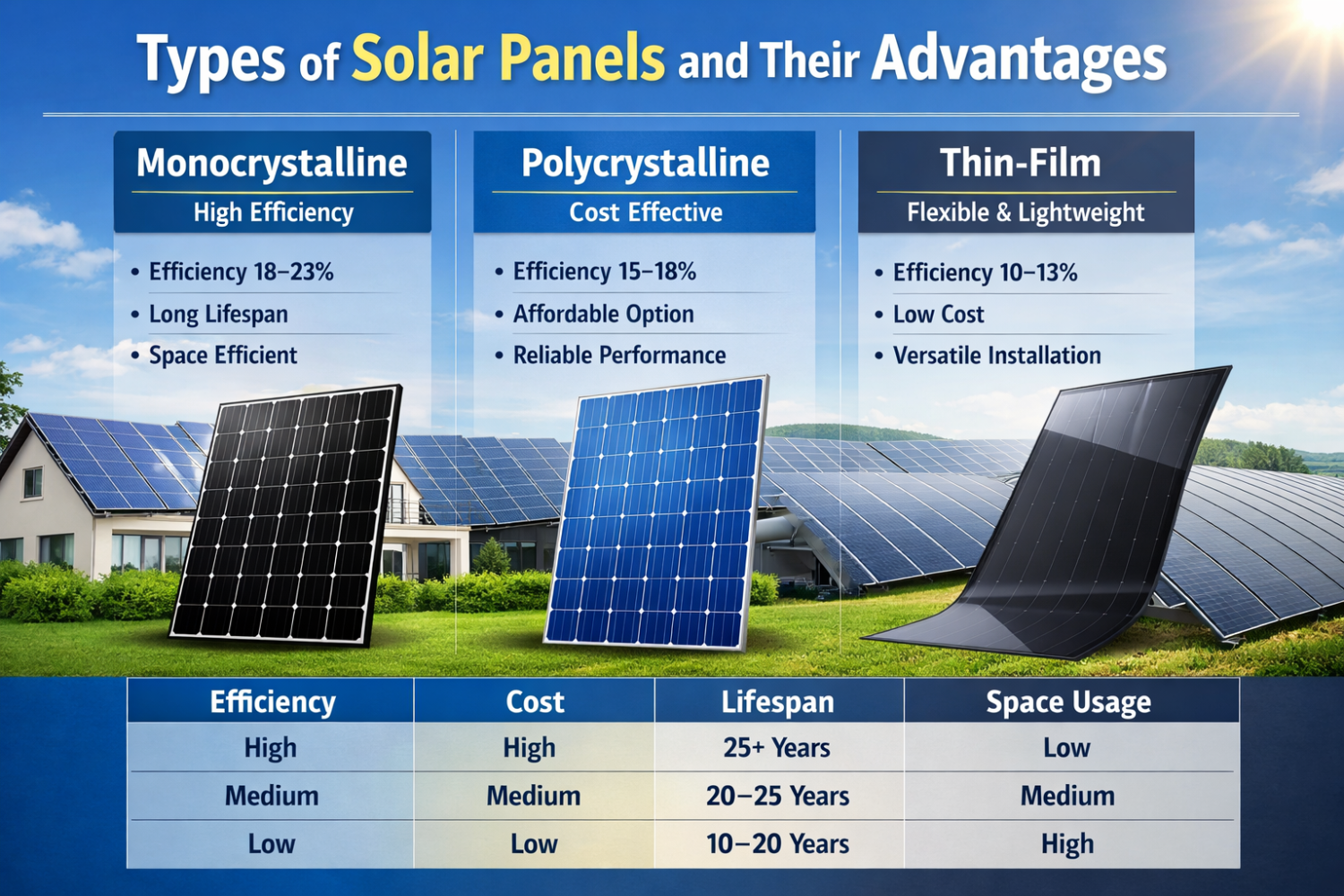
highest efficiency rates, often ranging between 18% and 23%, meaning
they produce more power per square meter.
Space
Efficiency
Because of their high efficiency,
fewer panels are needed to generate the same amount of energy, making them
ideal for limited rooftop space.
Long
Lifespan
These panels typically last 25
years or more, with minimal performance degradation over time.
Better
Performance in Low Light
They perform better in cloudy
conditions and early morning or late evening sunlight.
Premium
Aesthetics
Their sleek, uniform design makes
them visually appealing for residential and commercial installations.
Best
Applications
- Homes with limited roof space
- Commercial rooftops
- Industrial facilities seeking high efficiency
2.
Polycrystalline Solar Panels
Overview
Polycrystalline panels are made from
multiple silicon fragments melted together. They have a bluish appearance and a
less uniform look compared to monocrystalline panels.
Advantages
of Polycrystalline Panels
Cost-Effective
They are generally more affordable
due to a simpler manufacturing process.
Reliable
Performance
Although slightly less efficient,
polycrystalline panels provide consistent energy output in most climates.
Environmentally
Friendly Manufacturing
The production process generates
less waste compared to monocrystalline panels.
Durable
Construction
These panels are designed to
withstand harsh environmental conditions.
Efficiency
Range
Typically between 15% and 18%,
making them suitable for installations with sufficient space.
Best
Applications
- Residential homes
- Small to medium commercial buildings
- Budget-conscious solar projects
3.
Thin-Film Solar Panels
Overview
Thin-film panels are made by
depositing photovoltaic material onto a surface such as glass, metal, or
plastic. They are lightweight and flexible compared to crystalline panels.
Advantages
of Thin-Film Panels
Lightweight
and Flexible
Thin-film panels can be installed on
surfaces that cannot support heavy panels.
Easy
Installation
Their flexibility allows for quick
installation on curved or irregular surfaces.
Better
High-Temperature Performance
Thin-film panels perform well in
high temperatures, with less efficiency loss.
Lower
Initial Cost
They are often cheaper upfront
compared to crystalline panels.
Efficiency
Range
Typically 10% to 13%, which
means more space is required to produce the same power.
Best
Applications
- Large-scale solar farms
- Industrial rooftops with large surface areas
- Specialized or portable solar solutions
Other
Specialized Solar Panel Technologies
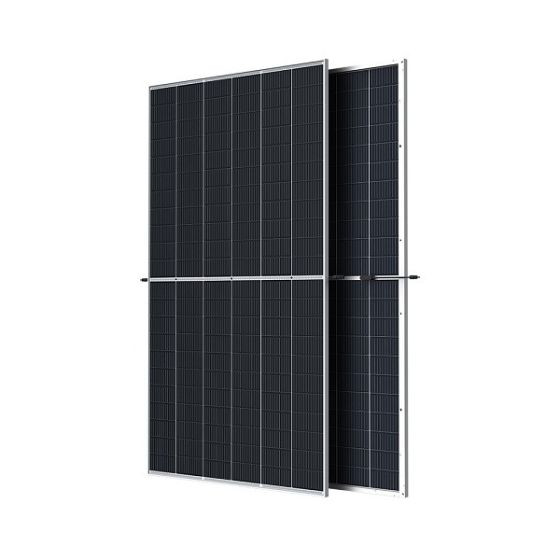
Bifacial
Solar Panels
- Capture sunlight from both front and back
- Higher energy yield
- Ideal for ground-mounted systems
PERC
Solar Panels
- Enhanced efficiency through improved cell design
- Better performance in low-light conditions
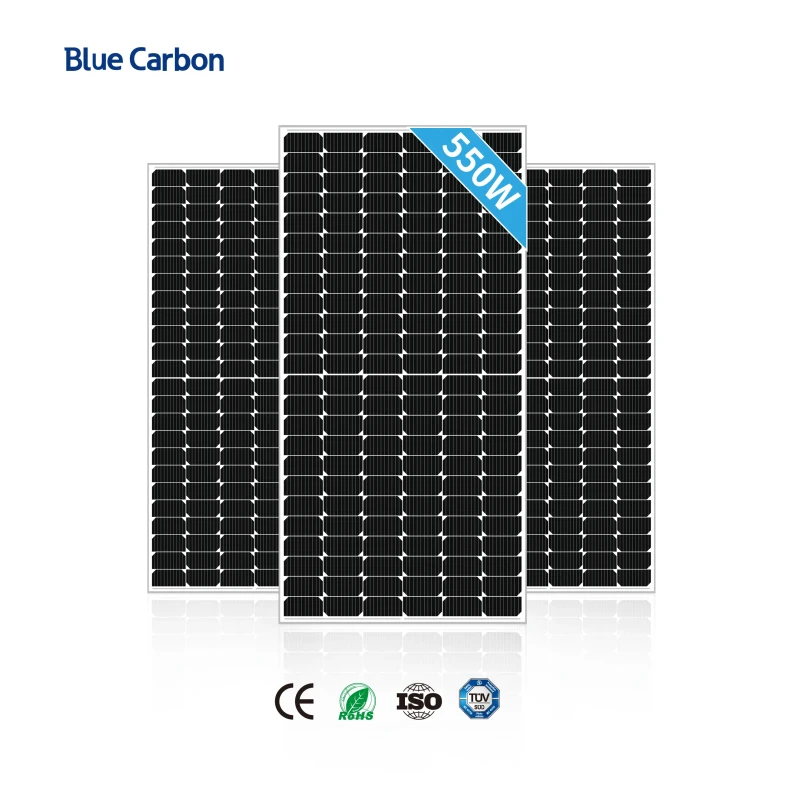
Half-Cut
Cell Panels
- Reduced power loss
- Improved shade tolerance
- Increased durability
Comparing
Solar Panel Types
|
Feature |
Monocrystalline |
Polycrystalline |
Thin-Film |
|
Efficiency |
High |
Medium |
Low |
|
Cost |
High |
Medium |
Low |
|
Space Requirement |
Low |
Medium |
High |
|
Lifespan |
25+ years |
20-25 years |
10-20 years |
|
Appearance |
Sleek black |
Blue |
Varies |
Factors
to Consider When Choosing Solar Panels
1.
Available Space
Limited space favors high-efficiency
panels.
2.
Budget
Lower budgets may opt for
polycrystalline or thin-film panels.
3.
Energy Demand
High consumption requires efficient
and durable panels.
4.
Climate Conditions
Panel performance varies with
temperature and sunlight availability.
5.
Long-Term Value
Higher-quality panels provide better
long-term savings.
Advantages
of Choosing the Right Solar Panel Type
- Maximized energy production
- Lower electricity costs
- Reduced system size requirements
- Longer system lifespan
- Higher return on investment
Selecting the right panel ensures
optimal system performance and long-term reliability.
Durability
and Warranty Considerations
Most quality solar panels come with:
- Performance warranties of 20-25 years
- Product warranties
covering defects
High-quality panels degrade slowly,
typically losing only 0.3%-0.7% efficiency per year.
Conclusion
Understanding the types of solar
panels and their advantages is essential when investing in solar energy.
Monocrystalline panels offer superior efficiency and durability,
polycrystalline panels balance cost and performance, while thin-film panels
provide flexibility and lightweight solutions.
The right choice depends on your
energy needs, budget, available space, and long-term goals. With proper
selection and installation, solar panels can deliver clean, reliable energy for
decades.
Solar energy is not just about going
green-it’s about choosing the right technology for lasting value and
performance.
Recent Posts
High Voltage vs Low Voltage Energy Storage Systems: How to Choose the Right Solution with Blue Carbon
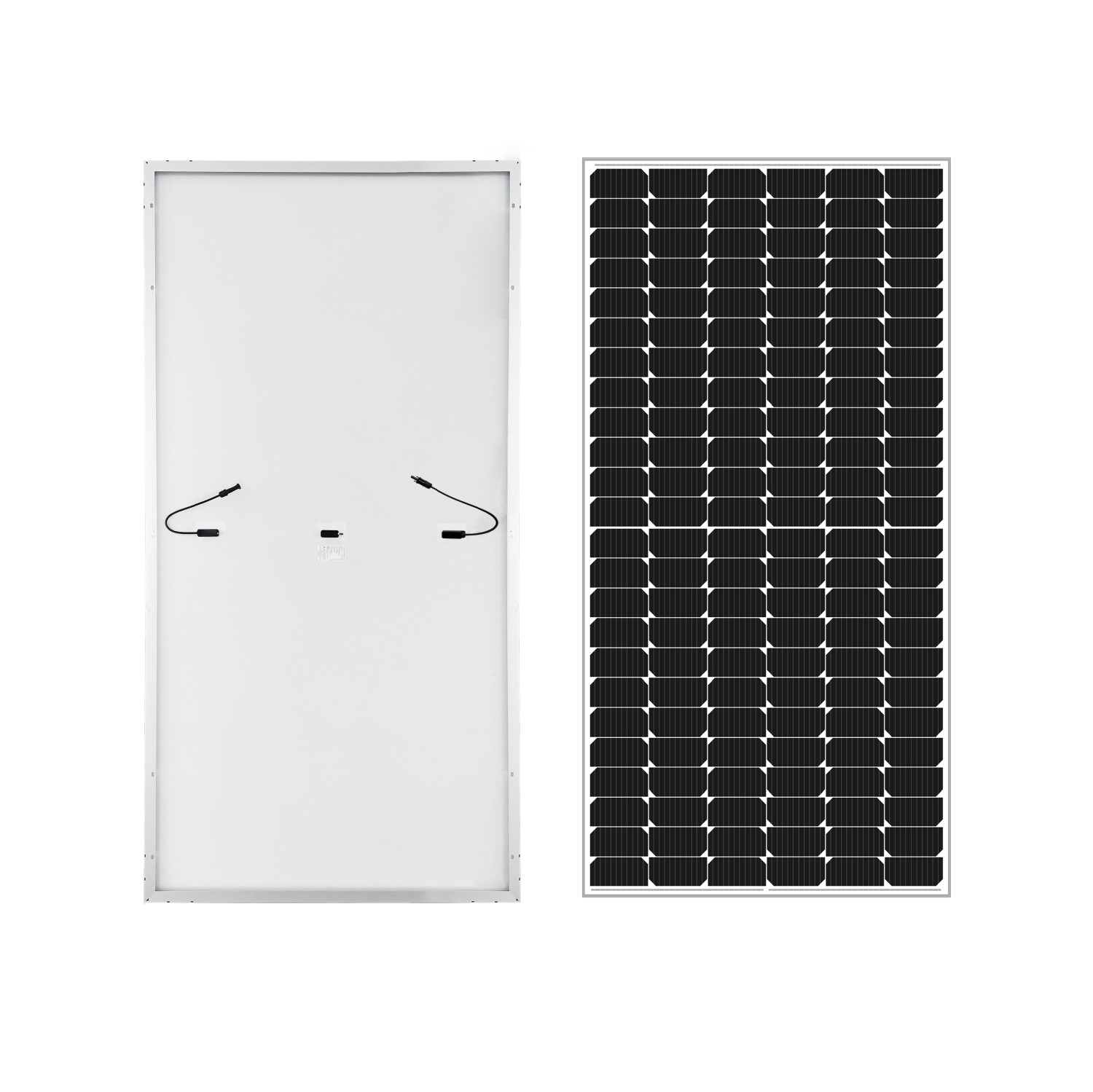
Register Your Blue Carbon Product for Warranty to Gain Access to Warranty Support
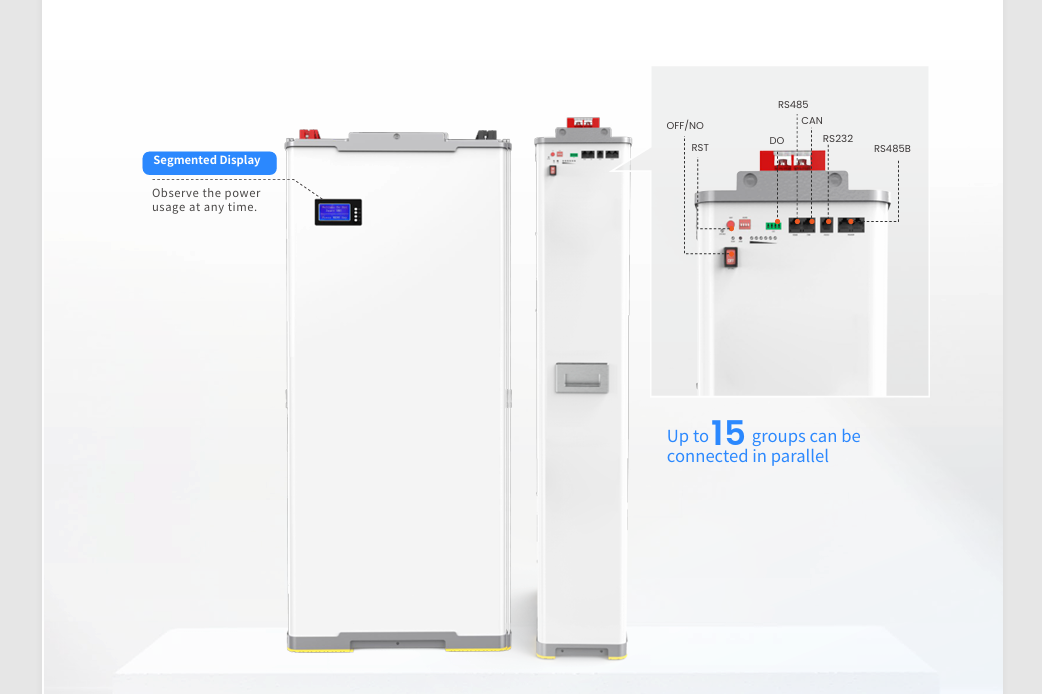
Blue Carbon Lithium Batteries: New Arrival with Smart BMS Specially Designed to Give Our Customers the Best Experience
How to Manage Your Solar System During the Rainy Season to Increase Backup Time
LiFePO₄ vs NMC Batteries: Which Is Better for Energy Storage Projects?