5kWh vs 10kWh vs 15kWh Lithium Battery: Which One Is Right for Your Home?
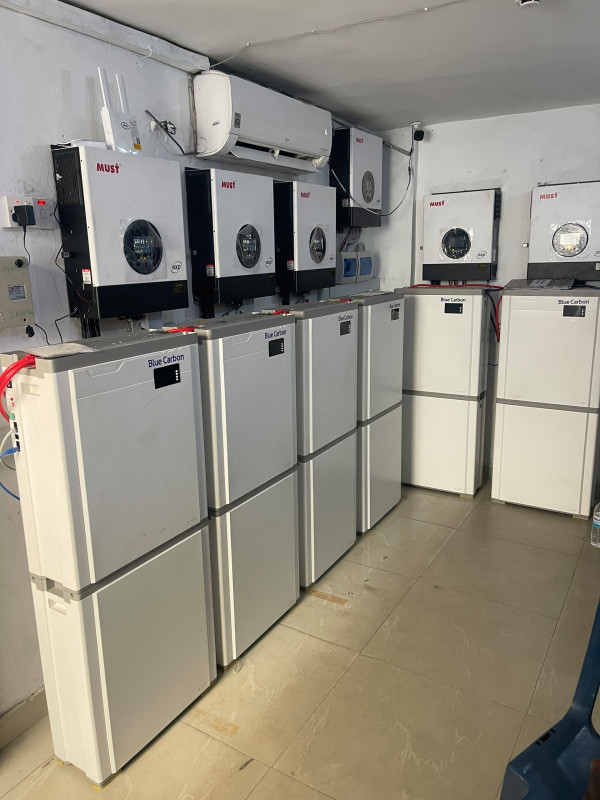
In an era where power grid instability, rising electricity tariffs, and noisy, high-maintenance generators dominate daily life, transitioning to solar energy is no longer a luxury—it is an absolute necessity. However, when building a reliable off-grid or hybrid solar setup, most homeowners spend the majority of their time researching solar panels and inverter capacities, often treating energy storage as an afterthought.
The reality
of modern renewable energy engineering is simple: Storage is the Source.
Your solar
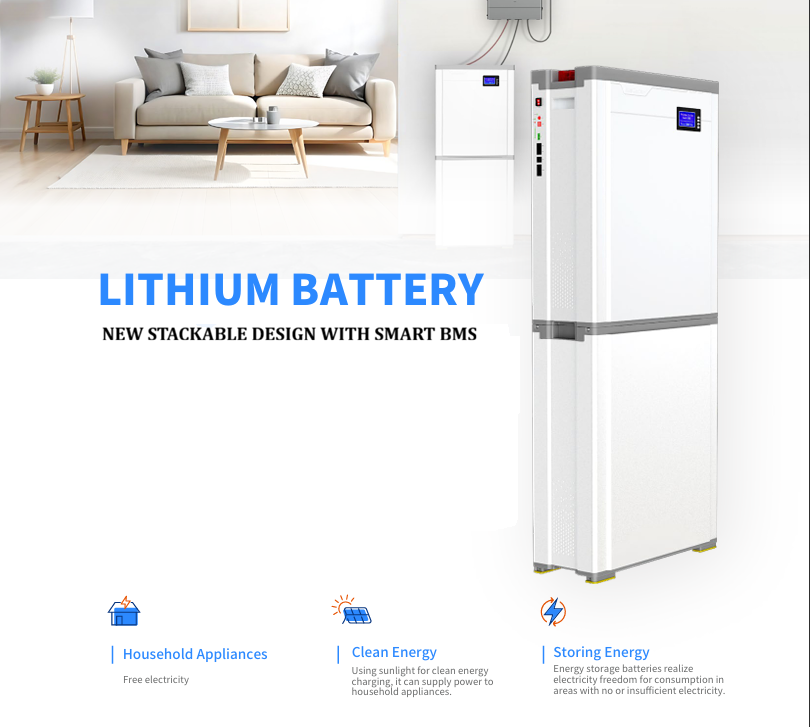
panels harvest sunlight during peak daylight hours, but your energy storage
system dictates how cleanly, comfortably, and reliably your household runs when
the sun goes down or grid power fails. Choosing the wrong lithium battery
capacity can leave you stuck in the dark mid-way through the night or force you
into overspending on capacity you will never use.
Among
residential solar installations today, three specific capacities dominate the
market: 5kWh, 10kWh, and 15kWh Lithium Iron Phosphate (LiFePO4) batteries.
In this
comprehensive guide, we will break down the engineering principles behind
kilowatt-hours (kWh), analyze what each capacity can actually power in a
real-world home, compare their long-term value, and help you determine
precisely which system delivers true energy freedom for your household.
1.
Understanding Kilowatt-Hours (kWh): The Basics of Energy Storage
Before
choosing a battery capacity, it is essential to understand what a
"kilowatt-hour" represents and how it measures energy storage.
A kilowatt-hour
(kWh) measures the total amount of energy an electrical device consumes—or
a battery delivers—over time. One kilowatt-hour is equivalent to 1,000 watts of
power used continuously for one hour.
To put this
into practical residential context:
- Running a 100-watt TV
continuously for 10 hours consumes 1 kWh of electricity (
 ).
- Running a 1,500-watt (1.5 HP)
inverter air conditioner for 4 hours consumes 6 kWh of electricity
(
 ).
Why
LiFePO4 Lithium Technology Matters
Not all
battery energy is created equal. Older lead-acid and gel batteries only allowed
a 50% Depth of Discharge (DoD) without causing permanent internal plate
degradation. This meant a nominal 10kWh lead-acid bank could only provide 5kWh
of usable energy.
Modern Lithium
Iron Phosphate (LiFePO4) batteries, by contrast, offer up to 90%–95%
usable DoD alongside exceptional thermal stability and a lifespan exceeding
4,000 to 6,000+ cycles (10 to 15 years of daily use). When evaluating 5kWh,
10kWh, or 15kWh LiFePO4 batteries, you are getting almost 100% of the nominal
energy stated on the unit's technical rating plate.
2. The
5kWh Lithium Battery: Essential Energy Backup for Small Homes
A 5kWh
lithium battery serves as the entry point for high-performance residential
energy storage. It is specifically engineered for basic load management, small
apartments, or homeowners looking to eliminate daily blackouts without heavy
capital expenditure.
+-------------------------------------------------+
| 5kWh LiFePO4 BATTERY |
|
Ideal for 1-2 Bedroom Apartments & Essentials |
+-------------------------------------------------+
|
+-----------------------+-----------------------+
|
|
v
v
[Essential Loads] [Recommended
Setup]
• House Lighting • 3kVA - 5kVA
Inverter
• Standing/Ceiling Fans • 1.5kW - 2.5kW Solar
Array
• TV, Sound System, Wi-Fi • 6-10 Hours Runtime
• Refrigerator / Small Freezer
Typical
Household Fit
- Home Type: 1–2 bedroom apartments, small
residential bungalows, or compact off-grid cabins.
- Occupancy: 1 to 3 occupants with basic,
non-heavy electrical routines.
What Can
a 5kWh Battery Power Simultaneously?
A single
5kWh setup is optimized to support essential low-to-medium draw appliances
without thermal overload:
- Full indoor and outdoor LED
lighting across the apartment.
- 3 to 4 standing or ceiling fans.
- Home entertainment center
(55-inch Smart TV, decoder, Wi-Fi router, soundbar).
- Laptops, mobile devices, and
home office workstations.
- 1 energy-efficient single-door
or double-door refrigerator.
Runtime
Performance
Under an
average continuous load of 500W to 800W, a 5kWh lithium battery delivers 6
to 10 hours of continuous power on a full charge.
Inverter
& Solar Panel Pairing
- Inverter Match: 3kVA to 5kVA single-phase
hybrid or off-grid inverter (24V or 48V systems).
- Solar Array Recommendation: 1.5kW to 2.5kW of
high-efficiency N-TYPE TOPCon solar panels (approx. 3 to 5 panels rated at
580W+).
The
Verdict on 5kWh Systems
Pros: Highly affordable, compact
wall-mounted or stackable designs, fast recharge times, and complete
elimination of generator noise for essential daily living.
Cons: Cannot sustain heavy inductive loads
like standard air conditioners, electric water heaters, or high-draw pumping
machines for extended periods.
3. The
10kWh Lithium Battery: The Sweet Spot for Standard Family Homes
The 10kWh
lithium battery configuration represents the industry benchmark for
standard family residences. It bridges the gap between basic backup and full
household luxury, offering sufficient energy reserve to power heavy appliances
overnight.
+-------------------------------------------------+
| 10kWh LiFePO4 BATTERY |
|
The Sweet Spot for 3-4 Bedroom Family Homes |
+-------------------------------------------------+
|
+-----------------------+-----------------------+
|
|
v
v
[Comfort & Heavy Loads] [Recommended Setup]
• All Essential Electronics • 5kVA - 8kVA Inverter
• Double-Door Fridges & Deep Freezers • 3.5kW - 5.5kW Solar Array
• 1-2 Inverter ACs (1HP / 1.5HP) • 10-16 Hours Runtime
• Intermittent Water Pumping
Typical
Household Fit
- Home Type: 3–4 bedroom detached bungalows,
semi-detached duplexes, or suburban family residences.
- Occupancy: 3 to 6 occupants requiring 24/7
power for work, school, and domestic comfort.
What Can
a 10kWh Battery Power Simultaneously?
A 10kWh
capacity gives homeowners freedom from aggressive load-shedding, comfortably
handling inductive and resistive equipment:
- All indoor/outdoor lighting,
fans, security systems, and CCTV.
- Home entertainment centers and
multiple home office workstations.
- Double-door refrigerators and
large chest freezers.
- 1 to 2 energy-efficient Inverter
Air Conditioners (1HP or 1.5HP) running throughout the night.
- Intermittent operation of a 1HP
water pumping machine during peak daytime solar generation or full battery
reserve.
Runtime
Performance
Under a
moderate continuous load (approx. 800W to 1,200W), a 10kWh battery provides 10
to 16 hours of autonomy. When running a 1.5HP inverter AC alongside
baseline lighting and refrigeration (approx. 1,500W load), it yields 5 to 8
hours of continuous overnight operation.
Inverter
& Solar Panel Pairing
- Inverter Match: 5kVA to 8kVA pure sine wave
hybrid inverter (48V nominal DC input).
- Solar Array Recommendation: 3.5kW to 5.5kW of N-TYPE TOPCon
solar modules (approx. 6 to 10 panels rated at 580W+).
The
Verdict on 10kWh Systems
Pros: Excellent balance of cost, capacity,
and lifestyle comfort. Allows overnight air conditioning, powers heavy
refrigeration, and protects against extended multi-day grid failures when
paired with adequate solar panels.
Cons: Requires disciplined load management
if running multiple AC units or heavy kitchen appliances simultaneously during
power blackouts.
4. The
15kWh Lithium Battery: Complete Energy Autonomy & High-Demand Living
For large
estates, luxury duplexes, and home-based commercial operations, the 15kWh
lithium battery delivers total grid independence. It eliminates energy
anxiety entirely, allowing occupants to utilize modern appliances without
constant monitoring.
+-------------------------------------------------+
| 15kWh LiFePO4 BATTERY |
| Full Energy Autonomy for Large
Duplexes & Offices|
+-------------------------------------------------+
|
+-----------------------+-----------------------+
|
|
v v
[Unrestricted Loads] [Recommended Setup]
• 2-3 Inverter ACs (1.5HP / 2HP) • 8kVA - 12kVA Inverter
• Multiple Fridges, Freezers & Kitchen
Apps • 6.0kW - 9.0kW Solar Array
• Water Pressure Pumps & Washing
Machines • 18-24+ Hours Runtime
• Full CCTV, Security & Smart Home Hubs
Typical
Household Fit
- Home Type: 4+ bedroom fully detached
duplexes, multi-story family homes, luxury residential compounds, or
combined home-and-office spaces.
- Occupancy: Large families, active
households, or professionals operating high-draw servers and equipment
from home.
What Can
a 15kWh Battery Power Simultaneously?
A 15kWh
energy storage system provides uncompromising power output:
- Unrestricted lighting,
entertainment systems, and smart home automation infrastructure.
- Multiple high-capacity
double-door fridges and deep freezers.
- 2 to 3 Inverter Air Conditioners
(1.5HP to 2HP)
running concurrently.
- Automated water pressure pumps,
washing machines, microwaves, blenders, and water dispensers.
- Heavy perimeter lighting and
multi-camera CCTV security systems.
Runtime
Performance
Under normal
continuous household usage without active air conditioning (around 750W draw),
a 15kWh setup delivers 18 to 24+ hours of autonomy. Under heavy
residential load including multiple ACs and refrigeration (approx. 2,500W
continuous draw), it comfortably provides 6 to 9 hours of continuous
runtime.
Inverter
& Solar Panel Pairing
- Inverter Match: 8kVA, 10kVA, or 12kVA
low-frequency or high-efficiency transformerless hybrid inverters (48V DC
nominal).
- Solar Array Recommendation: 6.0kW to 9.0kW of N-TYPE TOPCon
solar panels (approx. 10 to 16 panels rated at 580W+).
The
Verdict on 15kWh Systems
Pros: Ultimate energy security, seamless
support for heavy inductive loads, zero lifestyle compromises during prolonged
grid failure, and high scalability for commercial-grade residential setups.
Cons: Requires a higher initial financial
investment and demands a larger dedicated wall or floor installation footprint.
5.
Side-by-Side Comparison: 5kWh vs 10kWh vs 15kWh
To help you
visualize how these three storage capacities compare directly, review the
comprehensive specs and application matrix below:
|
Technical
& Operational Feature |
5kWh
Lithium Battery |
10kWh
Lithium Battery |
15kWh
Lithium Battery |
|
Primary
Target Application |
1–2
Bedroom Apartments |
3–4
Bedroom Family Homes |
4+ Bedroom
Duplexes & Estates |
|
Nominal
Voltage |
25.6V or
51.2V |
51.2V |
51.2V |
|
Usable
Energy (at 90% DoD) |
~4.5 kWh |
~9.0 kWh |
~13.5 kWh |
|
Air
Conditioner Support |
❌ Not Recommended |
✅ 1–2 Inverter ACs (1HP–1.5HP) |
✅ 2–3 Inverter ACs (1.5HP–2HP) |
|
Water
Pumping Support |
⚠️ Limited / Intermittent |
✅ Standard 1HP Water Pump |
✅ Multiple Pumps / Pressure Systems |
|
Average
Runtime (Essential Load) |
6–10 Hours |
10–16
Hours |
18–24+
Hours |
|
Average
Runtime (Heavy Load w/ AC) |
N/A |
5–8 Hours |
6–9 Hours |
|
Recommended
Inverter Capacity |
3kVA –
5kVA |
5kVA –
8kVA |
8kVA –
12kVA |
|
Recommended
Solar Array Size |
1.5kW –
2.5kW |
3.5kW –
5.5kW |
6.0kW –
9.0kW |
|
Scalability
(Parallel Connection) |
✅ Yes |
✅ Yes |
✅ Yes |
6. How to
Calculate Your Home's Exact Battery Requirements
While the
baseline recommendations above apply to most standard residential floor plans,
calculating your actual daily watt-hour (Wh) load ensures absolute precision
before purchase.
Step-by-Step
Load Audit Formula

Example
Calculation Table:
- LED Lights:

- Standing Fans:

- Smart TV & Wi-Fi:

- Refrigerator:

- 1.5HP Inverter AC:


In this
scenario, a 5kWh battery would fail rapidly under the 11.5kWh
requirement. A 10kWh battery would handle the load if solar panels
supplement generation during daytime hours, while a 15kWh battery would
store enough energy to cover the entire day and night smoothly without grid
support.
7. The
Modular Advantage: Start Small and Scale Up
One of the
greatest engineering benefits of modern LiFePO4 lithium batteries is modular
scalability via parallel expansion.
Unlike older
lead-acid batteries—which could not be safely mixed with new batteries after a
few months of degradation—lithium storage units feature intelligent internal Battery
Management Systems (BMS). This smart architecture allows you to connect
multiple battery units in parallel without risk of cross-charging or cell
imbalance.
+-------------------------------------------------+
| MODULAR PARALLEL EXPANSION |
+-------------------------------------------------+
|
[5kWh Unit] --->
Add [5kWh Unit] ---> 10kWh Bank
|
[10kWh Unit] ---> Add [5kWh Unit] --->
15kWh Bank
- Phase 1: Install a single 5kWh or
10kWh LiFePO4 unit today based on your immediate budget.
- Phase 2: As your family grows, your
financial bandwidth expands, or your power needs increase, purchase a
second matching unit.
- Phase 3: Connect the units via standard
parallel communication bus bars to instantly double or triple your usable
capacity (e.g., combining two 5kWh units to build a 10kWh system, or
adding 5kWh to a 10kWh bank to reach 15kWh).
8.
Summary Checklist: Which Battery Capacity Should You Buy?
To make your
final decision straightforward, use this quick checklist:
Choose a
5kWh Lithium Battery if:
- You live in a 1 or 2 bedroom
apartment or compact home.
- Your priority is powering
lights, fans, TVs, laptops, and a single fridge.
- You do not plan to run air
conditioners or water pumps on battery power.
- You are operating on a strict
initial budget and want an expandable starter system.
Choose a
10kWh Lithium Battery if:
- You live in a standard 3 or 4
bedroom family bungalow or duplex.
- You want continuous 24/7 power
for all baseline electronics and large fridges.
- Running at least one inverter
air conditioner through the night is non-negotiable for comfort.
- You want the industry's most
cost-effective blend of performance and energy reserve.
Choose a
15kWh Lithium Battery if:
- You live in a 4+ bedroom estate,
multi-story duplex, or high-consumption home.
- You need to power 2 to 3 air
conditioners, water pumps, freezers, and heavy domestic appliances
concurrently.
- You experience multi-day grid
blackouts and require complete off-grid energy independence.
- You prefer zero load-management rules and total peace of mind.
Visit BLUE CARBON Nigeria to explore available products and solar energy solutions.
For enquiries:
- Website: https://bluecarbon.ng/
- Email: enquires@bluecarbon.ng
- Phone: 09042103985
Tags:5kWh vs 10kWh vs 15kWh lithium battery, solar battery capacity for home, LiFePO4 lithium battery runtime, energy storage system guide, solar battery sizing calculation
Recent Posts
5kWh vs 10kWh vs 15kWh Lithium Battery: Which One Is Right for Your Home?
What Size Inverter Do You Need for a 15kWh Lithium Battery? Complete Guide for Nigerian Homes and Businesses
How Long Will a 15kWh Lithium Battery Last? Complete Guide for Nigerian Homes and Businesses
BLUE CARBON Lithium Battery and Inverter Communication: Step-by-Step Guide
Best Solar Energy Company in Nigeria: What Should You Look For?