Best Hybrid Inverter for Nigerian Homes in 2026: BLUE CARBON Models, Features and Buying Guide
Choosing the
best hybrid inverter for your home in Nigeria is about more than selecting the
highest power rating. You need an inverter that can manage solar panels,
lithium battery storage and electricity from the grid, while delivering enough
power for your appliances.
With rising
demand for reliable electricity and the need to reduce dependence on
generators, hybrid solar inverters have become an important part of modern home
energy systems.
BLUE
CARBON Nigeria offers several inverter options for residential and small
commercial applications, including its 6kW hybrid inverter, a 6.5kW model, and a BLUE CARBON-Deye
range available in different capacities.
This guide
uses product information published on bluecarbon.ng to
explain the available options, their features and how to choose a suitable
model for your home.
1. What
Is a Hybrid Solar Inverter?
A hybrid
solar inverter combines solar energy conversion, battery management and grid
interaction in one system. Depending on the model, it can manage energy from
solar panels, lithium batteries and the utility grid.
A typical
hybrid solar installation works as follows:
- Solar panels: Generate electricity from
sunlight.
- Hybrid inverter: Converts and manages electrical
power from the different sources.
- Lithium battery: Stores energy for use when
solar production is insufficient or grid power is unavailable.
- Utility grid: Provides an additional source
of electricity when required.
One
important point: not every inverter marketed as hybrid has identical functions.
Grid interaction, battery-free operation, parallel connection, export
capability and monitoring features vary by model. Always confirm the technical
specifications of the exact inverter you intend to purchase.
bluecarbon.ng+1
2. Why
Nigerian Homes Need the Right Hybrid Inverter
Electricity
requirements differ from one Nigerian home to another. A small apartment may
need to power lighting, fans, a television and a refrigerator, while a larger
household may also need to operate air conditioners, freezers, washing machines
and water pumps.
A suitable
hybrid inverter can help you:
- Use solar energy to power
household appliances.
- Store excess solar energy in
compatible batteries.
- Maintain power to selected
appliances during grid interruptions.
- Reduce generator dependence.
- Manage solar, battery and grid
electricity according to supported operating modes.
- Expand the system where the
inverter supports approved parallel operation or additional storage.
The right
system must be designed around your actual electricity consumption rather than
the number of rooms in your house.
3. BLUE
CARBON Hybrid Inverters to Consider in 2026
BLUE
CARBON's official website lists several inverter models for residential and
commercial applications. Here are three options worth considering.

BLUE
CARBON 6kW 48V Hybrid Solar Inverter
Residential
option
Model:
BCT-FXC-6KW-H-P
The product
page lists an all-in-one hybrid inverter with integrated MPPT charging, pure
sine wave output, CAN/RS485 BMS communication and optional Wi-Fi/GPRS
monitoring.
BLUE
CARBON-Deye Hybrid Inverter Range
Multiple
capacity options
The BLUE
CARBON website lists this range in 6kVA, 8kVA, 10kVA and 12kVA options. The
appropriate specification depends on the exact model and installation
requirements.
View
the BLUE CARBON-Deye range

BLUE
CARBON 6.5kW 48V Hybrid Inverter
Model:
BCT-FXC-6.5KW-H-P
The
published specification sheet identifies a 6.5kW rated output, 48V battery
system, pure sine wave output, MPPT solar charging and parallel capability.
bluecarbon.ng+2
BLUE
CARBON 6kW Hybrid Inverter: A Residential Option

The
BCT-FXC-6KW-H-P is one of the residential-oriented options listed on the BLUE
CARBON website.
Its
published features include:
|
Specification |
Published
information |
|
Maximum
power |
6kW |
|
Power
factor |
1 |
|
Battery
compatibility |
Lithium
and lead-acid |
|
Battery
communication |
CAN/RS485 |
|
Solar
charging |
Integrated
MPPT |
|
MPPT
voltage range |
120-450V |
|
Maximum PV
open-circuit voltage |
500V |
|
Output
waveform |
Pure sine
wave |
|
Battery-free
operation |
Supported |
|
Remote
monitoring |
Optional
Wi-Fi/GPRS |
|
Warranty |
5 years,
as stated on the product page |
The product
page also describes dual AC outputs and the ability to use solar and utility
grid power together. These features make it worth considering for homes that
want to manage their solar generation, battery storage and grid supply in one
system.
bluecarbon.ng
Important: The 6kW product's published PV
limits and battery communication features should be checked against the exact
installation design before purchasing.
4. Which
BLUE CARBON Hybrid Inverter Is Suitable for Your Home?
Your
inverter capacity should be determined by the total power of appliances you
expect to operate simultaneously.
Here is a
general selection guide:
|
Home or
application |
Inverter
capacity to investigate |
|
Small
apartment with essential appliances |
3.5-5.5kVA/kW
class |
|
Medium-sized
home |
Around 6-8kW |
|
Larger
home with several heavy appliances |
Around 8-12kW |
|
Large
residential or demanding commercial property |
12kW and
above, subject to load assessment |
These are
planning suggestions, not guaranteed appliance capacities. Check the inverter's
actual rated output in kW, power factor, surge capacity and phase
configuration.
When
should you choose a 6kW inverter?
Consider a
6kW hybrid inverter if you want to power essential household appliances and
selected additional loads.
It may suit
homes operating:
- Televisions and lighting.
- Ceiling fans.
- Refrigerators and freezers.
- Computers and networking
equipment.
- Selected air conditioners.
- Other appliances within the
inverter's rated capacity.
When
should you consider an 8kVA or 10kVA model?
A larger
model may be appropriate if you have several air conditioners, multiple
refrigeration appliances, pumps or other equipment that operates
simultaneously.
The BLUE
CARBON-Deye range provides 8kVA and 10kVA capacity options to investigate.
Confirm the exact model's specifications, including whether it is single-phase
or three-phase, before making a decision.
When
should you consider a 12kW inverter?
A 12kW
system may be worth investigating for larger homes and higher-demand
applications.
BLUE CARBON
also lists its BCT-FXC-12KW-P off-grid inverter with 220V output and parallel
capability for up to six units, subject to manufacturer requirements. However,
this is listed as an off-grid inverter, not the same hybrid model as the
6kW product.
bluecarbon.ng+1
5. What
Lithium Battery Should You Use with a BLUE CARBON Hybrid Inverter?
A hybrid
inverter and lithium battery perform different functions.
- The inverter determines how much
power can be delivered at a particular time.
- The battery determines how much
energy can be stored for later use.
A larger
battery generally provides longer backup, but it does not automatically
increase the inverter's rated output.

Here are
some illustrative battery combinations to consider:
|
Inverter
capacity |
Possible
battery storage |
|
5kW |
5-10kWh |
|
6kW |
10-15kWh |
|
8kW |
10-20kWh |
|
10kW |
15-20kWh |
|
12kW |
15-30kWh
or more |
These are
starting points for system planning, not fixed compatibility recommendations.
For example,
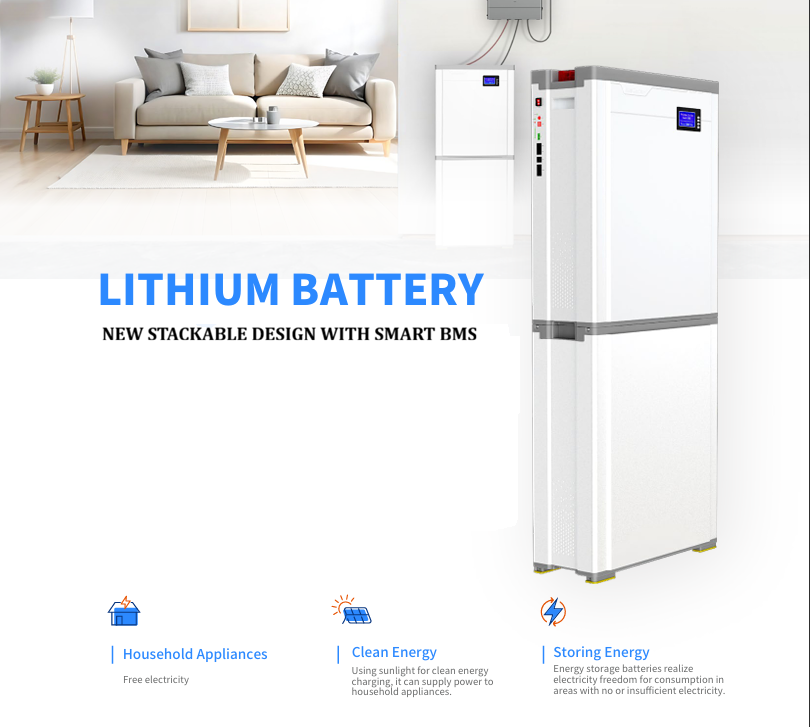
the BLUE CARBON 15.36kWh 48V stackable lithium battery with Smart BMS may be
worth considering for a suitable residential installation. Before connecting it
to an inverter, confirm the approved battery voltage, maximum continuous
discharge current, communication protocol and supported configuration.
Explore
the BLUE CARBON 15.36kWh Stackable Lithium Battery
6. How
Many Solar Panels Do You Need?
The solar
panel capacity should be determined by your daily electricity consumption,
battery size, available sunshine and the inverter's PV input limits.
For
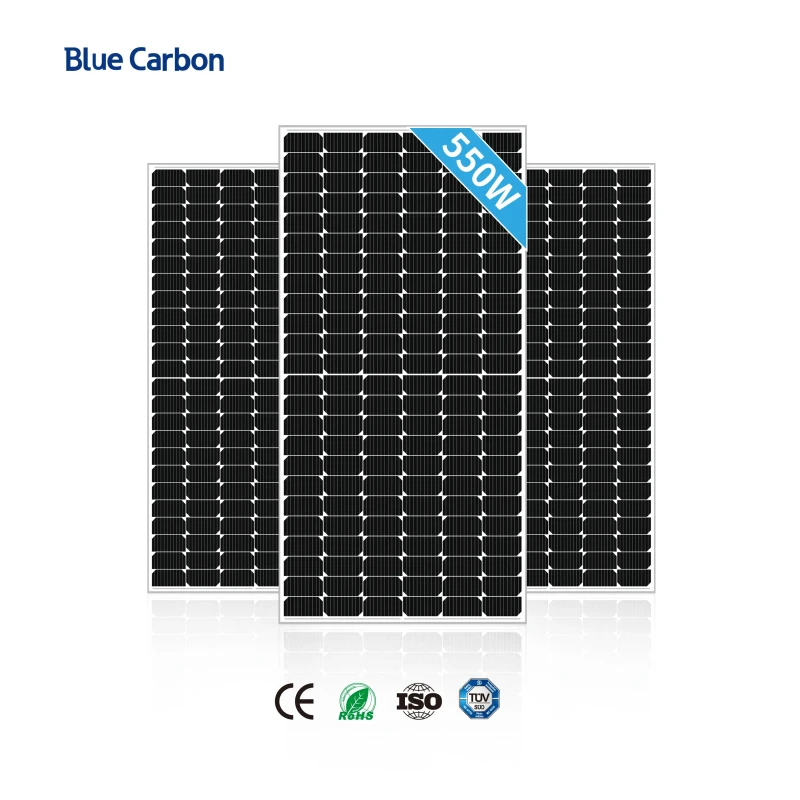
illustration, the following are possible solar array sizes:
|
Solar
array capacity |
Using
550W panels |
|
3.3kW |
6 panels |
|
4.4kW |
8 panels |
|
5.5kW |
10 panels |
|
6.6kW |
12 panels |
|
8.8kW |
16 panels |
|
11kW |
20 panels |
These
examples show total panel wattage only. They are not approved panel
configurations for every inverter.
Before
installation, your solar installer should check:
- Maximum PV input power.
- Maximum PV open-circuit voltage.
- MPPT operating voltage range.
- Maximum PV input current.
- Number of MPPT trackers.
- Permitted series and parallel
panel arrangements.
For the BLUE
CARBON 6kW hybrid inverter, the published MPPT range is 120-450V, with a
maximum PV open-circuit voltage of 500V. The actual panel arrangement must
remain within the complete model's electrical limits.
bluecarbon.ng
7.
Important Features to Look for When Buying a Hybrid Inverter
Before
choosing an inverter for your Nigerian home, pay attention to these
specifications.
1. Pure
sine wave output
Pure sine
wave output is a useful feature for supplying electricity to many household
appliances and electronic equipment.
2. MPPT
solar charge controller
MPPT
technology helps the inverter harvest solar energy efficiently within its
permitted PV operating range.
3.
Lithium battery compatibility
Confirm that
the inverter supports your exact lithium battery model and voltage.
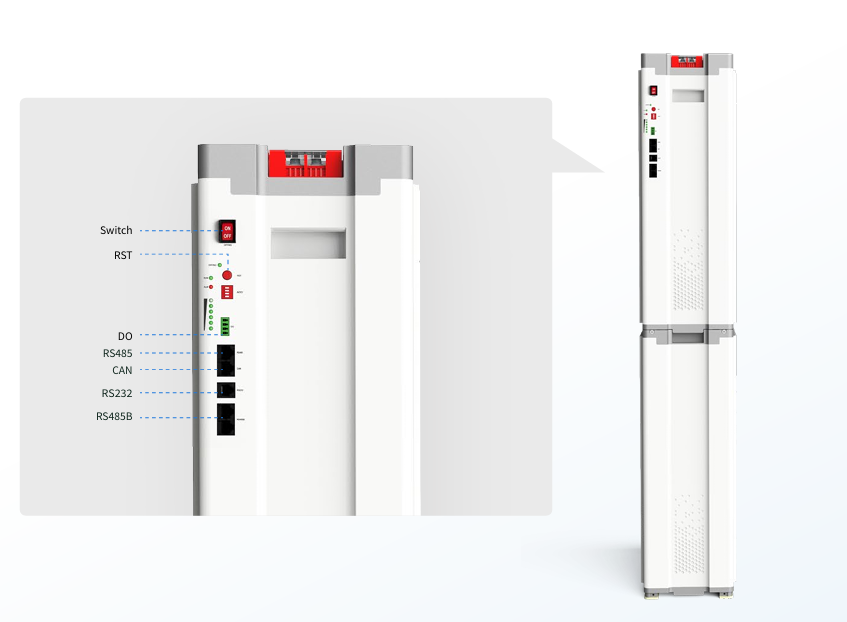
4. CAN
and RS485 communication
Where
supported by both devices, BMS communication allows the inverter and battery to
exchange information such as battery status and operating limits. The correct
communication cable and settings must be used.
5.
Parallel operation
Some models
support connection of multiple inverter units to expand system capacity.
Confirm the approved number of units and installation requirements.
6.
Monitoring
Wi-Fi or
GPRS monitoring, where available, can help users observe system performance and
identify operating issues.
7.
Warranty and after-sales support
Check the
warranty document for the exact model, including coverage, exclusions, service
arrangements and the process for handling faults.
bluecarbon.ng+1
8. Common
Mistakes to Avoid When Buying a Hybrid Inverter
Many solar
installations underperform because of poor system design rather than a problem
with the inverter itself.
Avoid these
mistakes:
- Buying an inverter based only on
its advertised kVA rating.
- Ignoring the total simultaneous
appliance load.
- Failing to account for
air-conditioner and pump starting surges.
- Pairing an inverter with an
undersized battery.
- Ignoring the battery's
continuous discharge-current limit.
- Connecting incompatible battery
and inverter communication systems.
- Installing more solar panels
than the inverter's PV input permits.
- Assuming every hybrid inverter
supports grid export or parallel operation.
- Failing to confirm the warranty
and technical support arrangements.
A
professional load assessment before purchasing can help prevent costly
mistakes.
9. Why
Consider BLUE CARBON for Your Home Solar Installation?
BLUE CARBON
provides solar energy products for residential and commercial applications,
including hybrid and off-grid inverters, lithium batteries, solar panels and
complete energy-storage solutions.
The official
website provides product information for different inverter capacities,
allowing customers to investigate options according to their power
requirements.
For
homeowners, the important consideration is selecting a compatible combination
of inverter, battery and solar panels rather than purchasing each component
independently.
Explore the
available products at BLUE
CARBON Nigeria.
10. Final
Recommendation: Which Is the Best Hybrid Inverter for Nigerian Homes in 2026?
There is no
single inverter that is best for every Nigerian home. The right option depends
on your appliance load, backup expectations, battery capacity, solar panel
arrangement and budget.
Our
practical recommendations based on the products listed on the BLUE CARBON
website are:
- For moderate residential
requirements:
Investigate the BLUE CARBON 6kW hybrid inverter.
- For higher residential
requirements: Compare
the BLUE CARBON-Deye 8kVA and 10kVA options.
- For larger installations: Investigate the available 12kW
options and confirm whether a hybrid or off-grid configuration is
appropriate.
The BLUE
CARBON 6kW hybrid inverter is a useful residential option to investigate
because its published product information includes integrated MPPT charging,
pure sine wave output, lithium battery communication and battery-free
operation.
However, the
final choice should always be based on the complete technical specifications
and a professional load assessment.
Frequently
Asked Questions
1. Which
hybrid inverter is best for a Nigerian home?
The best
inverter depends on your electricity consumption. A 6kW model may suit some
residential installations, while larger homes may require 8kVA, 10kVA or
higher-capacity equipment.
2. Can a
BLUE CARBON hybrid inverter work without a lithium battery?
The BLUE
CARBON 6kW BCT-FXC-6KW-H-P product page states that it supports battery-free
operation. Confirm this feature on the exact model before purchasing.
bluecarbon.ng
3. Can I
use a BLUE CARBON lithium battery with a hybrid inverter?
Yes,
provided the inverter and battery are compatible in voltage, discharge current
and BMS communication requirements. Confirm the approved configuration before
installation.
4. Does a
hybrid inverter work when there is no electricity from the grid?
A suitable
hybrid inverter can provide power from solar panels and battery storage during
grid interruptions, subject to its design, settings and available energy.
5. What
is the difference between a hybrid inverter and an off-grid inverter?
A hybrid
inverter generally manages solar, battery and grid interaction. An off-grid
inverter is designed primarily for independent operation, although some models
can also accept grid or generator input. Features differ by model.
6. Does
BLUE CARBON offer a warranty on its hybrid inverter?
The BLUE
CARBON 6kW hybrid inverter product page lists a five-year warranty. Always
request the written warranty for the exact model you purchase, as warranty
coverage may vary across products.
bluecarbon.ng
BLUE
CARBON Nigeria
- Website: bluecarbon.ng
- Email: enquires@bluecarbon.ng
- Phone: 09042103985
- Address: 10 Adeyemi Adeyanju
Street, Ilogbo-Elegba, Off Iyana-Oba, Lagos State.
Tags: best hybrid inverter in Nigeria
2026, Blue Carbon hybrid inverter, 6kW hybrid solar inverter Nigeria, 10kVA
hybrid inverter Nigeria, hybrid inverter for Nigerian homes
Recent Posts
5kVA vs 10kVA vs 15kVA Inverter: Which One Do You Need? Complete Solar Buying Guide for Nigeria
What Size of Lithium Battery Do You Need for a 10kVA Inverter? Complete Guide for Nigerian Homes and Businesses
5kWh vs 10kWh vs 15kWh Lithium Battery: Which One Is Right for Your Home?
What Size Inverter Do You Need for a 15kWh Lithium Battery? Complete Guide for Nigerian Homes and Businesses
How Long Will a 15kWh Lithium Battery Last? Complete Guide for Nigerian Homes and Businesses
BLUE CARBON Lithium Battery and Inverter Communication: Step-by-Step Guide