How Many Appliances Can a 6.5kVA Inverter Power? A Practical Guide for Nigerian Homes
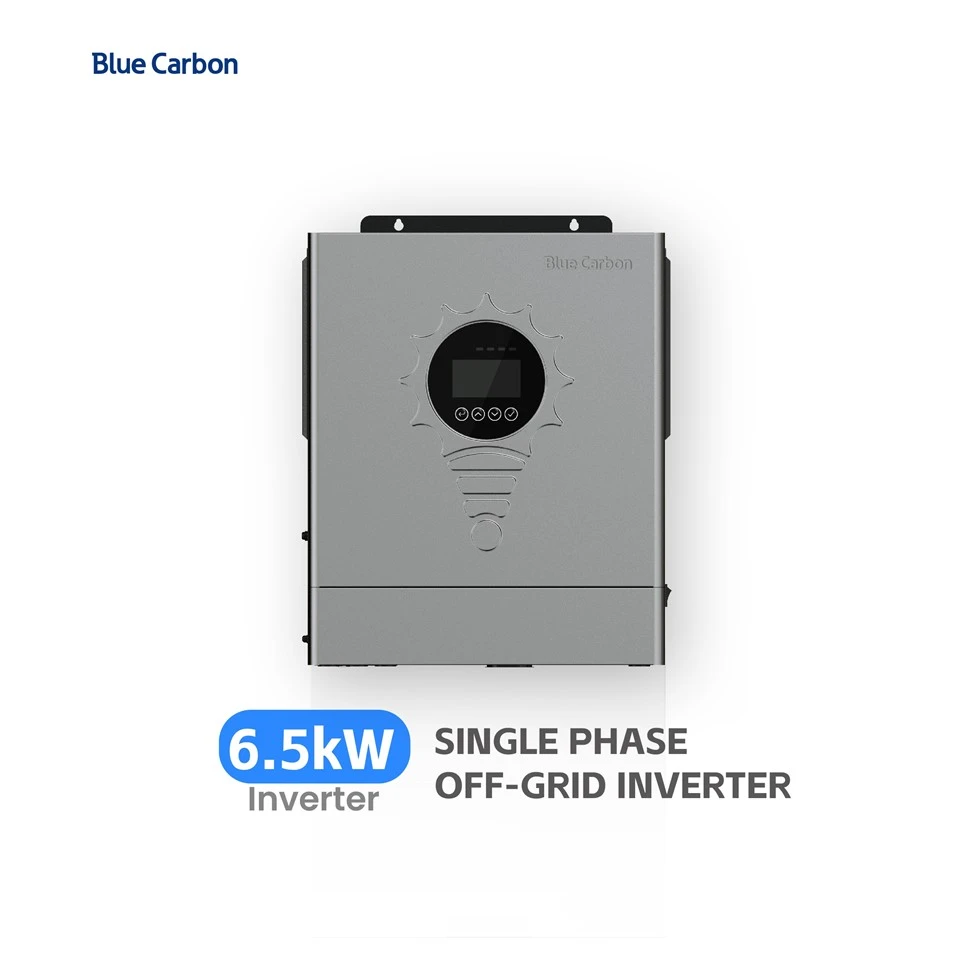
A 6.5kVA
solar inverter can power several household appliances at the same time, making
it a suitable option for many Nigerian homes, offices and small businesses.
However, the number of appliances it can handle depends on their individual
power ratings, starting currents, total simultaneous load and the inverter's
actual output capacity.
If you are
considering a 6.5kVA inverter for your home, one important question is: can it
power your refrigerator, television, air conditioner, washing machine, freezer,
fans and lighting simultaneously?
The answer
is yes, in many cases—but not necessarily all at once. Proper load calculation
is essential to avoid overloading the inverter and to ensure reliable
electricity.
In this
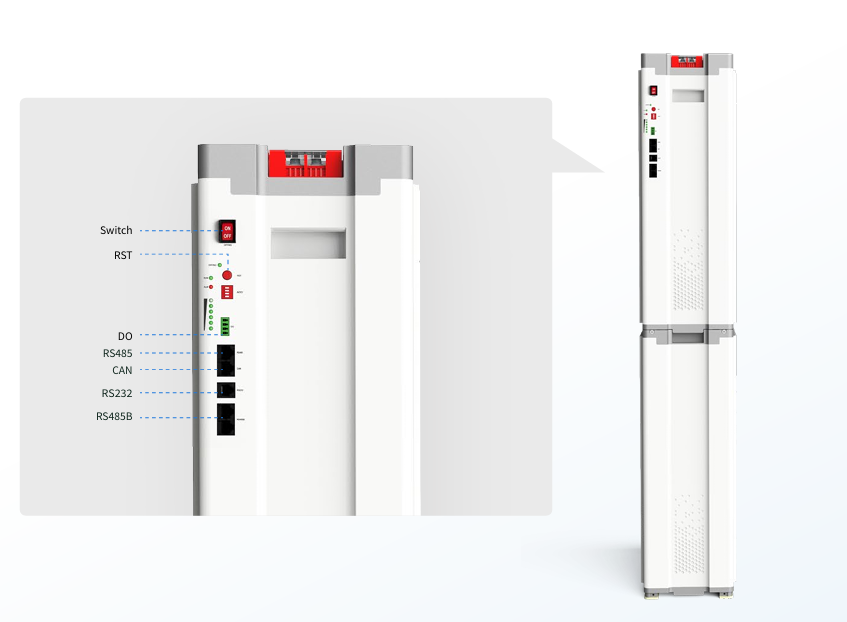
guide, we explain what a 6.5kVA inverter can power, how many appliances you can
run together, and how to choose the right lithium battery and solar panels for
your installation.
1.
Understanding What a 6.5kVA Inverter Can Handle
Before
selecting appliances, it is important to understand the difference between kVA
and kW.
- kVA (kilovolt-ampere): The inverter's apparent power
rating.
- kW (kilowatt): The actual real power available
to run appliances.
The real
power capacity depends on the inverter's power factor.
For example:
|
Power
factor |
Approximate
real power |
|
0.8 |
5.2kW |
|
0.9 |
5.85kW |
|
1.0 |
6.5kW |
A 6.5kVA
inverter with a power factor of 1.0 can deliver up to 6.5kW of real power,
provided its specifications and operating conditions support that output.
Important: Do not automatically assume every
6.5kVA inverter delivers 6.5kW. Always check the manufacturer's rated output in
watts or kilowatts.
2. How
Many Appliances Can a 6.5kVA Inverter Power?
A 6.5kVA
inverter can potentially run between 10 and 20 or more household appliances,
depending on their wattage and which appliances operate simultaneously.
The
important factor is not simply the number of appliances but their combined
power consumption.
Here are
estimated power requirements for common Nigerian household appliances.
|
Household
appliance |
Estimated
running power |
|
LED bulbs
(10 units) |
100W-150W |
|
Ceiling
fans (4 units) |
240W-320W |
|
LED
television |
100W-150W |
|
Decoder |
20W-40W |
|
Refrigerator |
150W-250W |
|
Deep
freezer |
150W-300W |
|
Laptop (2
units) |
100W-150W |
|
Wi-Fi
router |
10W-20W |
|
Washing
machine |
500W-1,000W |
|
1HP air
conditioner |
800W-1,200W |
|
Water
pumping machine |
500W-1,000W |
|
Microwave
oven |
1,000W-1,500W |
|
Electric
kettle |
1,500W-2,200W |
|
Electric
iron |
1,000W-2,000W |
These are
planning estimates, not fixed consumption figures. Actual power requirements
vary by appliance model, size, operating mode and condition. Refrigerators,
freezers, pumps and air conditioners can also draw extra power when their
motors start.
3.
Example: Appliances You Can Run Together
Let's
consider a typical Nigerian household using a 6.5kW inverter.
|
Appliance |
Estimated
load |
|
10 LED
bulbs |
120W |
|
4 ceiling
fans |
280W |
|
2
televisions |
250W |
|
1
refrigerator |
200W |
|
1 deep
freezer |
250W |
|
2 laptops |
120W |
|
1 decoder
and router |
50W |
|
1HP air
conditioner |
1,000W |
|
Washing
machine |
700W |
|
Total |
2,970W
(2.97kW) |
This
combination uses approximately 46% of a 6.5kW inverter's rated output.
It leaves
room for additional appliances, subject to their power requirements and
starting currents.
However,
adding a microwave, electric kettle, pressing iron and water pump
simultaneously could increase the load significantly. You should calculate the
combined consumption before switching on several heavy appliances.
4. Can a
6.5kVA Inverter Power an Air Conditioner?
Yes. A
properly sized 6.5kW inverter can power air conditioners, provided the total
load remains within its rated capacity and the battery can supply the required
current.
Here is a
general guide:
|
Air
conditioner |
Estimated
running power |
|
1HP |
800W-1,200W |
|
1.5HP |
1,200W-1,800W |
|
2HP |
1,600W-2,400W |
These
figures are estimates. Actual consumption depends on the air conditioner's
efficiency, inverter technology, temperature settings and cooling demand.
For better
performance:
- Consider inverter-type air
conditioners because they can adjust compressor speed to match cooling
demand.
- Avoid operating several large
air conditioners alongside electric cookers, kettles and pressing irons
without calculating the total load.
- Check the compressor's starting
requirements.
- Ensure your lithium battery has
sufficient continuous discharge capacity.
A 6.5kW
inverter may comfortably support one or two appropriately sized air
conditioners alongside essential household appliances, but the exact
combination must be calculated.
5. How
Many Air Conditioners Can a 6.5kVA Inverter Run?
There is no
universal number because air conditioners have different power requirements.
For example,
assuming each air conditioner consumes approximately 1,000W while running:
- One air conditioner uses about
1,000W.
- Two air conditioners use about
2,000W.
- Three air conditioners use about
3,000W.
- Four air conditioners use about
4,000W.
Although the
inverter may have sufficient rated output for these loads, you must also
account for other appliances, starting surges and battery limitations.
For a
typical home, running one or two air conditioners alongside lighting, fans,
televisions and refrigeration may be more practical than trying to operate four
air conditioners simultaneously.
6. What
Size Lithium Battery Do You Need for a 6.5kW Inverter?
The inverter
determines how much power you can operate at once, while the lithium battery
determines how long you can operate those appliances without sufficient solar
or grid support.
For a 48V
battery system, common storage capacities to consider include:
|
Lithium
battery capacity |
Typical
application |
|
5kWh |
Essential
appliances and shorter backup |
|
10kWh |
Moderate
household consumption |
|
15kWh |
Longer
backup and higher household demand |
|
20kWh |
Larger
loads and extended backup |
These are
general planning options, not guaranteed backup durations.
For example,
a 10kWh battery does not necessarily provide 10 hours of electricity. Actual
runtime depends on the load, usable battery capacity, inverter efficiency and
battery management system (BMS) limits.
An
important consideration is battery discharge current.
A 6.5kW load
on a 48V battery system can require approximately 144A at 94% inverter
efficiency:
\[
I=\frac{P}{V\times\eta} \]
\[
I=\frac{6500}{48\times0.94}\approx144A \]
This means
your battery bank must be capable of supplying the required continuous current.
A battery with sufficient kWh capacity may still be unsuitable if its BMS
discharge-current rating is too low.
Always
confirm battery compatibility, continuous discharge limits and communication
requirements with the inverter manufacturer.
7. How
Many Solar Panels Do You Need for a 6.5kW Inverter?
The number
of solar panels depends on your daily electricity consumption, available
sunlight, battery charging requirements and the inverter's maximum photovoltaic
input specifications.
For
illustration:
|
Solar
panel rating |
Number
of panels |
Total
solar capacity |
|
450W |
10 |
4.5kW |
|
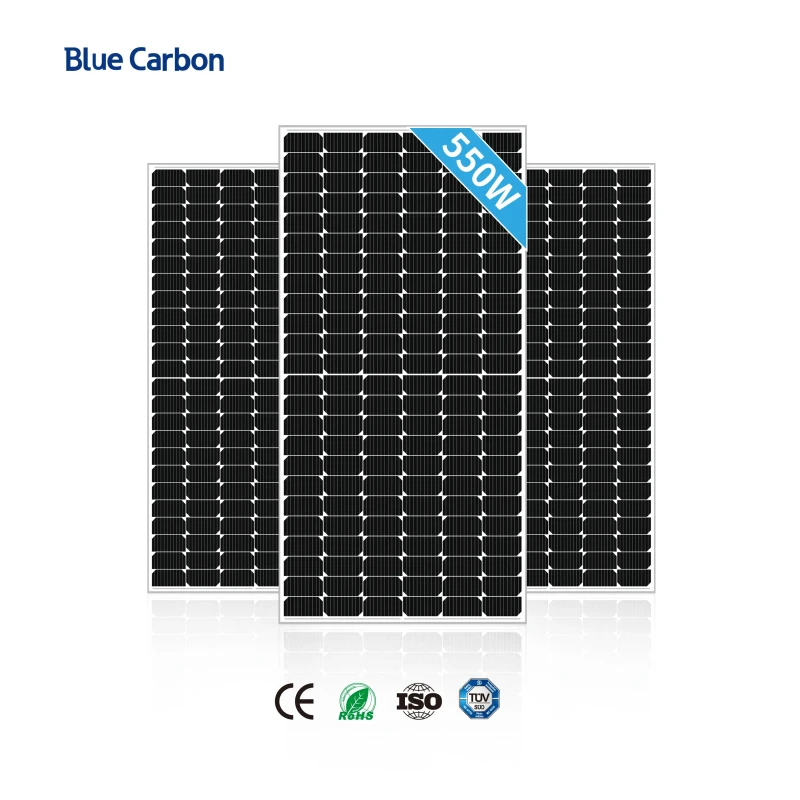
550W |
10 |
5.5kW |
|
550W |
12 |
6.6kW |
|
600W |
12 |
7.2kW |
|
650W |
12 |
7.8kW |
These
examples show the combined panel wattage only. They do not automatically
represent an approved panel configuration.
For the BLUE
CARBON BCT-FXC-6.5KW-H-P specification sheet, the published maximum PV input
power is 9,000W, with an MPPT operating voltage range of 60-450V and maximum PV
open-circuit voltage of 500V. The panel string arrangement must also comply
with the maximum input current and other electrical limits.
mail.bluecarbon.ng
In Nigeria,
solar panel output is affected by weather, shading, dust, panel orientation and
temperature. A qualified installer should calculate the correct panel
arrangement rather than simply matching the panel wattage to the inverter
rating.
8. Why
the BLUE CARBON 6.5kW Hybrid Inverter Is Worth Considering
BLUE
CARBON BCT-FXC-6.5KW-H-P

The BLUE
CARBON 6.5kW hybrid inverter is designed for residential and other applications
requiring substantial power capacity.
According to
its published specification sheet, key features include:
|
Specification |
Published
information |
|
Rated
output power |
6.5kW |
|
Battery
voltage |
48V |
|
Power
factor |
1 |
|
Output
waveform |
Pure sine
wave |
|
Surge
power |
12kVA |
|
Maximum PV
input power |
9,000W |
|
MPPT
operating voltage |
60-450V |
|
Maximum PV
open-circuit voltage |
500V |
|
Battery
compatibility |
Lithium
and lead-acid |
|
Maximum
battery-mode efficiency |
94% |
|
Parallel
capability |
Up to 9
units |
mail.bluecarbon.ng
Its 6.5kW
rated output gives households the flexibility to operate multiple appliances,
while its solar charging capability supports a properly designed solar and
battery installation.
The
inverter's surge rating is useful for managing certain short-duration starting
demands, but it does not mean that appliances can exceed the continuous rated
output indefinitely.
You can
explore the BLUE CARBON product range at bluecarbon.ng.
9.
Appliances You Should Be Careful About
Some
appliances consume considerable electricity and can quickly use up your
inverter's available capacity.
Examples
include:
- Electric cookers and induction
cookers.
- Electric kettles.
- Pressing irons.
- Water heaters.
- Large water pumping machines.
- Multiple air conditioners.
- Industrial equipment.
You can
operate some of these appliances with a 6.5kW inverter, but you should avoid
switching on several high-wattage appliances simultaneously without checking
the total load.
For
instance, an electric kettle rated at 2,000W and an electric iron rated at
1,500W already consume 3.5kW together. Adding an air conditioner, freezer,
refrigerator and other household appliances can bring the system close to its
operating limit.
10. Tips
for Getting the Best Performance from Your 6.5kW Inverter
To get
reliable performance from your solar installation, follow these
recommendations:
- Calculate your appliance load: Record the wattage of
appliances you intend to operate simultaneously.
- Prioritise essential appliances: Give refrigerators, lighting,
fans, televisions and other important loads priority.
- Use energy-efficient appliances: LED lighting and inverter-type
air conditioners can reduce electricity consumption.
- Install adequate lithium battery
storage: Select
a battery bank with sufficient capacity and discharge current.
- Use properly sized solar panels: Ensure the solar array can
support daytime loads and recharge the battery.
- Avoid continuous overloading: Keep your normal operating load
within the inverter's rated output.
- Use a qualified installer: Correct wiring, protection
devices, earthing and battery configuration are essential.
- Monitor your energy consumption: Use the inverter's display or
monitoring system, where available, to understand your actual load.
Frequently
Asked Questions
1. Can a
6.5kVA inverter power a 2HP air conditioner?
Yes. A 6.5kW
inverter can generally power a 2HP air conditioner alongside selected household
appliances, provided the combined load and starting requirements remain within
the inverter's limits.
2. Can a
6.5kVA inverter power a refrigerator and deep freezer together?
Yes. Most
household refrigerators and deep freezers can operate together on a properly
installed 6.5kW inverter. Their compressor starting currents and actual wattage
should still be considered.
3. Can a
6.5kVA inverter power an electric cooker?
It depends
on the cooker's wattage. A cooker rated at 2,000W can use a significant portion
of the inverter's available capacity. Other appliances must be considered
before operating it.
4. Is a
5kWh lithium battery enough for a 6.5kW inverter?
It can
operate selected loads, but it may not support the inverter's full output or
provide long backup. Its BMS discharge-current rating is particularly
important.
5. Can a
6.5kW inverter power an entire house?
It can power
many household appliances, but whether it can power an entire house depends on
the property's total simultaneous load, appliance types and energy
requirements.
6. What
is the difference between a 6.5kVA and 6.5kW inverter?
kVA measures
apparent power, while kW measures real power. The relationship depends on the
inverter's power factor. For the BLUE CARBON BCT-FXC-6.5KW-H-P, the published
specification lists 6.5kW rated output and a power factor of 1.
Conclusion:
Is a 6.5kVA Inverter Enough for Your Home?
A 6.5kW
inverter can be an excellent option for a Nigerian household that needs to
operate several appliances, including televisions, refrigerators, freezers,
fans, lighting, computers and selected air conditioners.
It can
potentially support 10-20 or more appliances, depending on their combined power
consumption. However, the number of appliances alone should never determine
your inverter choice.
For the best
results, calculate your total load, choose a compatible lithium battery with
adequate discharge capacity and install enough solar panels to support your
daily energy requirements.
At BLUE
CARBON, we provide solar energy solutions designed to support residential,
commercial and industrial power needs.
Contact our
team to discuss the right inverter, lithium battery and solar panel
configuration for your property.
BLUE
CARBON - Powering a Brighter, More Sustainable Future.
- Website: https://bluecarbon.ng/
- Email: enquires@bluecarbon.ng
- Phone: 09042103985
Tags:
6.5kVA inverter in Nigeria, 6.5kW inverter, appliances a 6.5kVA inverter can
power, BLUE CARBON inverter, solar inverter for Nigerian homes.
Recent Posts
How Many Appliances Can a 6.5kVA Inverter Power? A Practical Guide for Nigerian Homes
5kVA vs 10kVA vs 15kVA Inverter: Which One Do You Need? Complete Solar Buying Guide for Nigeria
What Size of Lithium Battery Do You Need for a 10kVA Inverter? Complete Guide for Nigerian Homes and Businesses
5kWh vs 10kWh vs 15kWh Lithium Battery: Which One Is Right for Your Home?
What Size Inverter Do You Need for a 15kWh Lithium Battery? Complete Guide for Nigerian Homes and Businesses
How Long Will a 15kWh Lithium Battery Last? Complete Guide for Nigerian Homes and Businesses