Hybrid vs Off-Grid Inverter: Which Is Better for Nigerian Homes?
Choosing the right solar inverter is one of the most important decisions when installing a solar power system in Nigeria. With rising electricity costs, unreliable grid supply, increasing generator expenses, and the growing popularity of lithium battery storage, more homeowners are investing in solar energy.
However, one
common question is: Should you choose a hybrid inverter or an off-grid
inverter?
Both
inverter types can power your home using solar panels and batteries, but they
differ in how they interact with the electricity grid, their flexibility,
backup capabilities, and how they support your energy needs.
For Nigerian
homes, choosing between a hybrid and off-grid inverter depends on your
electricity supply, budget, power consumption, battery capacity, and long-term
energy goals.
In this
guide, we will explain the differences between hybrid and off-grid inverters,
their advantages, disadvantages, costs, and which option is best for different
Nigerian households.
What Is a
Hybrid Inverter?

10
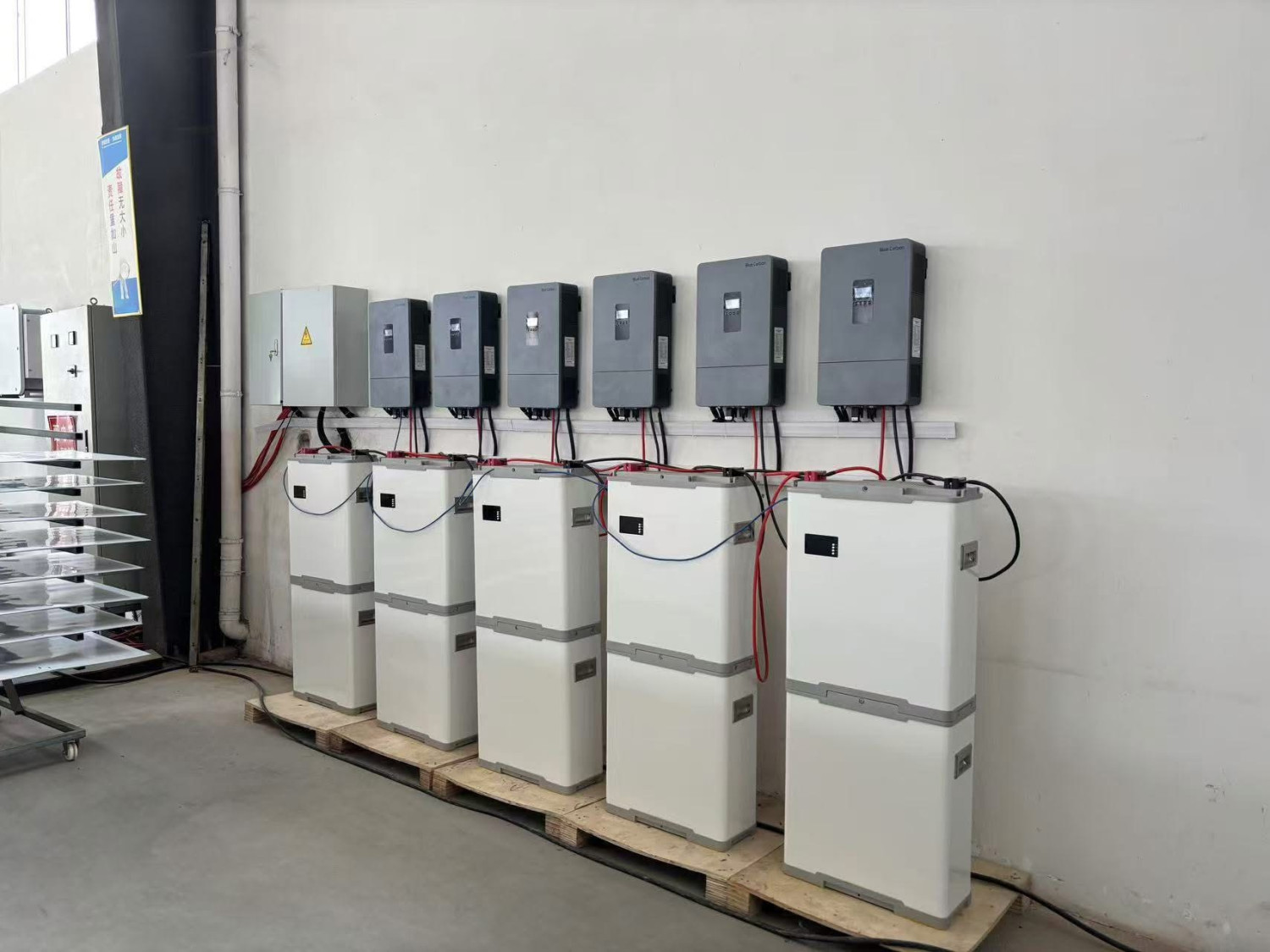
A hybrid
inverter is a solar inverter designed to work with multiple energy sources,
including solar panels, batteries, and utility electricity.
Depending on
the model, a hybrid inverter can combine solar power, battery energy, and
electricity from the grid to provide a reliable power supply.
For example,
during the day, solar panels can power your appliances while charging your
lithium battery. When solar production decreases in the evening, the inverter
can automatically use stored battery energy.
If the
battery becomes low or solar power is insufficient, the system may switch to
grid electricity, depending on the inverter's configuration and operating mode.
How a
hybrid inverter works
A typical
hybrid solar system works as follows:
- Solar panels generate
electricity during daylight hours.
- Solar energy powers connected
appliances.
- Excess solar energy charges the
lithium battery.
- At night, the battery supplies
electricity to the home.
- When battery power is
insufficient, the inverter can use grid electricity if configured and
available.
Some hybrid
inverter models also support generator integration, export of excess energy to
the grid, and advanced energy management.
However, not
every hybrid inverter supports every feature. Always check the manufacturer's
specifications.
What Is
an Off-Grid Inverter?

8
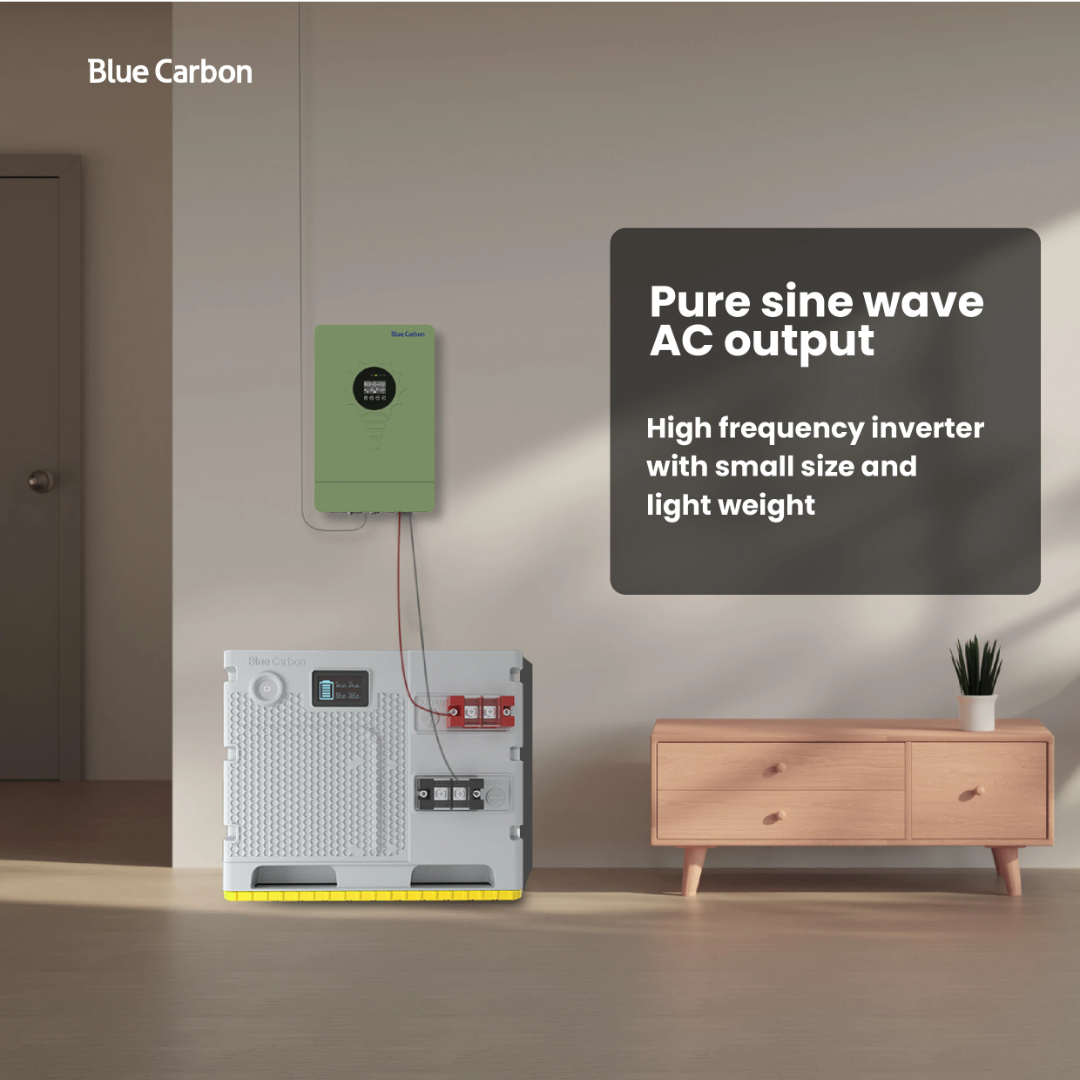
An off-grid
inverter is designed primarily to operate independently of the public
electricity grid.
It converts
DC electricity from solar panels and batteries into AC electricity that
household appliances can use.
Off-grid
systems are commonly installed in locations where electricity supply is
unavailable, unreliable, or where homeowners want to operate independently of
the utility grid.
Depending on
the inverter model, an off-grid system may also accept generator or utility AC
input for battery charging or backup purposes.
How an
off-grid inverter works
A typical
off-grid solar system operates like this:
- Solar panels generate
electricity.
- The inverter uses solar energy
to power appliances.
- Excess solar energy charges the
battery.
- Stored battery energy powers
appliances when solar production is low or unavailable.
- A generator or AC source may be
used as backup if the inverter supports it.
The key
distinction is that an off-grid inverter is designed around independent power
operation rather than grid-connected energy management.
Hybrid vs
Off-Grid Inverter: Key Differences
|
Feature |
Hybrid
Inverter |
Off-Grid
Inverter |
|
Solar
panel support |
Yes |
Yes |
|
Lithium
battery support |
Usually,
model-dependent |
Usually,
model-dependent |
|
Grid
connection |
Designed
for grid integration |
Model-dependent;
often for backup charging |
|
Solar and
grid management |
Advanced
energy management |
Depends on
model |
|
Battery
charging from grid |
Common |
Common on
models with AC input |
|
Solar
charging |
Yes |
Yes |
|
Battery
backup |
Yes |
Yes |
|
Grid
export |
Some
models |
Generally
not designed for grid export |
|
Generator
support |
Available
on selected models |
Available
on selected models |
|
Energy
management |
Often more
advanced |
Usually
focused on standalone operation |
|
Best for |
Homes with
grid access |
Homes
seeking independent power |
|
Flexibility |
Generally
higher |
Depends on
model and system design |
1. Which
Inverter Is Better for Nigerian Electricity Supply?
Nigeria's
electricity supply can be unpredictable. Some homes experience frequent
outages, while others have electricity for several hours daily.
This makes
the choice of inverter particularly important.
Hybrid
inverter for homes with grid electricity
If your home
has a connection to the national grid but experiences frequent outages, a
hybrid inverter may be a good choice.
It allows
you to integrate solar panels, batteries, and grid power into one energy
management system.
Depending on
the model and settings, you can prioritize solar energy, battery usage, or grid
electricity.
This can
help reduce dependence on:
- PHCN or DisCo electricity
- Petrol generators
- Diesel generators
- Expensive grid electricity
consumption
Off-grid
inverter for homes with poor or no grid supply
If you live
in an area where electricity supply is extremely unreliable or unavailable, an
off-grid inverter may be suitable.
It can power
your home using solar panels and battery storage without depending on the grid
for normal operation.
However, the
system must be properly sized to support your appliances, especially during
cloudy weather and nighttime operation.
2. Hybrid
Inverter vs Off-Grid Inverter: Battery Requirements
Both
inverter types require appropriately sized batteries if you want backup power
at night or during periods of insufficient solar generation.
Lithium
batteries are increasingly popular in Nigeria because of their energy density,
charging efficiency, cycle life, and compatibility with modern solar systems.
Hybrid
inverter battery requirements
A hybrid
inverter can work with lithium batteries, lead-acid batteries, or other
supported battery types, depending on the model.
For example,
a household using a 6kW hybrid inverter may require a battery bank capable of
delivering the required power safely, not simply one with a large energy
capacity.
A 5kWh
battery, 10kWh battery, or 15kWh battery may provide different backup durations
depending on the household's energy consumption.
Off-grid
inverter battery requirements
Off-grid
systems may require larger battery storage, particularly where the household
wants to operate independently of the electricity grid for extended periods.
For example,
a home with:
- Air conditioners
- Refrigerators
- Freezers
- Water pumps
- Televisions
- Lighting
- Computers
may require
a substantial battery bank to maintain reliable power throughout the night.
The battery
capacity should be calculated based on actual daily energy consumption and
expected backup duration.
3. Which
Is Better for Running Heavy Appliances?
Both hybrid
and off-grid inverters can power heavy appliances, provided they have
sufficient rated output, surge capacity, battery discharge capability, and
suitable installation.
Heavy
appliances include:
- Air conditioners
- Refrigerators
- Deep freezers
- Water pumps
- Electric pressing irons
- Microwave ovens
- Washing machines
However,
these appliances may require substantial starting current.
A solar
inverter that is too small may shut down when an appliance starts, even when
the battery appears fully charged.
When
choosing an inverter, consider:
- Continuous output power
- Peak or surge power
- Appliance starting current
- Battery voltage
- Maximum battery discharge
current
- Solar panel capacity
- Load management
For homes
running multiple air conditioners and heavy appliances, a properly sized
high-capacity hybrid or off-grid inverter may be required.
4. Solar Charging and Grid Charging
8
Both hybrid
and off-grid inverters can charge batteries using solar panels.
However,
hybrid inverters often provide more advanced energy management features.
Depending on
the model, homeowners may be able to configure:
- Solar-first operation
- Battery-first operation
- Grid-first operation
- Time-based battery charging
- Grid charging during selected
hours
- Solar energy priority
- Battery discharge schedules
These
features can be particularly useful in Nigeria, where electricity availability
and tariff structures may influence household energy usage.
For example,
a homeowner may prefer solar energy during the day, battery energy at night,
and grid electricity only when the battery reaches a specified reserve level.
5. Which
Inverter Is More Economical?
The total
cost of a solar installation is not determined by the inverter alone.
Your overall
system cost depends on:
- Inverter capacity
- Battery capacity
- Solar panel quantity
- Mounting structure
- DC and AC cables
- Protection devices
- Installation labour
- Monitoring accessories
An off-grid
system may be economical for a home that needs a straightforward standalone
power solution.
A hybrid
system may provide greater flexibility for homeowners who already have grid
electricity and want to reduce their electricity bills while maintaining backup
power.
The most
economical option is the one that matches your actual electricity needs without
purchasing unnecessary capacity.
6.
Advantages of Hybrid Inverters
Hybrid
inverters offer several advantages for Nigerian homeowners.
Benefits
- Integrate solar, battery and
grid electricity.
- Reduce dependence on public
electricity supply.
- Provide automatic backup during
power outages.
- Support intelligent energy
management.
- Allow battery charging from
solar and, on supported models, grid electricity.
- Offer flexibility for future
solar system expansion, subject to model specifications.
- May support generator
integration and grid export on selected models.
Disadvantages
- Some models may cost more than
basic off-grid inverters.
- Installation and configuration
can be more complex.
- Certain advanced features
require compatible batteries or accessories.
- Grid-interactive functions vary
significantly between models.
7.
Advantages of Off-Grid Inverters
Off-grid
inverters are excellent for independent power systems.
Benefits
- Suitable for locations with
little or no grid electricity.
- Can operate with solar panels
and batteries.
- Ideal for rural homes, farms,
offices, and remote locations.
- Can reduce dependence on
generators.
- Some models support generator
charging.
- Can provide reliable electricity
when properly designed.
Disadvantages
- A larger battery bank may be
necessary for prolonged outages.
- Poor solar production during
rainy or cloudy periods can affect energy availability.
- The homeowner must carefully
manage energy consumption if the system is not adequately sized.
- Some models offer fewer grid
energy management features than advanced hybrid systems.
8. Hybrid
vs Off-Grid: Which Is Better for Different Nigerian Homes?
The best
inverter depends on the type of property and how electricity is used.
|
Home or
Property |
Recommended
Option |
|
Urban home
with regular grid access |
Hybrid
inverter |
|
Home with
frequent electricity outages |
Hybrid
inverter |
|
Rural home
without electricity |
Off-grid
inverter |
|
Farm or
remote agricultural facility |
Off-grid
inverter |
|
Home with
solar and generator backup |
Either,
depending on specifications |
|
Large home
with multiple AC units |
High-capacity
hybrid or off-grid system |
|
Home
looking to reduce electricity bills |
Hybrid
inverter |
|
Fully
independent solar-powered property |
Off-grid
system or suitably configured hybrid system |
For many
Nigerian homes that have access to the grid but experience unreliable
electricity, a hybrid inverter is often the more flexible choice.
9.
Recommended Hybrid Inverter Capacities for Nigerian Homes
The inverter capacity you need depends on your appliances and the amount of power you use simultaneously.
10
5kVA–6kW
inverter
Suitable for
many small and medium-sized homes with carefully managed loads, including:
- Lighting
- Television
- Fans
- Refrigerators
- Computers
- Small appliances
8kVA–10kVA
inverter
Suitable for
larger homes with more appliances and higher power requirements, depending on
the inverter's real output rating and appliance combinations.
12kW and
above
Suitable for
large residential properties, offices, and homes with substantial energy
requirements, including multiple air conditioners, water pumps, and other
high-power appliances.
The inverter
should be sized based on your maximum simultaneous load, not simply the total
number of appliances in the house.
10. What
Should You Consider Before Buying?
Before
purchasing a hybrid or off-grid inverter, consider the following:
- Your electricity consumption: Calculate the power
requirements of your essential appliances.
- Your backup duration: Decide how many hours you need
electricity during an outage.
- Your battery capacity: Ensure the battery can supply
sufficient energy and current.
- Your solar panel capacity: Install enough solar panels to
power loads and recharge batteries.
- Your appliance starting current: Pay special attention to air
conditioners, pumps, compressors and refrigerators.
- Battery compatibility: Confirm the inverter supports
your lithium battery's voltage and communication protocol.
- Future expansion: Consider whether you may add
batteries, panels or more appliances later.
- Warranty and support: Purchase from a reputable
supplier with accessible technical support.
BLUE
CARBON Hybrid and Off-Grid Solar Solutions

At BLUE
CARBON, homeowners and businesses can explore solar energy solutions
designed to support different electricity requirements, including hybrid
inverters, off-grid inverter solutions, lithium battery storage, and solar
panels.
Choosing the
right combination of inverter, battery, and solar panels is essential for
reliable performance.
Whether you
need a system for a small residential apartment, a large family home, an
office, or a commercial facility, selecting the correct capacity can help
improve energy efficiency and reduce dependence on conventional electricity
sources.
Explore
available solar solutions at:
Website: https://bluecarbon.ng/
Frequently
Asked Questions (FAQs)
1. Can a
hybrid inverter work without electricity from the grid?
Yes. Many
hybrid inverters can operate using solar panels and batteries without grid
electricity, provided the model supports standalone operation and the system is
configured appropriately.
2. Can an
off-grid inverter charge batteries from PHCN?
Some
off-grid inverters support AC charging from grid electricity or a generator.
However, this depends on the inverter's specifications.
3. Is a
hybrid inverter better than an off-grid inverter?
For many
Nigerian homes with access to grid electricity, a hybrid inverter offers
greater flexibility because it can manage solar, battery and grid power.
However, an off-grid inverter may be more suitable for locations where grid
electricity is unavailable or unnecessary.
4. Can I
use a lithium battery with both inverter types?
Yes,
provided the inverter supports the battery's voltage, charging requirements,
discharge current, and communication settings where applicable.
5. Does a
hybrid inverter reduce electricity bills?
Yes. When
properly configured, a hybrid inverter can prioritize solar energy and reduce
the amount of electricity consumed from the grid.
6. Can an
off-grid inverter power air conditioners?
Yes. An
off-grid inverter can power air conditioners if it has sufficient output
capacity, surge capability, and an adequately sized battery system.
Conclusion
Hybrid and
off-grid inverters are both valuable solutions for Nigeria's growing demand for
reliable electricity.
A hybrid
inverter is often the better choice for homes with grid electricity because
it provides flexibility, solar energy management, battery backup, and the
ability to use grid electricity when necessary.
An off-grid
inverter is an excellent choice for homes and facilities that want to operate
independently of the public electricity network, particularly in areas with
little or no grid access.
Ultimately,
the best inverter is not necessarily the most expensive or the one with the
highest capacity. It is the inverter that matches your household's power
consumption, battery requirements, solar panel capacity, and future energy
needs.
Choose the right system, install it correctly, and enjoy a more dependable power supply for your home.
Keywords: hybrid vs off-grid inverter, best
inverter for Nigerian homes, hybrid solar inverter Nigeria, off-grid solar
inverter Nigeria, solar inverter with lithium battery
Recent Posts
Why Does My Inverter Shut Down When I Turn on Heavy Appliances? Causes and Solutions
How Many Appliances Can a 6.5kVA Inverter Power? A Practical Guide for Nigerian Homes
5kVA vs 10kVA vs 15kVA Inverter: Which One Do You Need? Complete Solar Buying Guide for Nigeria
What Size of Lithium Battery Do You Need for a 10kVA Inverter? Complete Guide for Nigerian Homes and Businesses
5kWh vs 10kWh vs 15kWh Lithium Battery: Which One Is Right for Your Home?