
Why N-Type Solar Panels Make Blue Carbon the Best in the Nigerian Market
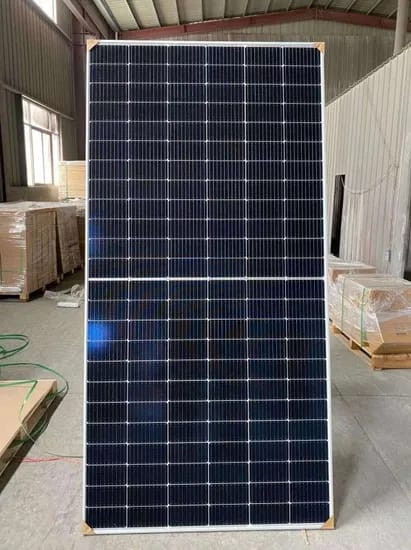
The Nigerian solar energy market is more competitive than ever. As more homeowners and businesses transition away from the unreliable national grid and the rising costs of diesel, the demand for high-performance solar hardware has skyrocketed. However, not all solar panels are created equal.
At Blue
Carbon Nigeria, we have made a strategic technological leap that sets us
apart from the competition: our solar panels are exclusively N-TYPE.
While most of the market still relies on older P-TYPE technology, Blue Carbon
has embraced the N-TYPE revolution to ensure our customers get the highest
energy yield, the longest lifespan, and the best return on investment (ROI)
available in Nigeria today.
But what
exactly is N-TYPE technology, and why does it make Blue Carbon the
undisputed leader in the market? Let’s dive into the science and the real-world
benefits.
Understanding
the Science: N-TYPE vs. P-TYPE
To
understand why N-TYPE is superior, we have to look at the chemistry of a solar
cell. Solar cells are made of silicon wafers "doped" with specific
chemicals to create an electrical current.
- P-TYPE (Positive): These cells are doped with Boron.
For decades, this was the industry standard because it was cheaper and
easier to mass-produce. However, Boron has a fundamental flaw: when it
reacts with oxygen in the air, it creates a "Boron-Oxygen
defect."
- N-TYPE (Negative): These cells are doped with Phosphorus.
Because there is no Boron involved, N-TYPE cells are completely immune to
the Boron-Oxygen defect.
This simple
chemical difference is the "secret sauce" that allows Blue Carbon
panels to outperform almost every other brand in the Nigerian sun.
1. Higher
Efficiency: More Power from Every Ray of Sun
The primary
goal of any solar installation is to generate as much electricity as possible
from the available roof space. N-TYPE solar panels, particularly those using TOPCon
(Tunnel Oxide Passivated Contact) technology like ours, have a much higher
conversion efficiency than traditional P-TYPE panels.
While
standard P-TYPE panels often peak at around 20% to 22% efficiency, Blue
Carbon N-TYPE panels can reach efficiencies of 25% and beyond. In
practical terms, this means that if you have a limited roof area on your Lagos
home or Abuja office, Blue Carbon panels will produce significantly more power
than a competitor's system of the same size.
2.
Immunity to Light-Induced Degradation (LID)
One of the
most frustrating "hidden" problems with traditional solar panels is Light-Induced
Degradation (LID).
Research
shows that P-TYPE panels can lose up to 2% to 3% of their power output
in just the first few days of being exposed to sunlight due to the Boron-Oxygen
defect. Over the first year, this degradation continues to eat away at your
energy production.
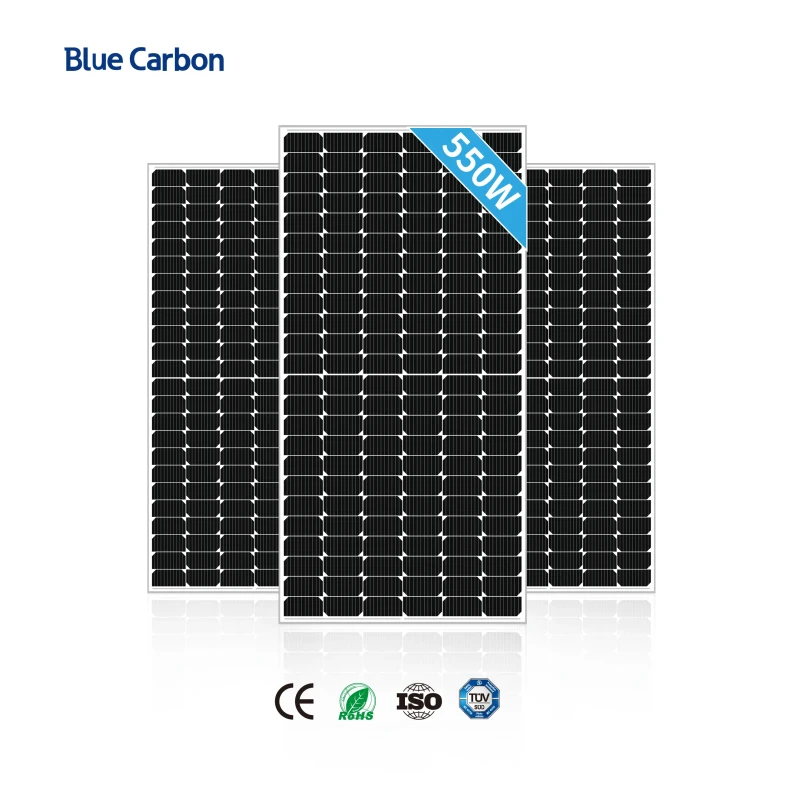
Because Blue
Carbon panels are N-TYPE, they suffer from zero LID. When you buy
a 550W Blue Carbon panel, you get exactly the power you paid for from day one,
without the "initial dip" that plagues cheaper, lower-quality panels.
3.
Superior Performance in the Nigerian Heat
Nigeria is a
high-temperature environment. Ironically, while solar panels need sunlight,
they actually hate heat. As a solar panel gets hotter, its ability to produce
electricity drops—a phenomenon measured by the Temperature Coefficient.
N-TYPE cells
have a much lower temperature coefficient than P-TYPE cells. This means that on
a sweltering 38°C afternoon in Kano or Maiduguri, a Blue Carbon N-TYPE panel
will maintain its power output much more effectively than a standard panel.
While other systems "throttle down" in the heat, Blue Carbon keeps
pushing maximum power to your LiFePO4 batteries
4. Better
Low-Light Performance
In Nigeria,
we don't always have "perfect" sunshine. During the rainy season or
on hazy harmattan days, the intensity of the sun can drop significantly.
N-TYPE
silicon has a higher sensitivity to long-wavelength light. This allows Blue
Carbon panels to "wake up" earlier in the morning and "stay
awake" later in the evening than P-TYPE panels. They are also much more
effective at capturing energy on cloudy days, ensuring your home stays powered
even when the weather isn't cooperating.
5. A
30-Year Investment: Unmatched Longevity
When you
invest in solar, you aren't looking for a 2-year fix; you are looking for a
25-to-30-year solution. Because N-TYPE cells are made from purer silicon and
are more resistant to environmental stressors, they degrade much more slowly.
- P-TYPE Panels: Typically degrade at a rate of 0.7%
to 0.8% per year.
- Blue Carbon N-TYPE Panels: Degrade at a much lower rate,
often as low as 0.4% per year.
Over 25
years, this difference is massive. A Blue Carbon system will still be producing
nearly 90% of its original power after two and a half decades, whereas a
standard P-TYPE system might have dropped to 80% or less. This makes
Blue Carbon the most cost-effective choice over the lifespan of the system.
The Blue
Carbon Edge: Integrated Energy Freedom
At Blue
Carbon Nigeria, we don't just stop at the panels. We believe that "Storage
is the Source." By pairing our high-efficiency N-TYPE panels with our
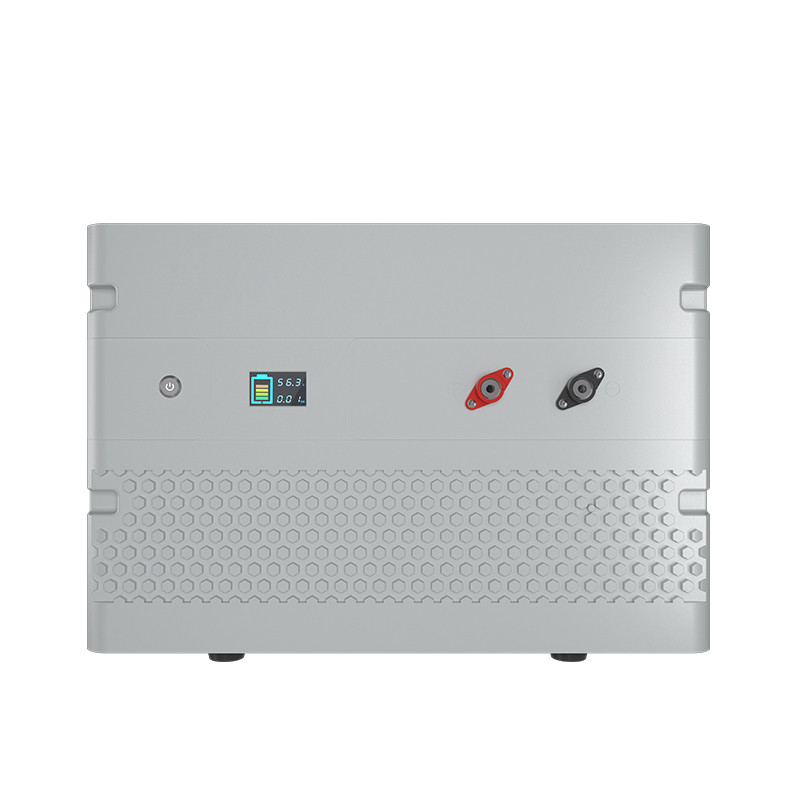
Grade A LiFePO4 (Lithium Iron Phosphate) batteries, we create a
closed-loop system of unmatched reliability.
Our N-TYPE
panels charge your batteries faster and more efficiently, and our batteries
hold that charge longer and more safely than any other combination on the
market. This is why we are recognized as the "Best in the Nigeria
Market"—we don't cut corners on technology.
Conclusion:
Why Settle for Less?
Choosing
solar panels for your home or business is one of the most important financial
decisions you will make this decade. While P-TYPE panels might seem
"cheaper" upfront, they cost you more in the long run through higher
degradation, lower heat tolerance, and decreased efficiency.
By choosing Blue
Carbon N-TYPE solar panels, you are choosing the cutting edge of
photovoltaic technology. You are choosing a panel that thrives in the Nigerian
sun, resists the wear and tear of time, and delivers the maximum "Energy
Freedom" possible.
Don't settle
for yesterday's technology. Step into the future with Blue Carbon Nigeria.
Recent Posts
Blue Carbon Invites You to the 2026 Nigeria International Lighting Expo - September 16 - 18, 2026
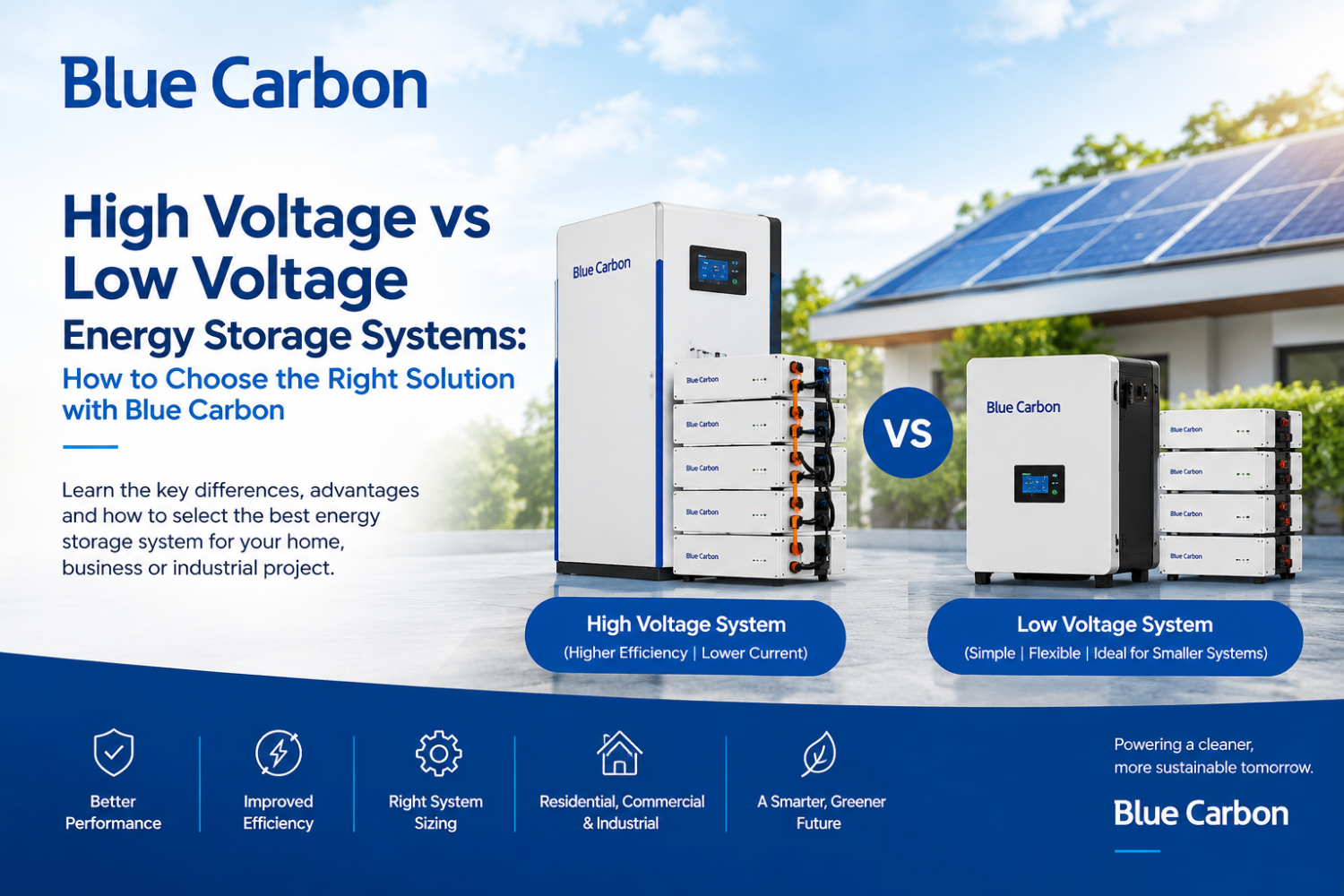
High Voltage vs Low Voltage Energy Storage Systems: How to Choose the Right Solution with Blue Carbon
Register Your Blue Carbon Product for Warranty to Gain Access to Warranty Support
Blue Carbon Lithium Batteries: New Arrival with Smart BMS Specially Designed to Give Our Customers the Best Experience