
Choosing the right battery chemistry is one of the most important decisions in energy storage projects. Whether for residential backup systems, commercial and industrial (C&I) storage, or utility-scale deployments, battery selection directly affects system safety, lifespan, operating cost, and long-term return on investment.
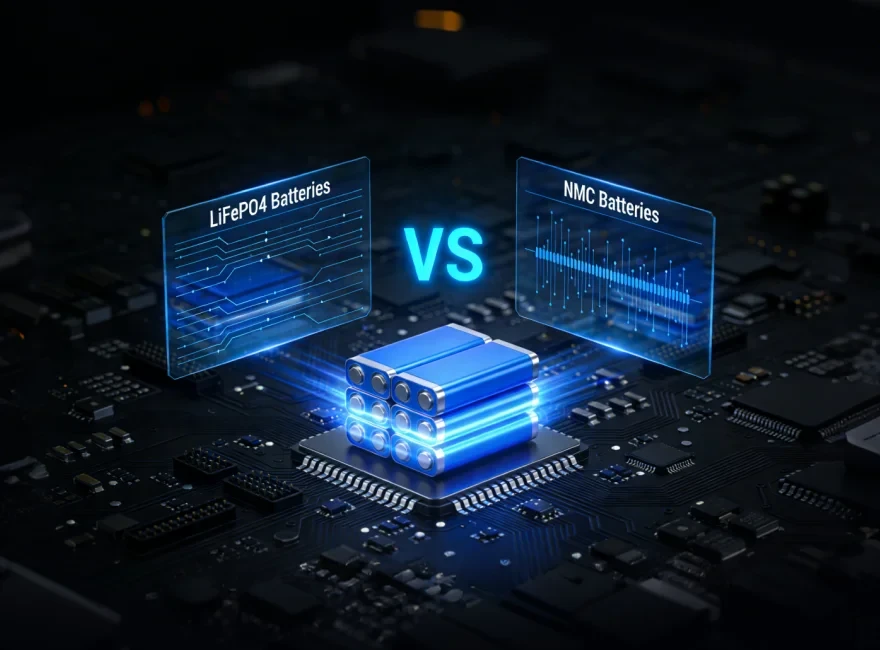
Two of the most widely used lithium battery chemistries today are LiFePO₄ (Lithium Iron Phosphate) and NMC (Nickel Manganese Cobalt). Each has distinct strengths, but they serve different priorities in real-world energy storage applications.
This blog offers a practical, engineering-focused comparison to help project developers, EPC contractors, system integrators, and buyers make informed decisions.
Understanding the Core Difference Between LiFePO₄ and NMC
The primary difference between LiFePO₄ and NMC lies in their cathode material composition, which influences energy density, thermal stability, cycle life, and long-term reliability.
LiFePO₄ chemistry is designed around stability, safety, and long service life, making it well-suited for stationary energy storage. NMC chemistry, by contrast, focuses on higher energy density and compact system design, which explains its widespread use in electric vehicles and applications where weight and space are limited.
From a project perspective, LiFePO₄ is generally optimized for high-cycle, long-duration energy storage, while NMC is better suited for mobility-focused or size-constrained applications.
Safety and Thermal Stability: A Critical Factor in ESS Projects
Safety is a critical requirement for energy storage systems, especially for large battery installations, indoor systems, and remote sites where maintenance access may be limited.
LiFePO₄ batteries are known for their strong thermal stability and lower risk of thermal runaway, making them a safer choice for long-term stationary storage. This advantage is particularly important for commercial buildings, containerized ESS systems, microgrids, and high-capacity battery rooms.
NMC batteries can deliver high energy density, but they typically operate closer to thermal limits and often require more advanced cooling and protection strategies in stationary ESS projects. From a system engineering standpoint, LiFePO₄ helps simplify thermal management, reduce fire risk, and improve overall system resilience.
Cycle Life and Long-Term Cost Efficiency
For energy storage systems, the number of charge–discharge cycles is often more important than nominal capacity, as it determines how long a battery can operate before replacement is required. In real-world applications, cycle life is a key indicator of long-term reliability and system durability, especially for projects designed to run continuously over many years.
In real-world operating conditions, LiFePO₄ batteries typically provide around 4,000–8,000 charge–discharge cycles, while NMC batteries generally offer around 2,000–4,000 cycles, depending on depth of discharge, temperature, and usage patterns.
This difference directly affects battery replacement schedules, maintenance costs, Levelized Cost of Storage (LCOS), and overall project return on investment (ROI). In applications involving daily cycling, peak shaving, load shifting, time-of-use arbitrage, or microgrid operation, longer cycle life often translates into lower total cost of ownership over a 10–15 year system lifespan.
Performance in High-Temperature and Harsh Environments
Environmental conditions play a major role in battery aging and long-term performance, especially in regions with sustained high temperatures.
LiFePO₄ batteries generally maintain more stable performance in hot climates, making them a strong option for Africa, the Middle East, Southeast Asia, desert regions, and outdoor containerized ESS deployments. Their degradation rate under heat is typically lower than that of NMC batteries, which may experience faster capacity fade in high-temperature conditions.
For off-grid, rural, or infrastructure-limited projects, where climate control is not always available, LiFePO₄ provides more predictable performance and reduced operational risk.
Energy Density vs. Practical System Design
NMC batteries typically offer higher energy density, allowing more energy to be stored in a smaller and lighter footprint. This is beneficial in electric vehicles, portable power stations, and space-limited battery systems.
However, in most stationary energy storage projects, footprint and weight are secondary to system longevity, safety, serviceability, and lifecycle cost. The slightly larger size of LiFePO₄ batteries is often an acceptable tradeoff when balanced against longer lifespan, slower degradation, and improved operational stability.
For many project developers, durability and reliability outweigh compactness in long-term system planning.
Supply Chain Stability and Sustainability Considerations
Material sourcing can influence both long-term cost and supply reliability. NMC batteries depend on nickel and cobalt, materials that are subject to price volatility, geopolitical risk, and ethical sourcing concerns.
LiFePO₄ batteries, in contrast, rely on iron and phosphate, which are more abundant, cost-stable, and less exposed to supply chain disruptions. For large-scale ESS projects and long-term procurement planning, this can improve budget predictability and sourcing resilience.
Which Battery Chemistry Is Better for Energy Storage Projects?
In practical terms, LiFePO₄ is generally the more suitable choice for stationary energy storage, particularly when safety, longevity, and lifecycle economics are prioritized.
LiFePO₄ is typically better for:
- Commercial and industrial energy storage
- Utility-scale ESS deployments
- Solar-plus-storage and hybrid energy systems
- Microgrids and off-grid power solutions
- High-temperature or remote installations
- Projects prioritizing long-term reliability and cost stability
NMC is typically better for:
- Electric vehicles
- Portable or compact energy storage products
- Applications where weight and space are primary constraints
For most grid-connected and off-grid ESS projects, LiFePO₄ offers a more balanced, lower-risk, and future-proof battery solution.
How Blue Carbon Applies LiFePO₄ in Real Energy Storage Solutions
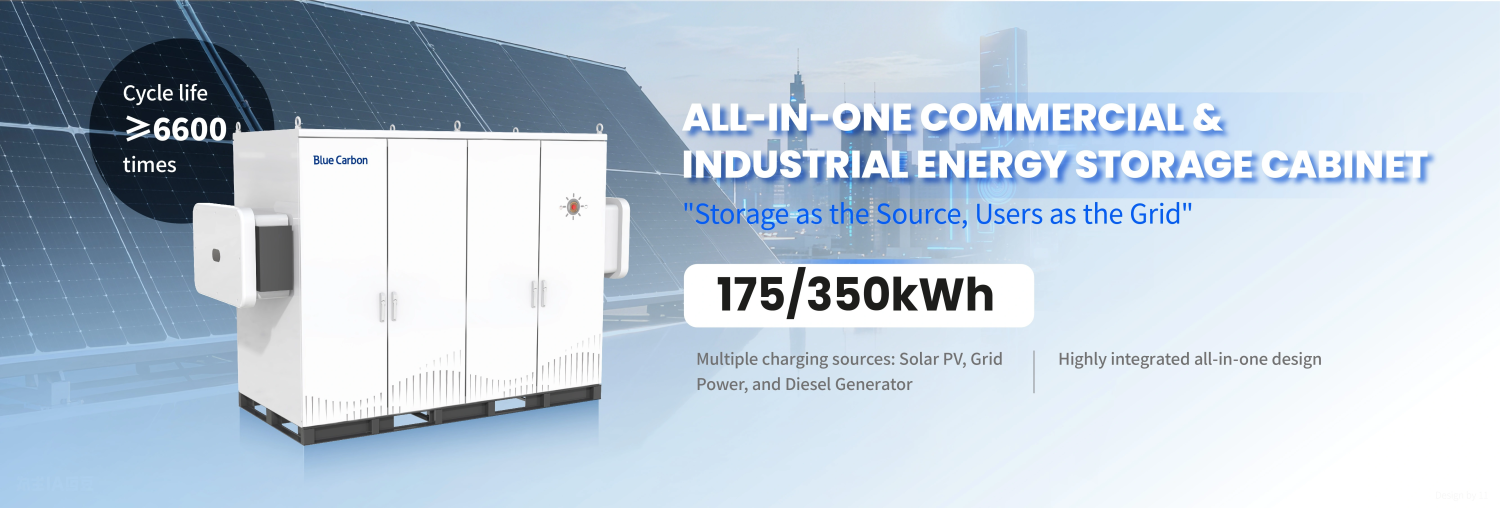
As a manufacturer of energy storage batteries and complete ESS systems, Blue Carbon prioritizes LiFePO₄ chemistry to deliver safer, more stable, and longer-lasting energy storage solutions.
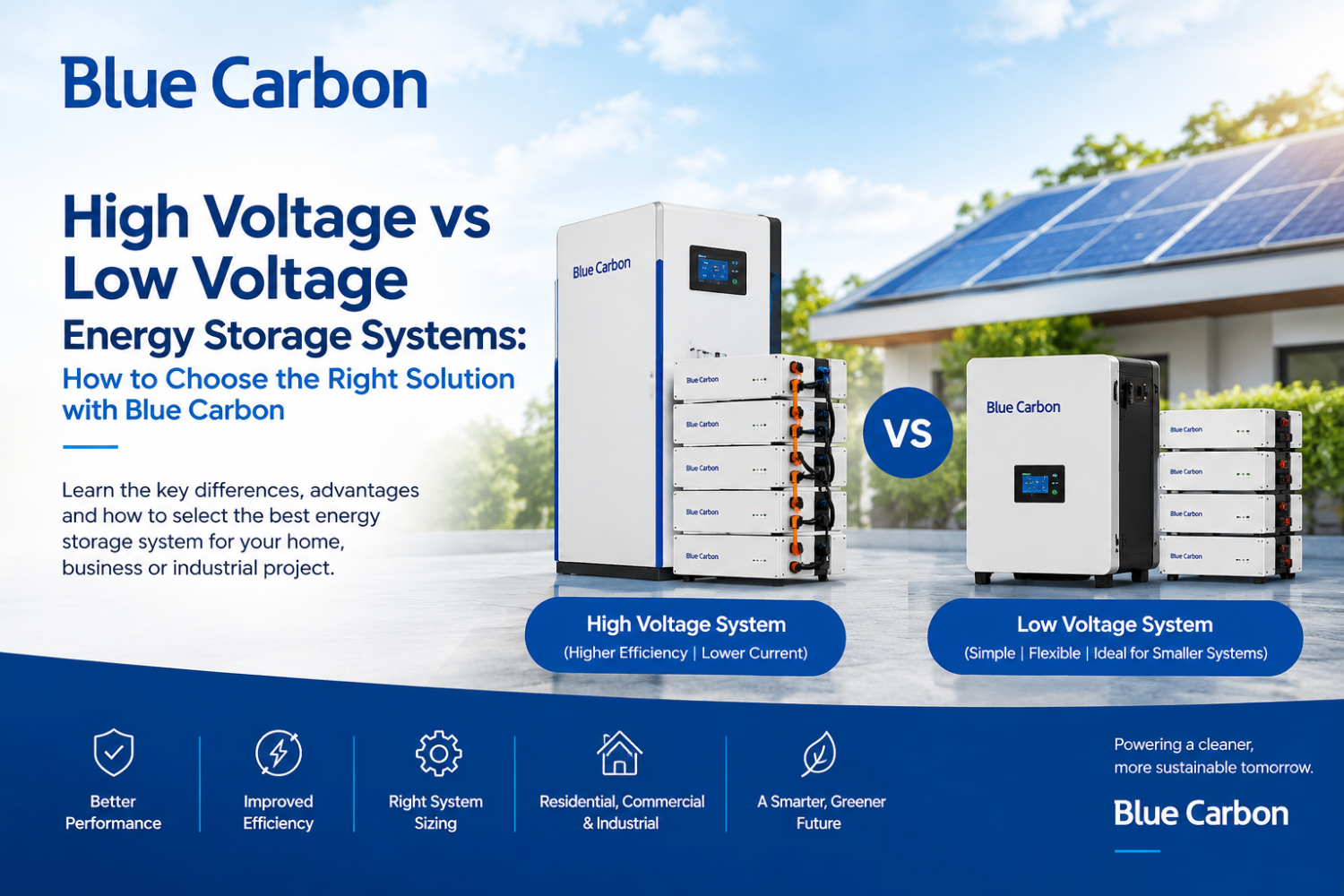
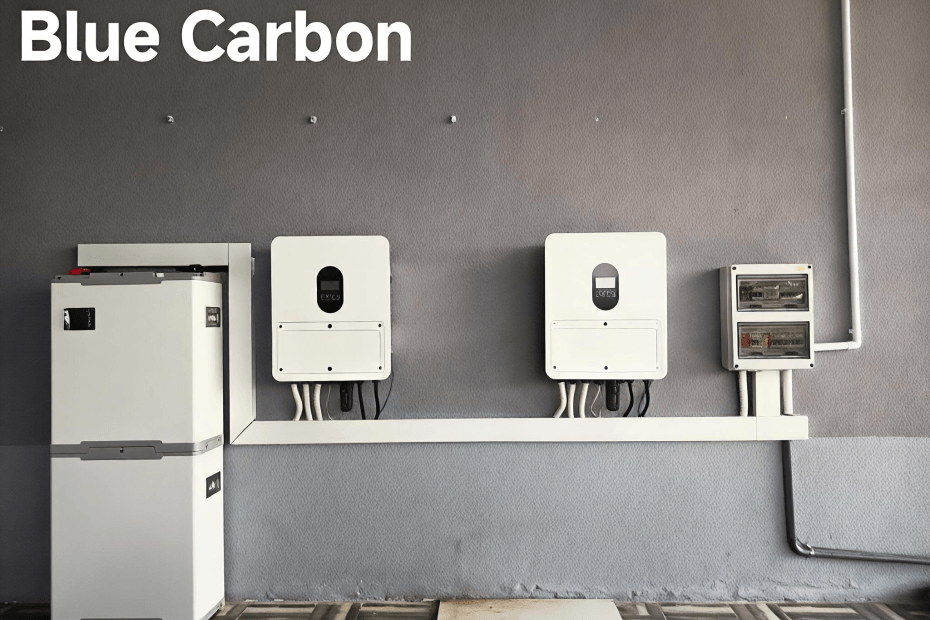
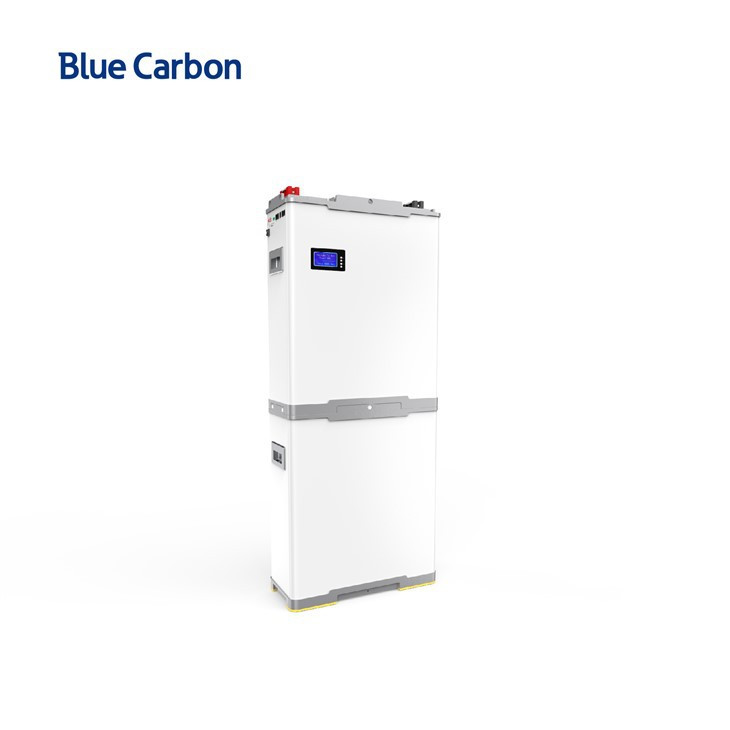
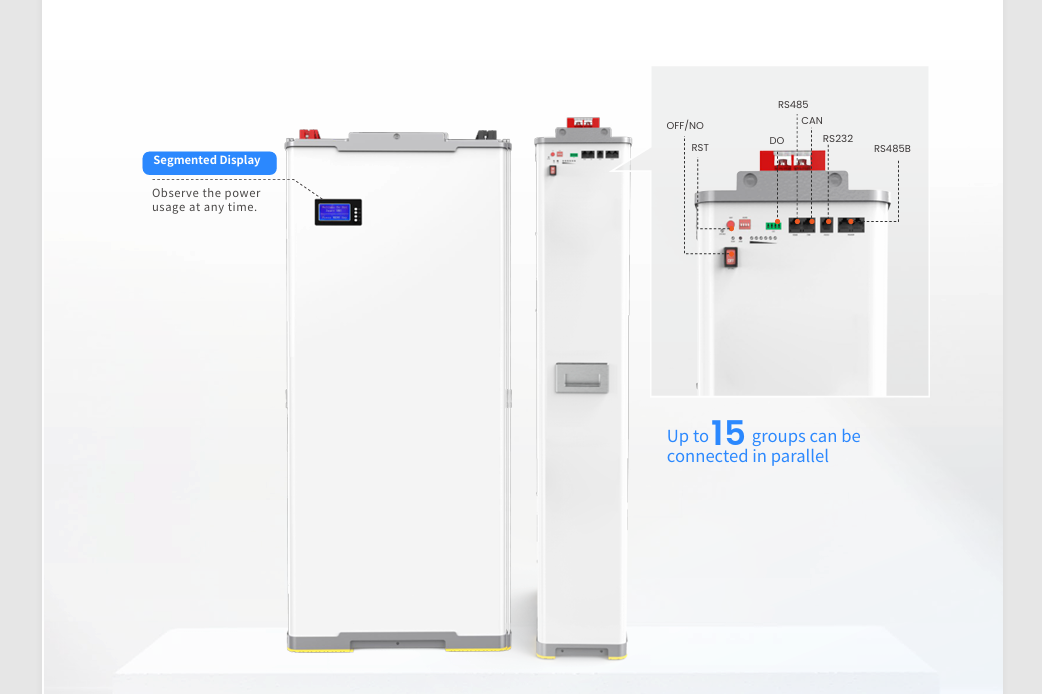
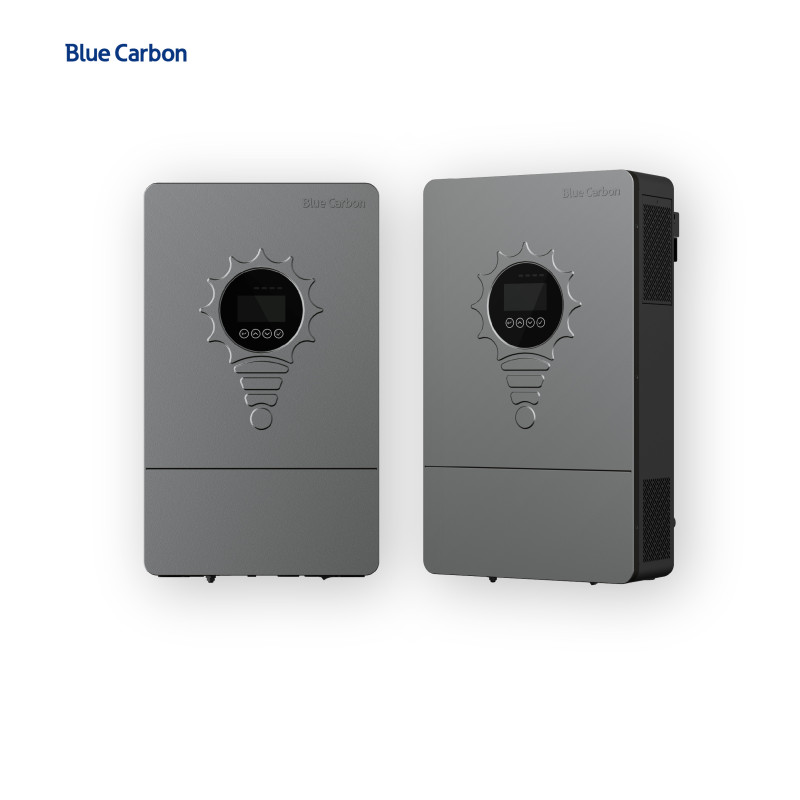
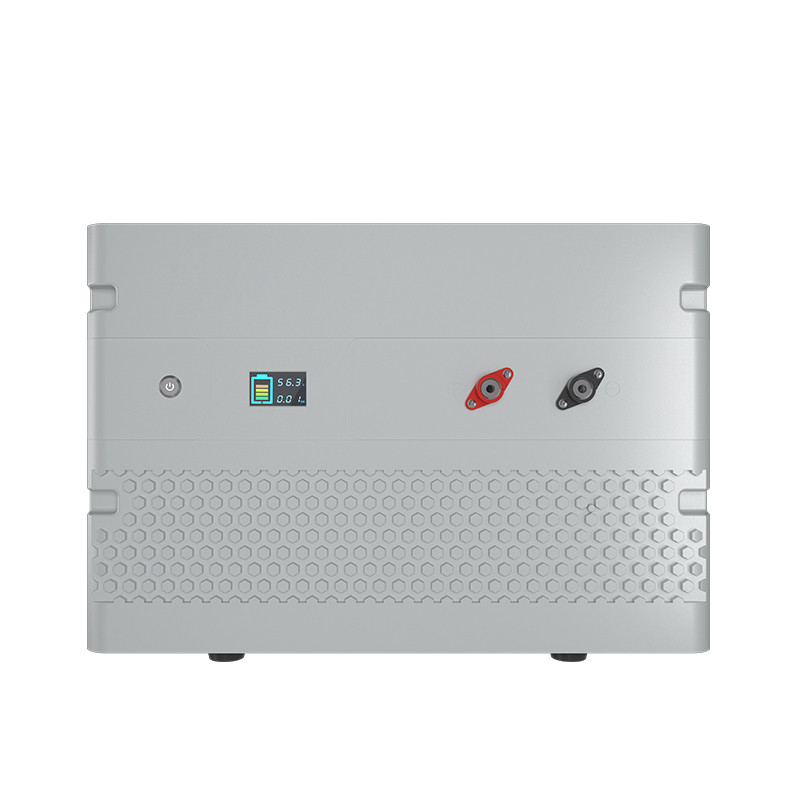
Blue Carbon develops and supplies a broad product portfolio, including LiFePO₄ battery modules in multiple capacities, rack-mounted systems, vertical and desktop storage batteries, portable energy storage units, and fully integrated residential and commercial ESS solutions. This flexibility allows system integrators, distributors, and project developers to select configurations that match technical requirements, installation environments, and budget targets.
By optimizing battery architecture, system efficiency, and long-cycle performance, Blue Carbon supports energy storage projects that require reliable long-term operation, predictable performance in demanding climates, and scalable system expansion. The company focuses on solving grid connectivity challenges and enabling affordable independent energy systems, delivering high-efficiency energy storage solutions for global markets.
Final Perspective: A Practical, Long-Term Decision
Both LiFePO₄ and NMC are proven lithium battery technologies, but they serve different priorities in stationary energy storage projects, where long-term reliability, safety, lifecycle cost, and environmental resilience matter most, LiFePO₄ is often the more practical and lower-risk choice.
Selecting battery chemistry is not just a technical decision—it is also a financial, operational, and risk-management decision that can influence project performance for more than a decade. Evaluating real-world operating conditions, usage patterns, and total ownership cost rather than headline specifications is essential for building durable and profitable energy storage systems.
Tags: Batteries, lifepo4 batteries, nmc batteries