
Transformerless vs Transformer-Based Inverters: Advantages and Disadvantages for Lithium Batteries - Why Blue Carbon Inverters Are Transformerless
As solar energy adoption continues to grow across Nigeria, homeowners, businesses, industries, farms, offices, and institutions are increasingly investing in lithium battery storage systems. However, choosing a good lithium battery is only one part of building a reliable solar installation. The inverter that manages the battery is equally important.
The inverter is responsible for converting the
battery's DC electricity into AC electricity that can be used by household
appliances, office equipment, machines, and other electrical loads. Depending
on its design, an inverter may be transformer-based or transformerless.
Understanding the difference between these two
technologies is particularly important when designing a solar system around
lithium batteries. Each technology has advantages and disadvantages, and the
right choice depends on the application, load requirements, battery
specifications, installation environment, and desired system efficiency.
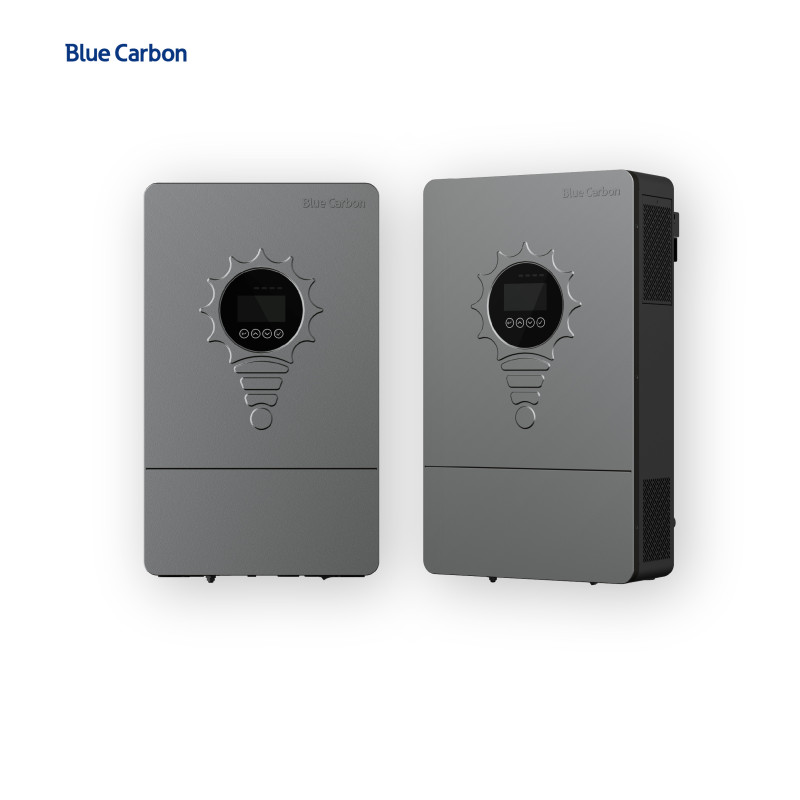
Blue Carbon Inverters are designed as
transformerless inverters, making them a modern option for
solar installations that use lithium battery energy storage. Their
transformerless architecture can provide advantages in efficiency, size,
weight, and energy management when properly matched with compatible Blue Carbon
lithium batteries.
This article explains the differences between
transformer-based and transformerless inverters, their advantages and
disadvantages, how they interact with lithium batteries, and why
transformerless technology is an important feature of modern Blue Carbon solar
energy systems.
What Is an Inverter?
Before comparing the two technologies, it is
important to understand what an inverter does.
Solar panels and batteries produce DC (Direct
Current) electricity, while most household and commercial appliances
operate on AC (Alternating Current) electricity.
The inverter converts DC power into usable AC power.
A modern solar inverter can also perform several
other functions, including:
- Managing
solar energy production
- Charging
batteries
- Discharging
batteries
- Managing
grid electricity
- Supplying
backup power
- Monitoring
energy consumption
- Protecting
connected equipment
- Communicating
with compatible lithium batteries through BMS communication
In a solar installation, the inverter therefore acts
as one of the main control points between the solar panels, battery and
electrical loads.
What Is a Transformer-Based Inverter?
A transformer-based inverter uses an electrical
transformer as part of its power-conversion architecture.
The transformer can provide electrical isolation and
voltage transformation between different parts of the system.
Traditional transformer-based inverter designs have
been used for many years and remain useful for certain applications.
They can provide advantages such as:
- Electrical
isolation
- Strong
surge-handling characteristics in certain designs
- Compatibility
with some specialized loads
- Robustness
in particular applications
However, transformer-based designs can also have
disadvantages, particularly when compared with modern high-frequency
transformerless inverter designs.
What Is a Transformerless Inverter?
A transformerless inverter does not use a
traditional heavy transformer in its main power-conversion stage.
Instead, it uses modern power electronics, switching
devices, control systems, filters, and other electronic components to perform
the required DC-to-AC conversion.
This design has become increasingly common in modern
solar energy systems because it can offer:
- Higher
efficiency
- Lower
weight
- More
compact construction
- Reduced
energy losses
- Flexible
system design
Blue Carbon Inverters use a transformerless
architecture, making them suitable for modern solar and lithium battery
installations when correctly configured and matched to the battery and
electrical loads.
Transformer-Based vs Transformerless
Inverters
The easiest way to understand the difference is to
compare their characteristics.
|
Feature |
Transformer-Based Inverter |
Transformerless Inverter |
|
Transformer |
Uses transformer |
Does not use traditional transformer |
|
Weight |
Generally heavier |
Generally lighter |
|
Size |
Usually larger |
More compact |
|
Efficiency |
Can have higher conversion losses |
Generally high efficiency |
|
Heat generation |
Transformer contributes to losses and heat |
Typically lower conversion losses |
|
Installation |
Can require more space |
Space-efficient |
|
Surge performance |
Often strong depending on design |
Depends heavily on electronic design |
|
Electrical isolation |
Can provide galvanic isolation |
May not provide the same isolation |
|
Modern solar applications |
Still useful |
Very common |
|
Lithium battery applications |
Suitable when compatible |
Well suited when correctly designed |
|
Maintenance |
Transformer adds a physical component |
Fewer transformer-related components |
The actual performance of any inverter depends on
its specific engineering and specifications, so these are general
technology-level comparisons rather than rules that apply to every individual
model.
Advantages of Transformerless Inverters
1. Higher Efficiency
One of the biggest advantages of transformerless
technology is efficiency.
A traditional transformer can introduce energy
losses during operation. By eliminating the conventional transformer from the
power-conversion stage, transformerless designs can reduce certain conversion
losses.
Higher efficiency means more of the energy stored in
the lithium battery can reach the appliances.
This is particularly important in solar
installations because every unit of stored energy matters.
2. Lower Energy Losses
When electricity passes through an inverter, some
energy is inevitably lost.
Reducing unnecessary conversion losses can improve
overall system performance.
For a lithium battery system that cycles frequently,
even relatively small efficiency differences can become significant over
thousands of operating cycles.
This is one reason modern transformerless inverter
technology is attractive for solar energy storage.
3. Smaller and Lighter Design
Transformers can be large and heavy.
Removing the traditional transformer allows
transformerless inverters to have a more compact design.
This can make installation easier, especially where
space is limited.
For homes, offices, apartments, shops and other
installations where equipment space matters, a compact inverter can be a
practical advantage.
4. Reduced Heat From Transformer Losses
Transformers generate heat as a result of electrical
losses.
Transformerless designs eliminate
transformer-related losses, although they still generate heat from
semiconductor switching and other electronic components.
Proper cooling and ventilation therefore remain
essential.
5. Modern Power Electronics
Transformerless inverters rely heavily on advanced
power electronics.
These systems can provide sophisticated control
over:
- Battery
charging
- Battery
discharging
- Solar
generation
- Grid
interaction
- Load
management
This makes them particularly suitable for modern
intelligent solar systems.
Potential Disadvantages of
Transformerless Inverters
Transformerless technology is not automatically
superior for every application.
There are some considerations that customers and
installers should understand.
1. Less Galvanic Isolation
Many transformer-based systems can provide galvanic
isolation between the DC and AC sides.
A transformerless design may not provide the same
type of isolation.
Therefore, proper system grounding, protection
devices, installation practices and applicable electrical standards are
particularly important.
2. Load Compatibility Must Be Considered
Some appliances have high starting currents.
Examples include:
- Pumps
- Refrigerators
- Freezers
- Compressors
- Air
conditioners
- Motors
The inverter must be capable of handling the
required starting surge.
A transformerless inverter can be perfectly suitable
for such applications if appropriately designed and rated, but customers should
not assume that every inverter can handle every motor load.
How Transformerless Inverters Affect
Lithium Batteries
One of the most important questions is whether
transformerless technology is good for lithium batteries.
The answer is generally yes, when the inverter
and battery are properly matched.
However, the relationship between the inverter and
lithium battery depends on more than whether the inverter has a transformer.
Important factors include:
- Battery
voltage
- Charging
voltage
- Maximum
charging current
- Maximum
discharge current
- Battery
capacity
- BMS
communication
- Inverter
charging profile
- Depth-of-discharge
settings
- Temperature
protection
A high-quality transformerless inverter can
efficiently manage lithium battery energy while minimizing unnecessary
conversion losses.
Efficient Charging of Lithium Batteries
Lithium batteries benefit from properly controlled
charging.
An appropriately configured inverter should ensure
that the battery receives charging parameters compatible with its
manufacturer's specifications.
Incorrect charging settings can cause problems
regardless of whether the inverter is transformer-based or transformerless.
Therefore, battery compatibility is more
important than simply choosing an inverter based on transformer type.
Efficient Battery Discharging
During a power outage, the lithium battery supplies
DC energy to the inverter.
The inverter converts this energy into AC power for
connected appliances.
An efficient transformerless design can help reduce
conversion losses, allowing more of the battery's stored energy to be delivered
to the loads.
This can potentially contribute to longer usable
backup time, depending on the complete system design.
Why Efficiency Matters for Battery Life
Lithium batteries are valuable energy storage
assets.
If an inverter wastes unnecessary energy during
conversion, the battery may need to supply more energy to deliver the same
amount of usable AC electricity.
Higher inverter efficiency can therefore contribute
to better overall energy utilization.
However, battery lifespan itself is determined by
many factors, including:
- Depth
of discharge
- Temperature
- Charging
parameters
- Discharge
current
- Cell
quality
- BMS
operation
- Usage
pattern
Therefore, it would be inaccurate to say that a
transformerless inverter alone makes a lithium battery last longer.
Blue Carbon Inverters Are
Transformerless
Blue Carbon Inverters use a transformerless
design as part of their modern solar power architecture.
This approach offers several potential benefits for
Blue Carbon solar installations, including:
- Compact
equipment design
- Reduced
weight
- High
conversion efficiency
- Efficient
battery energy utilization
- Modern
electronic control
- Integration
with lithium battery systems
For customers using Blue Carbon lithium batteries,
appropriately matched Blue Carbon Inverters can form an integrated energy
storage solution.
Blue Carbon Inverters and Lithium
Battery BMS Communication
The Battery Management System, or BMS, is a critical
component of a lithium battery.
The BMS monitors battery conditions and can
communicate important information to a compatible inverter.
Depending on the battery and inverter model,
communication may allow information such as:
- Battery
state of charge
- Battery
voltage
- Charging
limits
- Discharging
limits
- Battery
alarms
- Temperature
information
This helps the inverter manage the battery more
intelligently.
For this reason, installers should always confirm
compatibility between the specific Blue Carbon lithium battery model and
inverter before installation.
Transformerless Does Not Mean
"Without Protection"
Another misconception is that transformerless means
the inverter is less safe.
Safety depends on the complete electrical design.
A properly designed transformerless solar system
should include appropriate:
- Earthing
- Circuit
protection
- Surge
protection
- Overcurrent
protection
- Battery
protection
- Correct
cable sizing
- Proper
installation
- Adequate
ventilation
The inverter must also be installed according to the
manufacturer's instructions.
Why Blue Carbon's Transformerless Design
Is Suitable for Modern Solar Systems
Modern solar customers increasingly want systems
that are:
- Efficient
- Compact
- Intelligent
- Reliable
- Easy
to monitor
- Compatible
with lithium batteries
Transformerless inverter technology fits naturally
into this modern approach.
For residential and commercial solar systems,
reducing equipment size and improving conversion efficiency can provide
practical benefits.
When combined with quality solar panels and lithium
battery storage, transformerless inverter technology can contribute to a highly
efficient renewable energy system.
Important Considerations Before Choosing
an Inverter
Customers should not select an inverter solely
because it is transformerless.
Before purchasing an inverter, consider:
Inverter Capacity
Ensure the inverter can support the expected
continuous load.
Surge Capacity
Check whether it can handle the starting current of
motors and compressors.
Battery Voltage
The inverter must be compatible with the lithium
battery's voltage.
Battery Communication
Confirm whether the inverter supports the battery's
BMS communication protocol.
PV Input
Check maximum solar voltage, current, and allowable
PV capacity.
Charging Current
Ensure charging parameters are suitable for the
battery.
Warranty and Support
Choose a supplier that provides appropriate product
documentation and after-sales support.
Transformerless vs Transformer-Based:
Which Is Better for Lithium Batteries?
There is no universal answer that one architecture
is better for every lithium battery application.
Transformer-based inverters
can be advantageous where galvanic isolation, certain surge characteristics, or
specialized load requirements are important.
Transformerless inverters
can be advantageous where high efficiency, compact design, low weight, and
modern electronic control are priorities.
For modern solar installations using lithium
batteries, transformerless technology is often an attractive choice because of
its efficiency and compact design.
Blue Carbon's transformerless inverter architecture
is therefore well suited to customers looking for a modern solar energy system
built around lithium battery storage.
Conclusion
The difference between transformer-based and
transformerless inverters is primarily related to how the inverter's
power-conversion system is designed.
Transformer-based inverters use a traditional
transformer and can offer benefits such as electrical isolation and strong
performance in certain applications. However, they can be heavier, larger, and
may have additional transformer-related energy losses.
Transformerless inverters eliminate the conventional
transformer from the main power-conversion stage. This allows modern inverter
systems to achieve a more compact design, lower weight, and high conversion
efficiency.
For lithium battery applications, transformerless
technology can be particularly beneficial because efficient power conversion
helps maximize the amount of stored energy delivered to electrical loads.
Blue Carbon Inverters are
transformerless, making them a modern option for solar
systems using lithium batteries. When properly sized and configured, they can
work together with Blue Carbon LiFePO₄ batteries to create an efficient and
intelligent energy storage solution.
However, the most important factor is not simply
whether an inverter has a transformer. The inverter, battery, solar panels,
loads, protection equipment, and installation must all be properly matched.
For customers planning a solar installation,
choosing quality equipment and working with a qualified installer is essential.
A properly designed Blue Carbon solar system can help homeowners, businesses,
and industrial users achieve efficient energy conversion, dependable battery
storage, and better utilization of available solar energy.
Tags: transformerless inverter Nigeria, transformer based inverter, Blue Carbon inverter, lithium battery inverter Nigeria, solar inverter Nigeria
Recent Posts
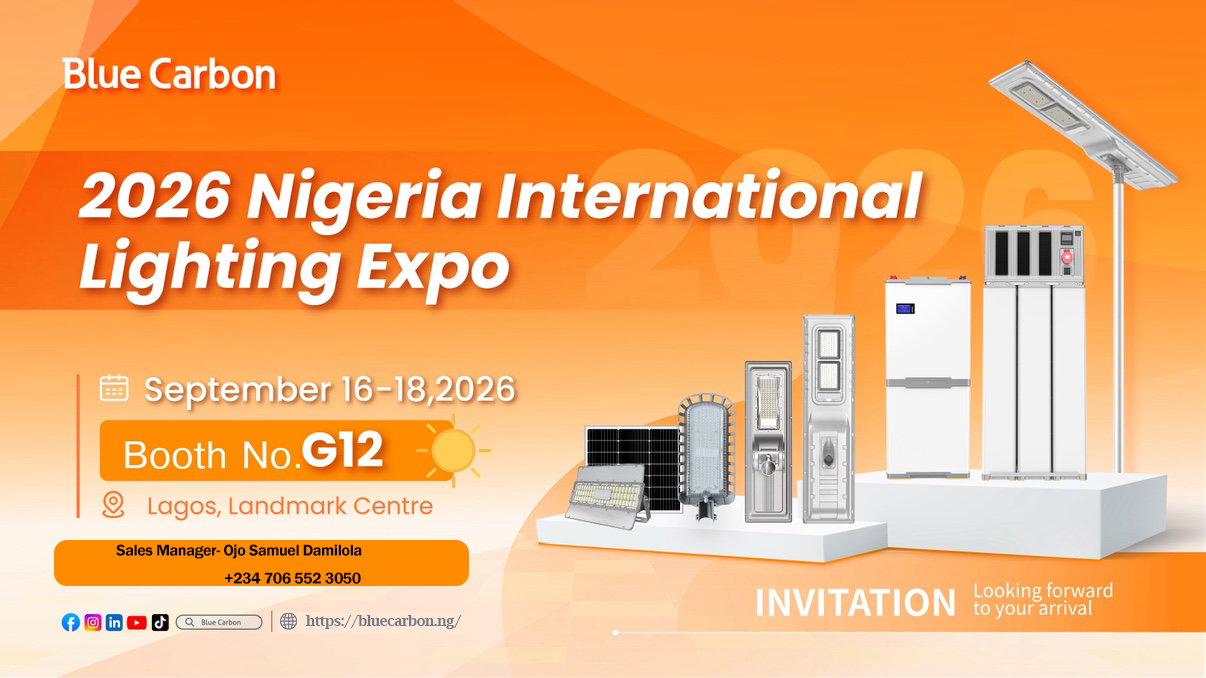
Blue Carbon Invites You to the 2026 Nigeria International Lighting Expo - September 16 - 18, 2026
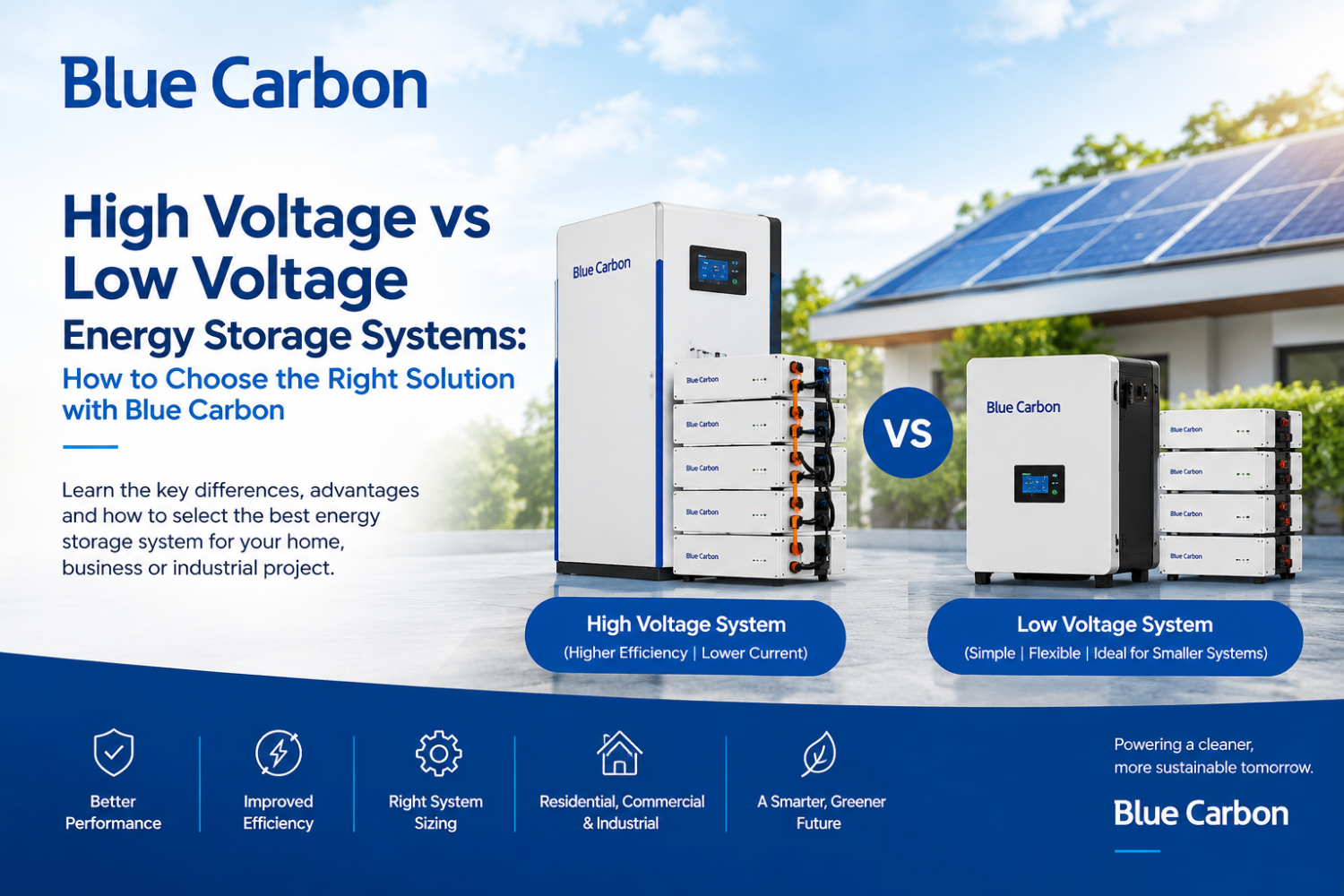
High Voltage vs Low Voltage Energy Storage Systems: How to Choose the Right Solution with Blue Carbon
Register Your Blue Carbon Product for Warranty to Gain Access to Warranty Support
Blue Carbon Lithium Batteries: New Arrival with Smart BMS Specially Designed to Give Our Customers the Best Experience