Lithium Battery Price in Nigeria 2026: Complete Buying Guide
The demand for lithium batteries in Nigeria continues to rise as more homes, businesses, offices, schools, hospitals and industrial facilities adopt solar energy and battery-storage systems. With frequent grid interruptions, rising generator running costs and the need for dependable backup power, many Nigerians are now looking beyond traditional lead-acid and tubular batteries toward LiFePO₄ lithium battery technology.
One of the first questions buyers ask is:
How much is a lithium battery in Nigeria in
2026?
The answer depends on several factors, including battery
capacity, voltage, chemistry, cell quality, Battery Management System (BMS),
brand, warranty, inverter compatibility, configuration and market conditions.
Current Nigerian market listings show that lithium battery
prices can vary considerably. For example, published 2026 market guides
currently place 5kWh lithium systems around the ₦1
million range at some suppliers, while 10kWh and 15kWh systems can range from
roughly ₦2
million into several million naira depending on specification and brand. These
figures are market indications rather than fixed prices, and prices can
change with exchange rates, stock availability, import costs and product
configuration.
For Blue Carbon customers, the most important principle is
simple: do not choose a lithium battery based on price alone. The
cheapest battery may not provide the best long-term value.
This guide explains lithium battery prices in Nigeria in
2026, the factors that influence pricing, different capacity options, how to
compare batteries and how to choose the right battery for your solar system.
What Is a Lithium Battery?
A lithium battery is a rechargeable energy-storage device
that stores electricity for later use.
In a solar power system, solar panels generate electricity
during the day. Some of that electricity powers appliances directly, while
excess energy can be stored in the lithium battery. The stored energy can then
be used at night or whenever solar and grid power are unavailable.
A typical solar energy-storage system consists of:
- Solar
panels
- Hybrid
or off-grid inverter
- Lithium
battery
- Battery
Management System
- DC
and AC protection
- Appropriate
cables
- Earthing
and surge protection
- Distribution
equipment
The battery therefore plays a major role in determining how
long your solar system can operate when there is no grid electricity or
sunlight.
How Much Does a Lithium Battery Cost in Nigeria
in 2026?
There is no single fixed lithium battery price in
Nigeria.
The price depends heavily on capacity and specification.
As a broad market reference, current published Nigerian
listings show approximately:
|
Lithium Battery Capacity |
Indicative 2026 Market Range |
|
2.5kWh |
₦300,000
– ₦400,000+ |
|
5kWh |
₦800,000 – ₦100,000+ |
|
10kWh |
₦1,400,000 – ₦1,600,000+ |
|
15kWh |
₦1,500,000 – ₦1,800,000+ |
|
20kWh+ |
₦2,200,000 – ₦2,900,000+ |
These are indicative market ranges compiled from
published Nigerian listings, not Blue Carbon's official prices. Different
brands, cell grades, BMS specifications, warranties, installation requirements
and sales channels can produce very different quotations.
Some current retailers list specific 48V lithium batteries
at prices significantly below or above these ranges, which demonstrates why
customers should request a current quotation for the exact model rather than
relying on a generic online price.
Blue Carbon customers should contact the
company or an authorized dealer for the current price and availability of the
exact battery model required.
Why Do Lithium Battery Prices Differ So Much in
Nigeria?
Two batteries can have the same advertised capacity but
significantly different prices.
For example, two manufacturers may both sell a:
48V 200Ah lithium battery
Yet one product may cost substantially more because of
differences in:
- Cell
quality
- Battery
chemistry
- BMS
- Cycle-life
rating
- Safety
protection
- Communication
functions
- Enclosure
- Certifications
- Warranty
- Brand
- Local
support
- Installation
requirements
Therefore, comparing only the number printed on the battery
is not enough.
1. Battery Capacity
Capacity is one of the biggest factors affecting lithium
battery price.
Capacity is usually expressed in:
- Ah
— amp-hours
- Wh
— watt-hours
- kWh
— kilowatt-hours
For larger solar systems, kWh is particularly useful
because it describes the amount of energy the battery can store.
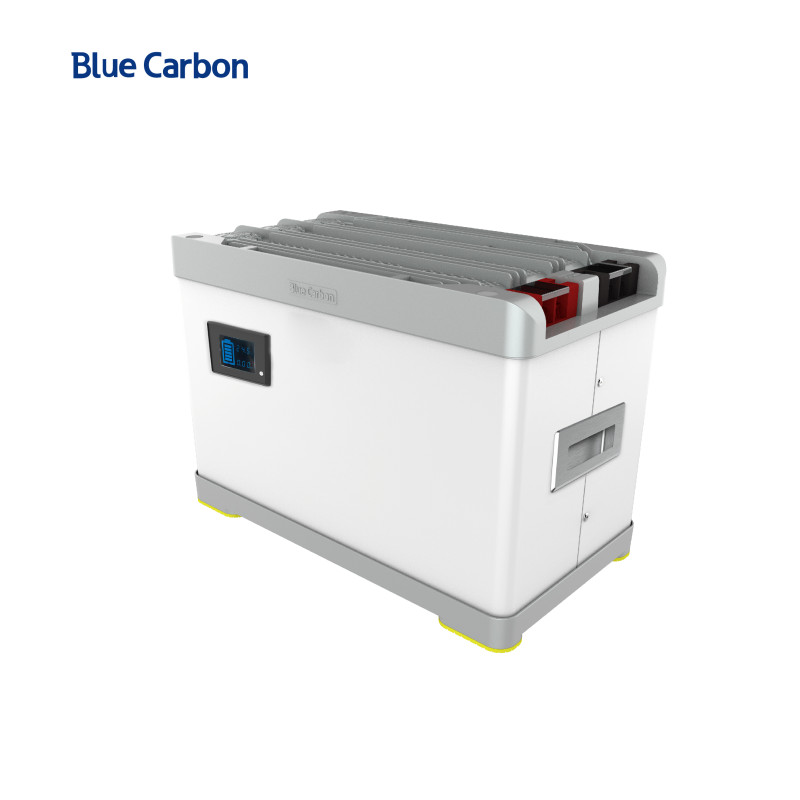
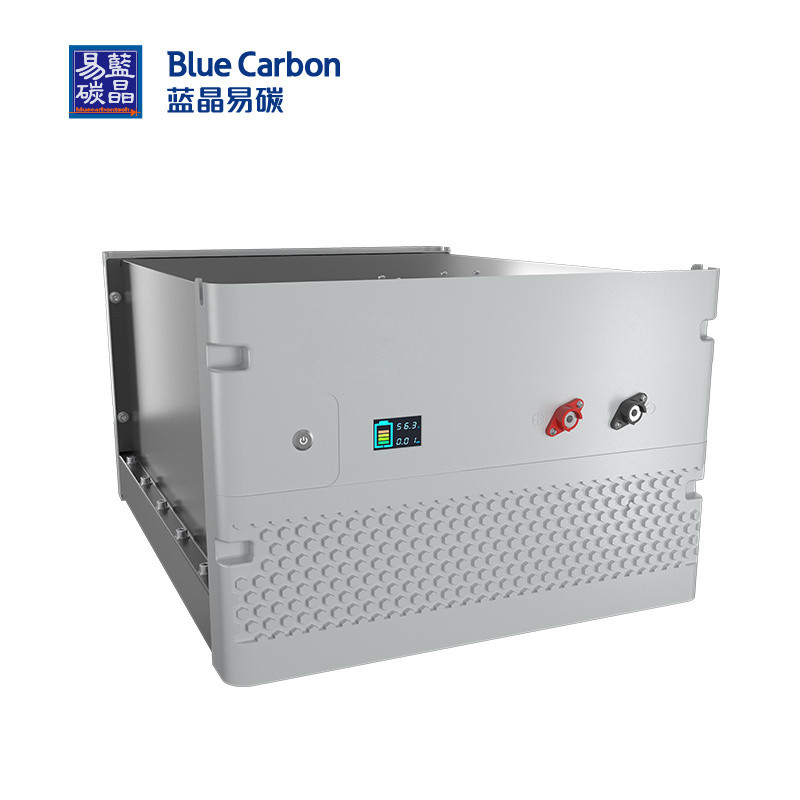
Blue Carbon currently offers 48V-class lithium batteries in
capacities including approximately 10.24kWh, 12.8kWh and 15.36kWh,
depending on model. (bluecarbon.ng)
Generally, as capacity increases, the total battery price
increases.
For example:
5kWh → 10kWh
→ 15kWh
→ 20kWh
But price does not always increase in a perfectly linear
manner because larger battery systems can have different enclosure, BMS,
packaging and installation configurations.
2. Lithium Battery Chemistry
Not every lithium battery uses the same chemistry.
For solar energy storage, LiFePO₄ (Lithium Iron
Phosphate or LFP) is particularly important.
LiFePO₄
batteries are widely used for stationary energy storage because of their
combination of:
- Safety
- Stability
- Long
cycle life
- Good
thermal characteristics
- Consistent
performance
- High
usable capacity
Blue Carbon's published battery specifications identify LiFePO₄/LFP
chemistry across its relevant lithium storage products. (bluecarbon.ng)
When comparing prices, always ask:
What battery chemistry am I buying?
3. Quality of the Lithium Cells
The cells are essentially the building blocks of the
battery.
Cell quality can affect:
- Battery
performance
- Consistency
- Cycle
life
- Safety
- Capacity
retention
- Reliability
Blue Carbon has published information specifically
highlighting Grade A LiFePO₄ cells for
its 15kWh battery range. The company's 2026 article states that the applicable
model is engineered for more than 6,000 charge-discharge cycles under
recommended operating conditions. (bluecarbon.ng)
This illustrates why two batteries with the same kWh rating
should not automatically be considered equivalent.
4. Battery Management System
The Battery Management System (BMS) is another major
factor in lithium battery quality and price.
A properly designed BMS helps monitor and protect the
battery.
Depending on the model, protection can include:
- Overcharge
protection
- Over-discharge
protection
- Overcurrent
protection
- Overvoltage
protection
- Short-circuit
protection
- Temperature
protection
- Cell
monitoring
- Communication
with the inverter
Blue Carbon's published battery specifications describe
multiple BMS protection functions, including overcharge, over-discharge,
overcurrent, overvoltage, temperature and short-circuit protection. (bluecarbon.ng)
Some advanced lithium batteries can also communicate with
compatible inverters through communication protocols such as RS485 or other
supported interfaces.
That can improve system monitoring and battery-inverter
coordination.
5. Cycle Life
Another important factor affecting lithium battery value is
cycle life.
A cycle refers broadly to the equivalent of a full
charge-and-discharge cycle.
For example, a battery that is regularly charged and
discharged every day will accumulate cycles over time.
Some Blue Carbon 48V battery models are specified at more
than 6,000 cycles under specified test conditions, including a discharge
rate below 0.5C. (bluecarbon.ng)
However, customers should understand that a manufacturer's
cycle-life rating is not necessarily a guarantee of a specific number of years.
Actual service life depends on:
- Depth
of discharge
- Charging
conditions
- Discharge
rate
- Operating
temperature
- Installation
- Inverter
settings
- Usage
pattern
- Maintenance
- Battery
configuration
6. Usable Capacity Matters More Than Nominal
Capacity
Suppose you purchase a battery advertised as:
10kWh
That does not necessarily mean you should routinely extract
every last watt-hour from it.
The amount of energy you can practically use depends on the
battery's recommended depth of discharge (DoD).
Some Blue Carbon battery specifications list a depth of
discharge greater than 80%. (bluecarbon.ng)
This is important when comparing batteries.
Instead of asking only:
"How many kWh is the battery?"
also ask:
"How much of that capacity is recommended for regular
use?"
10kWh Lithium Battery Price in Nigeria
A 10kWh lithium battery is a popular capacity for
larger residential and smaller commercial solar systems.
Current published Nigerian market listings place 10kWh
lithium batteries across a broad range, roughly from around ₦1.4
million to ₦1.6 million or more,
depending on brand and specification.
A 10kWh battery may be suitable for:
- Larger
homes
- Duplexes
- Small
offices
- Shops
- Small
businesses
- Moderate
backup requirements
However, whether 10kWh is sufficient depends on your actual
load.
For example, a home using:
2kW × 5 hours = 10kWh
would theoretically require 10kWh of energy.
But the actual battery requirement should account for
usable capacity, inverter efficiency, operating conditions and reserve
capacity.
15kWh Lithium Battery Price in Nigeria
A 15kWh lithium battery is suitable for applications
requiring greater energy storage.
Published Nigerian 2026 market listings currently show
approximately ₦1.5 million to above ₦5
million across different products and suppliers.
Blue Carbon has a 48V/300Ah battery specification with
approximately 15.36kWh nominal capacity, greater than 80% depth of
discharge and more than 6,000 cycles under the stated test condition. (bluecarbon.ng)
A 15kWh-class battery may be appropriate for:
- Large
residential systems
- Duplexes
- Offices
- Hotels
- Commercial
facilities
- Schools
- Clinics
- Larger
backup systems
Again, the correct choice depends on load requirements
rather than house size alone.
5kWh Lithium Battery Price in Nigeria
A 5kWh lithium battery is often considered for smaller
residential or light commercial applications.
Current published market guides show 5kWh lithium batteries
ranging broadly from around ₦995,000 to over ₦2
million, depending on brand, configuration and quality.
A 5kWh battery could be appropriate for a system powering
selected loads such as:
- Lighting
- Television
- Fans
- Refrigeration
- Internet
equipment
- Computers
- Small
pumps
- Selected
appliances
But again, actual backup duration depends on how much power
those appliances consume.
How Do You Calculate the Battery Size You Need?
A simple starting formula is:
Battery Energy Required
Power × Time = Energy
For example:
If your load is:
1,500W
and you want:
6 hours
of backup:
1,500 × 6 = 9,000Wh
or:
9kWh
This does not mean you should automatically buy a 9kWh
battery.
You also need to consider:
- Usable
DoD
- Inverter
efficiency
- Battery
reserve
- Future
loads
- Charging
conditions
- Battery
ageing
- Peak
power requirements
This is why professional load assessment is recommended
before purchasing a battery.
Lithium Battery Price vs Lead-Acid Battery
Price
One of the biggest mistakes buyers make is comparing the
purchase price of one lithium battery against one lead-acid battery without
considering usable energy and expected lifespan.
For example:
A lead-acid battery may have a lower upfront price.
A lithium battery may cost considerably more.
But the lithium battery may provide:
- Greater
usable capacity
- More
cycles
- Faster
charging
- Lower
maintenance
- Lower
weight
- Better
suitability for frequent daily cycling
Current Nigerian price guides continue to show that lithium
batteries cost more upfront than many tubular or GEL batteries, although
long-term economics can differ substantially depending on usage.
Therefore, consider total cost of ownership, not
only purchase price.
Why the Cheapest Lithium Battery May Not Be the
Best
When you find a lithium battery that is significantly
cheaper than comparable products, ask questions before purchasing.
Ask:
What cells are used?
What is the battery chemistry?
What is the cycle-life rating?
What is the usable depth of discharge?
What BMS protection is included?
Does it communicate with my inverter?
What certifications are available?
What warranty applies?
Who handles warranty claims?
Is technical support available in Nigeria?
A cheap battery with poor cell quality or inadequate
protection can become an expensive mistake.
Inverter Compatibility Is Extremely Important
Never purchase a lithium battery simply because the voltage
appears to match your inverter.
For example, a 48V battery should be checked against the
inverter's:
- Battery
voltage range
- Charging
voltage
- Maximum
charging current
- Maximum
discharge current
- BMS
communication requirements
- CAN/RS485
requirements
- Battery
settings
- Parallel
configuration requirements
Blue Carbon's battery documentation includes communication
and electrical specifications that should be considered alongside the
compatible inverter and system design. (bluecarbon.ng)
An appropriately qualified installer should configure the
inverter according to the battery manufacturer's requirements.
How Nigerian Market Conditions Affect Lithium
Battery Prices
Lithium battery prices in Nigeria can change due to several
factors.
Exchange Rate
Many solar equipment components are imported, so changes in
foreign-exchange rates can affect local pricing.
Import and Logistics Costs
Shipping, customs, inland transportation and warehousing
can influence the final selling price.
Availability
A product that is readily available locally may have a
different price from one that needs to be specially imported.
Battery Capacity
Larger battery systems require more cells and components.
Brand
Established brands may charge more because of quality
control, warranty infrastructure, technical support and distribution.
Warranty
A battery with stronger warranty and local support may cost
more initially but provide greater peace of mind.
Current Nigerian price guides explicitly caution that
battery prices change with exchange rates and market availability.
What Should You Look for in a Quality Lithium
Battery?
Before buying a lithium battery in Nigeria in 2026, use
this checklist:
1. LiFePO₄ chemistry
Consider whether LFP is appropriate for your application.
2. High-quality cells
Ask about cell quality and manufacturer specifications.
3. Reliable BMS
Ensure appropriate protection is available.
4. High usable capacity
Don't focus only on nominal kWh.
5. Good cycle-life rating
Check the test conditions behind the claim.
6. Inverter compatibility
Confirm voltage, current and communication compatibility.
7. Appropriate operating temperature
Install the battery within the manufacturer's specified
conditions.
8. Warranty
Understand exactly what the warranty covers.
9. Certifications
Request applicable product documentation.
10. After-sales support
Make sure you know who will support you if a problem
occurs.
Blue Carbon Lithium Batteries in Nigeria
Blue Carbon provides lithium energy-storage products for
residential, commercial and industrial applications.
Its published product range includes 48V-class batteries
such as:
- 10.24kWh
/ 48V / 200Ah
- 12.8kWh
/ 48V / 250Ah
- 15.36kWh
/ 48V / 300Ah
depending on the specific model. (bluecarbon.ng)
The company's published 10.24kWh and 15.36kWh products
specify LiFePO₄
chemistry, greater than 80% depth of discharge and more than 6,000 cycles under
stated test conditions. (bluecarbon.ng)
Blue Carbon has also published information highlighting
Grade A LiFePO₄ cells
and long-cycle performance for applicable 15kWh battery models. (bluecarbon.ng)
These specifications make capacity, battery chemistry,
cycle life, BMS and compatibility important factors when evaluating Blue Carbon
against alternative lithium batteries.
Why You Should Request a Current Blue Carbon
Price
A major mistake in an article targeting “lithium battery
price in Nigeria 2026” would be publishing one permanent price and allowing
it to become outdated.
Solar equipment prices can change.
Therefore, customers should request the current price
for the exact Blue Carbon battery model, capacity and configuration they
require.
The quotation should ideally identify:
- Battery
model
- Nominal
capacity
- Voltage
- Number
of batteries
- Inverter
- Solar
panels
- Protection
equipment
- Installation
- Delivery
- Warranty
- Any
additional accessories
This makes it easier to compare quotations accurately.
Is a More Expensive Lithium Battery Always
Better?
Not necessarily.
The goal is to find the best value, not necessarily
the most expensive battery.
A suitable battery should match:
Your load + backup requirement + inverter +
solar array + budget + expected usage pattern.
For example, buying a 15kWh battery when your actual
requirements only justify 5kWh could unnecessarily increase your initial
investment.
On the other hand, purchasing a battery that is too small
could result in:
- Frequent
deep discharge
- Insufficient
backup
- Increased
stress on the battery
- Customer
dissatisfaction
- Need
for an early upgrade
Correct system sizing is therefore essential.
7 Questions to Ask Before Buying a Lithium
Battery in Nigeria
Before paying for a battery, ask the supplier:
Question 1
What is the exact battery capacity in kWh?
Question 2
What chemistry and cell type does it use?
Question 3
What is the recommended depth of discharge?
Question 4
What is the cycle-life rating and under what
test conditions?
Question 5
Is the battery compatible with my inverter?
Question 6
What warranty applies to this exact model?
Question 7
What happens if I need warranty or technical
support?
These questions can help you distinguish a quality
energy-storage product from a battery being sold primarily on price.
Final Thoughts: What Is the Right Lithium
Battery Price in Nigeria in 2026?
The lithium battery price in Nigeria in 2026 varies
widely depending on capacity, chemistry, cell quality, BMS, brand, warranty,
configuration and market conditions.
These are indicative market ranges, not fixed prices,
and different products can fall outside them.
For Blue Carbon customers, the best approach is to request
a current quotation for the specific battery model and system configuration
required.
Blue Carbon's current lithium range includes 48V LiFePO₄ storage options around
10.24kWh, 12.8kWh and 15.36kWh, with applicable models offering BMS protection
and published cycle-life specifications exceeding 6,000 cycles under stated
conditions. (bluecarbon.ng)
Ultimately, the cheapest lithium battery is not
necessarily the best battery, and the most expensive battery is not
automatically the best either.
The best purchase is a battery that delivers the right
combination of quality, usable capacity, safety, cycle life, compatibility,
warranty, support and long-term value.
For homes, businesses and industrial facilities across
Nigeria, proper battery sizing and professional installation are just as
important as the battery itself.
Tag: lithium battery price in Nigeria 2026, lithium battery Nigeria, LiFePO4 battery price Nigeria, 15kWh lithium battery price Nigeria, solar battery price Nigeria
Recent Posts
48V Lithium Battery in Nigeria: Prices, Capacity, Lifespan & Best Uses
10kWh Lithium Battery Price in Nigeria: Capacity, Backup Time & Cost
15kWh Lithium Battery Price in Nigeria: What You Need to Know Before Buying
Lithium Battery Price in Nigeria 2026: Complete Buying Guide