
High Voltage vs Low Voltage Energy Storage Systems: How to Choose the Right Solution with Blue Carbon
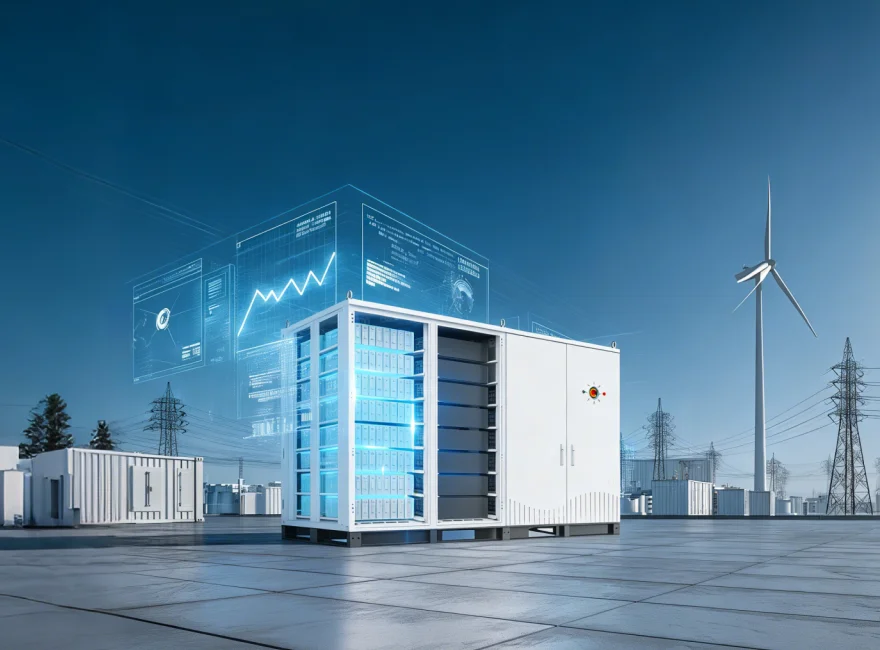
As solar energy adoption continues to grow across Nigeria, energy storage has become just as important as solar generation. For homes, businesses, offices, factories, hospitals, schools, and other facilities, choosing the right battery storage architecture can have a major impact on system efficiency, installation requirements, scalability, and long-term performance.
One of the
most important decisions when designing a battery energy storage system is
whether to use a High Voltage (HV) or Low Voltage (LV) energy storage system.
Although
both systems can use lithium-ion battery technology, they operate at
significantly different voltage levels and have different design
characteristics. Understanding these differences helps solar installers,
homeowners, businesses, and project developers select a solution that matches
their energy requirements.
Blue
Carbon offers
lithium battery and energy-storage solutions designed for different
applications, making it important to understand where low-voltage and
high-voltage battery systems fit into a modern solar installation.
This guide
explains the differences between High Voltage vs Low Voltage Energy Storage
Systems, their advantages and disadvantages, and how to determine the right
solution for your project.
What Is
an Energy Storage System?
An Energy
Storage System (ESS) stores electrical energy so that it can be used later.
In a solar
power installation, solar panels generate electricity during daylight hours.
Depending on the system configuration, that energy can:
- Power appliances and equipment
directly.
- Charge the battery.
- Feed excess energy into an
electrical grid where permitted.
- Be used later when solar
production is low or unavailable.
A typical
solar-plus-storage system consists of:
Solar
Panels → Inverter → Battery Storage → Electrical Loads
The battery
voltage architecture is an important part of this system.
This is
where the distinction between Low Voltage and High Voltage energy storage
becomes important.
What Is a
Low Voltage Energy Storage System?
A Low
Voltage battery system generally operates within a lower DC voltage range than
a high-voltage battery system.
In many
residential solar applications, battery systems are commonly built around
nominal voltages such as 48V, although the exact operating voltage
depends on the battery chemistry, configuration, and manufacturer.
Low-voltage
systems can be configured using individual battery modules connected together
to increase total storage capacity.
For example,
multiple compatible battery modules may be connected in parallel to increase
the available energy capacity while maintaining a relatively low system
voltage.
This
architecture has become popular for:
- Residential solar systems
- Small businesses
- Backup power systems
- Small offices
- Shops
- Villas
- Small commercial installations
What Is a
High Voltage Energy Storage System?
A High
Voltage energy storage system operates at a substantially higher DC voltage.
Instead of
keeping multiple battery modules at approximately the same low voltage and
increasing capacity primarily through parallel connections, HV systems can
connect battery modules in series to create a much higher system voltage.
For example,
several compatible battery modules may be connected in series to achieve a
higher DC bus voltage.
High-voltage
systems are commonly considered for:
- Large residential systems
- Commercial solar installations
- Industrial facilities
- High-power energy storage
systems
- Large hybrid inverter systems
- Projects requiring higher power
transfer efficiency
However, the
exact voltage range and battery configuration must always follow the battery
and inverter manufacturer's specifications.
High
Voltage vs Low Voltage: What Is the Main Difference?
The
fundamental difference is the voltage at which the battery storage system
operates.
A simplified
electrical relationship is:
Power =
Voltage × Current
Therefore:
Current =
Power ÷ Voltage
This means
that, for the same power level, increasing system voltage allows the system to
operate at a lower current.
For example,
ignoring system losses:
A 10kW load
at 48V would require approximately:
10,000 ÷
48 = 208A
At 400V, the
same 10kW power would require approximately:
10,000 ÷
400 = 25A
This
difference in current can become very important as system power increases.
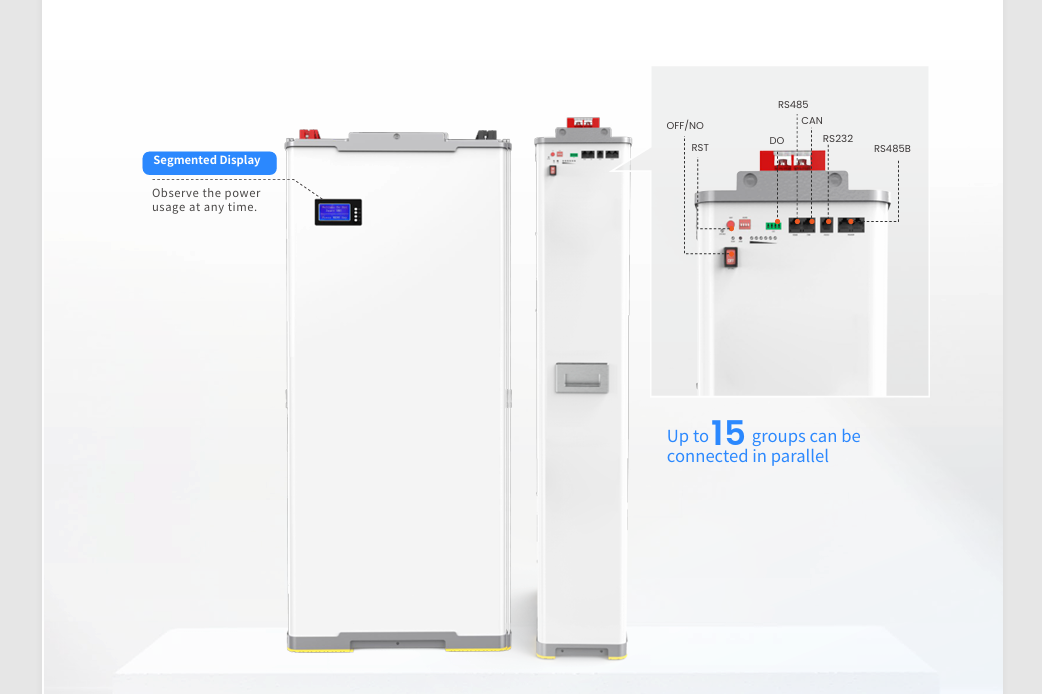
1. High
Voltage Systems Can Reduce Current
One of the
biggest technical advantages of high-voltage battery systems is reduced current
for a given power level.
Lower
current can allow appropriately designed systems to use smaller conductors than
would otherwise be required for an equivalent low-voltage system.
It can also
reduce certain resistive losses.
Electrical
cable losses are related to:
P = I²R
Where:
- P = power loss
- I = current
- R = resistance
Because
current is squared in this relationship, reducing current can significantly
reduce resistive losses in appropriately designed systems.
This is one
reason high-voltage battery architectures can become attractive for larger
solar installations.
2. Low
Voltage Systems Are Often Simpler for Residential Applications
Low-voltage
battery systems have an important advantage: simplicity.
Many
residential solar systems are already designed around low-voltage battery
architectures.
A 48V
lithium battery system, for example, can be relatively straightforward when
paired with a compatible inverter.
This can
make LV systems attractive for:
- Homes
- Apartments
- Small offices
- Small shops
- Basic backup systems
For smaller
power requirements, the additional complexity of a high-voltage battery system
may not always provide enough practical benefit to justify choosing it.
3. High
Voltage Can Be Attractive for Large Solar Systems
As the size
of a solar system increases, current becomes increasingly important.
A large
commercial installation may require tens or hundreds of kilowatts of power.
Trying to
move very high power at low voltage can result in very high currents.
That can
create challenges involving:
- Cable sizing
- Busbars
- Connections
- Heat management
- Protection equipment
- Installation complexity
- Voltage drop
A properly
engineered high-voltage architecture can help address some of these challenges.
This is one
reason HV battery systems are increasingly relevant to commercial and
industrial energy storage.
4. Low
Voltage Can Offer Greater Flexibility for Smaller Systems
Low-voltage
systems can be very flexible for residential applications.
A homeowner
may begin with a smaller battery capacity and later add compatible battery
modules if the system design and manufacturer allow expansion.
For example,
a residential system could be designed around several lithium battery modules
connected according to the manufacturer's approved configuration.
However,
battery expansion should never be improvised.
The
installer must confirm:
- Battery compatibility
- Maximum number of batteries
- Firmware requirements
- BMS compatibility
- Cable sizing
- Communication requirements
- Inverter compatibility
- Battery age and condition
- Approved connection
configuration
5. High
Voltage Systems Require More Specialized Design
High-voltage
battery systems require careful engineering because higher DC voltage
introduces additional safety and installation considerations.
An HV ESS
may require specialized:
- Battery management systems
- Contactors
- Fuses
- Disconnects
- Insulation monitoring
- Communication systems
- HV connectors
- Protection equipment
Installation
should therefore be carried out by appropriately qualified professionals
following the manufacturer's instructions and applicable electrical standards.
The higher
voltage should not be treated as simply "more powerful."
It is a
different system architecture requiring appropriate equipment.
6. Blue
Carbon Lithium Battery Technology
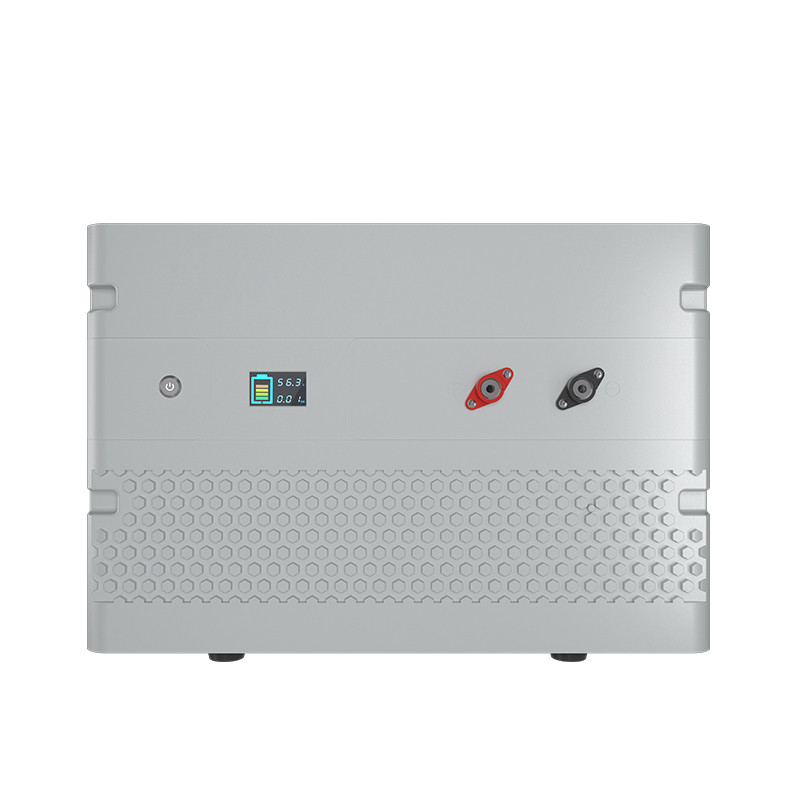
Blue Carbon
provides lithium battery solutions for solar energy storage applications.
Lithium iron
phosphate (LiFePO₄) batteries are particularly popular in modern solar
systems because of their combination of energy density, cycle performance,
safety characteristics, and suitability for stationary energy storage when
properly designed and operated.
Blue
Carbon's product ecosystem includes lithium batteries designed for residential,
commercial, and industrial applications.
This allows
system designers to consider storage capacity alongside the inverter and
solar-generation requirements.
High
Voltage vs Low Voltage Battery Efficiency
Efficiency
should be considered at the complete system level, rather than simply
assuming that high voltage is always more efficient.
Higher
voltage can reduce current for a given power level, which can reduce certain
resistive losses in conductors and associated components.
However,
overall system efficiency depends on many factors, including:
- Battery chemistry
- Battery management system
- Inverter efficiency
- Cable resistance
- Operating temperature
- Charge/discharge rate
- Battery state of charge
- Conversion stages
- System design
Therefore,
the best approach is to compare the actual specifications of the complete
battery-and-inverter system.
High
Voltage vs Low Voltage: Which Is Better?
There is no
universal answer.
The right
choice depends on the project.
Low
Voltage may be more suitable when:
- The system is relatively small.
- The application is residential.
- A compatible 48V inverter is
already being used.
- Simplicity is a priority.
- The required battery capacity is
moderate.
- Installation requirements favor
a straightforward architecture.
High
Voltage may be more suitable when:
- The system has higher power
requirements.
- The project is commercial or
industrial.
- Lower current is desirable.
- Long cable runs or high power
transfer are involved.
- The selected inverter is
designed for HV batteries.
- The project requires a
high-voltage storage architecture.
High
Voltage vs Low Voltage Comparison
|
Feature |
Low
Voltage ESS |
High
Voltage ESS |
|
Typical
application |
Residential/small
commercial |
Commercial/industrial |
|
System
voltage |
Lower |
Higher |
|
Current at
same power |
Higher |
Lower |
|
Cable
current requirements |
Potentially
higher |
Potentially
lower |
|
System
complexity |
Generally
simpler |
Generally
more complex |
|
Installation
requirements |
Often
simpler |
Requires
specialized design |
|
Scalability |
Good when
properly configured |
Excellent
for suitable larger systems |
|
Inverter
compatibility |
LV
inverter required |
HV
inverter required |
|
Safety
requirements |
Important |
More
stringent due to higher DC voltage |
|
Large
power systems |
Can
require high current |
Often well
suited |
|
Small
residential systems |
Often
practical |
May be
unnecessary |
|
Professional
installation |
Recommended |
Essential |
How to
Choose the Right Blue Carbon Energy Storage Solution
Before
choosing between high-voltage and low-voltage storage, consider the following
factors.
1.
Determine Your Energy Consumption
Calculate
how much electricity your property uses each day.
Important
loads may include:
- Refrigerators
- Freezers
- Air conditioners
- Televisions
- Lighting
- Pumps
- Computers
- Washing machines
- Production equipment
- Office equipment
Understanding
your energy consumption is the foundation of correct battery sizing.
2.
Calculate Your Peak Power Requirement
Daily energy
consumption is not the only consideration.
You also
need to know the maximum power that may be required simultaneously.
For example,
a home may consume 20kWh per day but have a peak load of 8kW.
A factory
could consume hundreds of kilowatt-hours daily and have a much higher peak
demand.
The battery
and inverter must be designed to accommodate the required power.
3.
Consider Your Solar Capacity
Your solar
array and battery should work together.
A system
with:
- 20kW solar panels
- 15kW inverter
- 30kWh battery
has
different requirements from a system with:
- 100kW solar panels
- 80kW inverter
- 200kWh battery.
As system
capacity increases, the advantages of high-voltage architecture can become more
relevant.
4. Check
Inverter Compatibility
This is
extremely important.
You cannot
simply connect any Blue Carbon battery to any inverter.
The
battery's voltage range must be compatible with the inverter's battery input
specifications.
For systems
requiring BMS communication, communication protocols and configuration must
also be compatible.
Before
purchasing, confirm:
- Battery voltage
- Operating voltage range
- Maximum charge current
- Maximum discharge current
- Inverter battery voltage range
- BMS communication
- Firmware requirements
- Approved battery configurations
5.
Consider Future Expansion
Think about
your future electricity requirements.
If you
currently operate a small home but plan to install more air conditioners,
electric appliances, or other equipment, your future energy requirements may
increase.
Similarly, a
business may expand its operations.
Choosing a
scalable energy-storage architecture can help accommodate future growth,
provided the manufacturer's expansion requirements are followed.
6.
Consider Installation and Maintenance
A good
battery system is only as reliable as its installation.
The
installation should account for:
- Ventilation
- Temperature
- Cable sizing
- Earthing
- Overcurrent protection
- Isolation
- Surge protection where
applicable
- Battery spacing
- Environmental conditions
- Communication cables
- Proper commissioning
High-voltage
systems particularly require appropriate protection and professional
commissioning.
Why Blue
Carbon Is a Strong Option for Energy Storage
For
customers considering solar energy storage in Nigeria, Blue Carbon provides an
ecosystem covering multiple aspects of a solar installation.
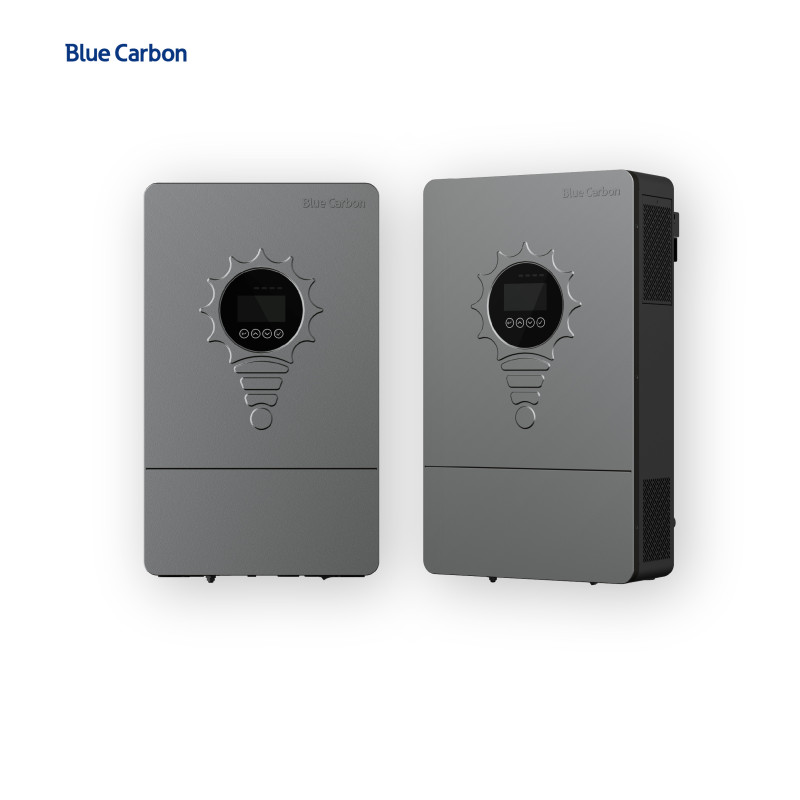
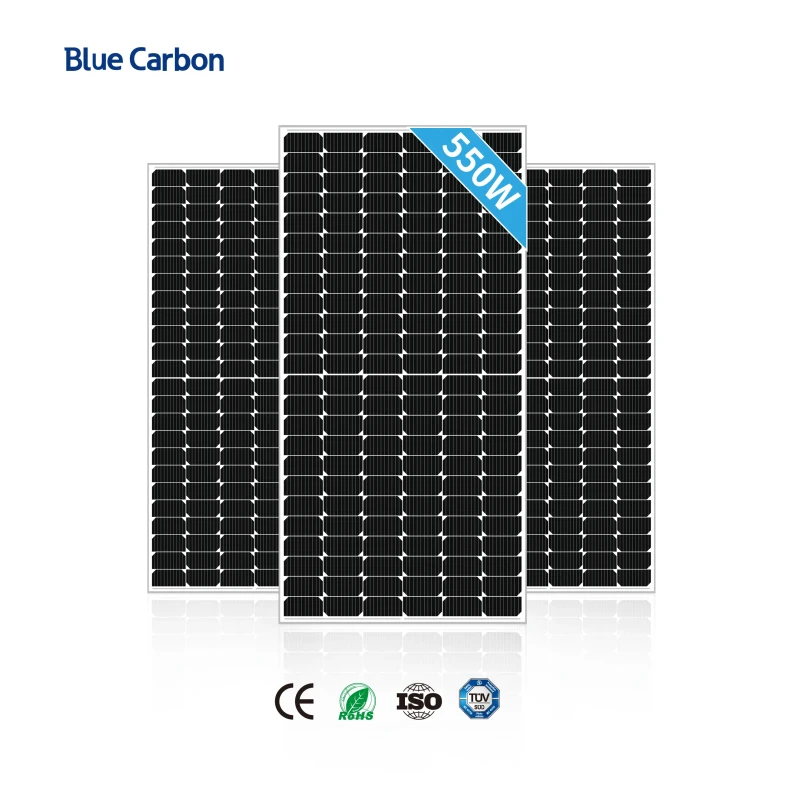
Its product
portfolio includes lithium batteries, solar inverters, solar panels and other
renewable-energy products.
This makes
it possible to approach a solar project as an integrated energy solution rather
than selecting every component independently.
For
residential customers, businesses, and industrial users, the goal should be to
select the battery architecture that matches the actual energy requirements of
the facility.
High
Voltage or Low Voltage: A Practical Example
Imagine two
different customers.
Customer
A: Residential Home
The
homeowner needs:
- 5kW inverter
- Moderate daily electricity
consumption
- Battery backup for lighting,
refrigeration, television, fans and selected appliances
- Limited solar installation space
A properly
designed low-voltage lithium battery system may be a practical solution.
Customer
B: Commercial Facility
The facility
requires:
- Large solar array
- High-power inverter system
- Significant battery storage
- High peak loads
- Potential future expansion
A properly
engineered high-voltage energy storage system may be more appropriate.
The
important point is that the "best" battery is determined by the
application.
Common
Mistakes When Selecting an Energy Storage System
Mistake
1: Choosing Based Only on Battery Capacity
A 10kWh
battery is not automatically suitable for every 10kWh energy requirement.
Power
output, inverter compatibility and operating conditions matter.
Mistake
2: Ignoring Peak Loads
A battery
may have enough energy capacity but still be unable to supply the required
instantaneous power.
Mistake
3: Mixing Incompatible Batteries
Different
battery models or generations should not be connected together unless the
manufacturer explicitly permits the configuration.
Mistake
4: Ignoring BMS Communication
Modern
lithium batteries rely heavily on their Battery Management System.
Incorrect
communication or configuration can result in poor performance or unsafe
operation.
Mistake
5: Using Improper Cable Sizes
Cable sizing
must account for current, distance, installation conditions and applicable
standards.
Mistake
6: Treating HV and LV as Interchangeable
They are
not.
The
inverter, battery, protection equipment and system architecture must be
designed around the appropriate voltage class.
The
Future of Solar Energy Storage in Nigeria
Nigeria has
enormous potential for solar energy deployment.
As
electricity demand grows and more businesses and households seek reliable
alternative power, battery storage will become increasingly important.
Energy
storage allows solar-generated electricity to become more useful beyond
daylight hours.
Modern
lithium battery systems can help provide:
- Backup power
- Energy shifting
- Solar self-consumption
- Reduced generator dependence
- Improved energy management
- Greater power resilience
As projects
become larger, both low-voltage and high-voltage storage architectures will
have important roles to play.
Conclusion
The choice
between High Voltage and Low Voltage Energy Storage Systems should never
be based simply on which voltage is higher.
Both
technologies have legitimate applications.
Low-voltage
energy storage can
be an excellent choice for many residential and smaller commercial applications
because of its simplicity, flexibility and compatibility with commonly used
battery architectures.
High-voltage
energy storage can
be particularly attractive for larger commercial and industrial systems because
higher voltage allows the same power to be transferred at lower current,
potentially reducing certain electrical losses and simplifying high-power
distribution when properly engineered.
For Blue
Carbon customers, the right solution should be selected based on energy
consumption, peak demand, battery capacity, inverter compatibility,
scalability, installation requirements, safety and long-term project objectives.
The most
important step is to work with a qualified solar professional who can correctly
size and configure the complete system.
Whether your
project is a home, office, commercial building, factory or large-scale solar
installation, Blue Carbon energy-storage solutions can be evaluated as part
of a properly engineered solar-plus-storage system designed around your
specific power requirements.
Tags: High Voltage Energy Storage System, Low Voltage Energy Storage System, Blue Carbon lithium battery, HV vs LV battery, energy storage systems Nigeria
Recent Posts
Why Blue Carbon Products Have the Best Quality in the Nigerian Market: Making Blue Carbon the Most Preferred Choice
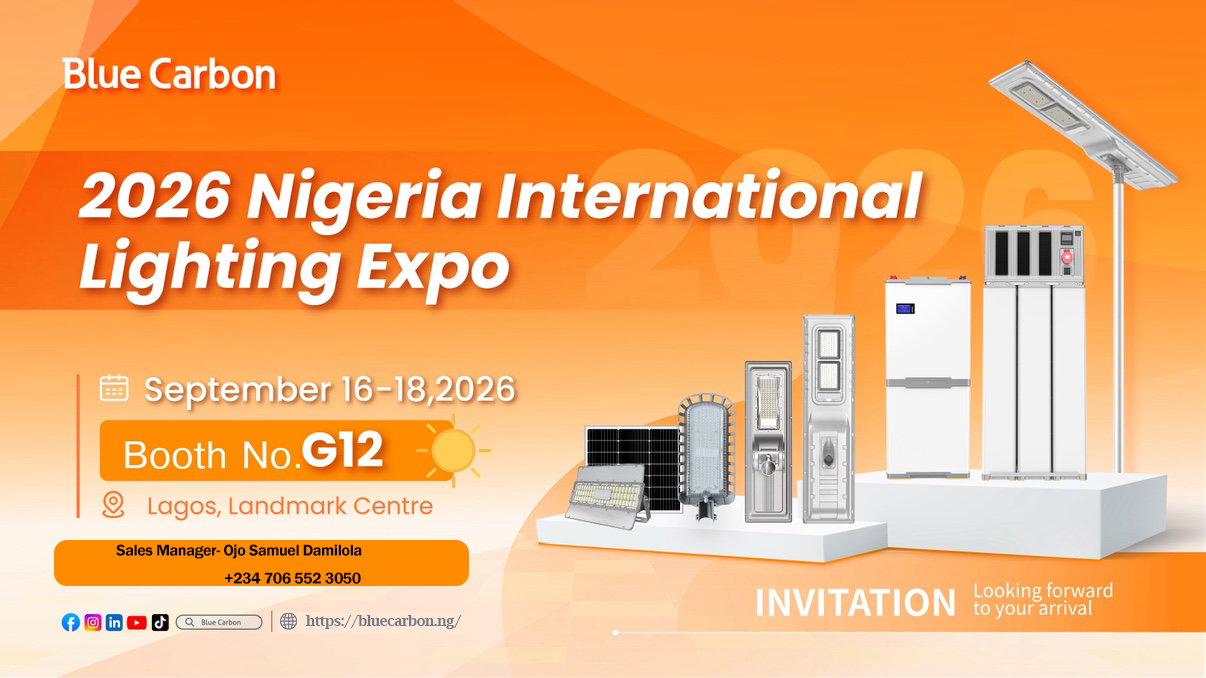
Blue Carbon Invites You to the 2026 Nigeria International Lighting Expo - September 16 - 18, 2026
High Voltage vs Low Voltage Energy Storage Systems: How to Choose the Right Solution with Blue Carbon
Register Your Blue Carbon Product for Warranty to Gain Access to Warranty Support