
How Solar Panel Quality Can Affect Your Battery Bank Charging Frequency
Solar power has become one of the most reliable and cost-effective energy solutions for homes and businesses in Nigeria. But while many people focus on the inverter capacity and battery size when installing a solar system, one critical factor often gets overlooked: solar panel quality. The quality of the solar panels you choose plays a major role in how efficiently your battery bank charges, how long it lasts, and how stable your power supply will be.
A battery bank is only as good as
the energy it receives from the solar panels. If the panels do not produce
enough power, or if the energy generation is inconsistent, your batteries will
not charge properly. This leads to frequent charging cycles, reduced battery
lifespan, poor backup time, and frustration for the user.
In this guide, we break down in
detail how solar panel quality affects your battery charging frequency-and why
choosing high-quality solar panels is essential for reliable solar performance.
1. Understanding the Role of Solar Panels in Battery
Charging
Solar panels are responsible for
converting sunlight into electricity. This electricity is then passed to the
charge controller, which regulates it before sending it to the battery bank.
The entire performance of your solar system depends on how much power your
solar panels can generate.
If the panels generate insufficient
or inconsistent power, your batteries are forced to recharge more frequently
because:
- They rarely reach full charge
- They discharge faster
- They cycle more often than they should
This affects your system efficiency
and the lifespan of your battery bank.
2. How Solar Panel Quality Influences Charging
Frequency
Not all solar panels are created
equal. The quality of the panels determines their energy output, durability,
and ability to charge your batteries efficiently. Here’s how:
(1)
Higher Efficiency =Faster and More Consistent Charging
High-quality solar panels have
higher efficiency ratings, meaning they convert more sunlight into usable
energy. Premium panels can reach 20–23% efficiency, while low-grade
panels may produce only 14–16% efficiency.
Higher efficiency means:
- More power generation even in low-light conditions
- Faster battery charging
- Reduced number of charging cycles
- Better overall system performance
Low-quality panels, on the other
hand, require longer hours to charge the same battery capacity, leading to
increased battery cycling.
(2)
Better Low-Light Performance Extends Charging Hours
In Nigeria, cloudy days, rainy
seasons, and early mornings/late evenings reduce solar intensity. High-quality
solar panels still generate power under these conditions due to advanced cell
technology, while low-quality panels struggle.
Better low-light performance means:
- Your batteries continue charging even during poor
weather
- Fewer deep discharge cycles
- Improved battery lifespan
Poor low-light performance increases
charging frequency because your system may rely heavily on the battery during
daylight hours.
(3)
Panel Degradation Rate Controls Long-Term Performance
All solar panels degrade over time,
but the rate of degradation varies significantly between high-quality and
low-quality panels.
- High-quality panels degrade at 0.2–0.5% per year
- Low-quality panels degrade at 1–2% per year
This means that after 10 years:
- A high-quality 500W panel may still produce 480–490W
- A low-quality 500W panel may drop to 400–450W
Lower long-term performance =more
frequent battery charging as the panels become weaker.
(4)
Temperature Coefficient Affects Output in Hot Weather
Nigeria's climate is hot, and solar
panel performance reduces when panel temperature increases. High-quality solar
panels have a better temperature coefficient (e.g., -0.25% to -0.35% per °C),
which means they lose less efficiency under heat.
Poor-quality panels often come with
higher coefficients, causing:
- Faster output drop
- Inconsistent charging
- Shorter charging windows
Hot weather should not prevent your
batteries from charging fully, but poor-quality panels often fail under high
temperatures.
(5)
Superior Build Quality Improves Voltage Stability
Battery charging depends heavily on
the voltage consistency coming from the solar panels. High-quality panels
maintain stable voltage output, ensuring smooth and safe charging.
Poor-quality panels often produce
fluctuating voltage, which can lead to:
- Inefficient charging
- Battery stress
- Shortened battery lifespan
Stable voltage =fewer charging
cycles and better battery health.
(6)
Better Materials Increase Durability and Long-Term Power Output
Premium solar panels use:
- Grade A monocrystalline cells
- High-transparency tempered glass
- Corrosion-resistant frames
- Advanced EVA encapsulation
- Durable junction boxes
Low-quality panels often cut corners
on materials, leading to:
- Cell micro-cracks
- Moisture penetration
- Hot spots
- Reduced performance over time
These issues drastically reduce
panel output, increasing battery charging frequency and reducing the overall
efficiency of your solar system.
3. How Poor Solar Panel Quality Damages Your Battery
Bank
Using low-quality solar panels
doesn’t just affect charging speed-it can directly harm your battery bank.
•
Frequent deep cycles damage battery cells
Your battery constantly discharges
and recharges because the panels cannot keep up.
•
Undercharging weakens battery chemistry
Lithium and AGM batteries need full
charge cycles to maintain health.
•
Over-discharge shortens lifespan
Batteries forced to run without
proper charging degrade faster.
•
Higher charge controller stress
Poor panel output strains your
charge controller, increasing system risk.
In summary: poor panels =expensive
battery replacements.
4. How High-Quality Panels Extend Battery Life
Investing in good panels helps your
battery last longer by ensuring:
- Full charging cycles
- Faster recharge during peak sunlight hours
- Reduced discharge depth
- Optimal voltage and current flow
- Lower operating temperature
This leads to improved battery
health, longer lifespan, and better performance of your entire solar system.
5. Why Nigerian Homes and Businesses Need Good Solar
Panels
Nigeria’s solar conditions demand
durable, high-efficiency panels because:
- The weather is hot
- Dust accumulation is high
- Rainy seasons reduce sunlight
- Power outages increase solar dependence
- Batteries cycle more often
A quality panel ensures maximum
performance regardless of external conditions.
Conclusion
The quality of your solar panel is
one of the most important factors affecting the performance, efficiency, and
lifespan of your battery bank. A poor-quality panel forces frequent battery
cycling, reduces charging efficiency, decreases backup time, and shortens the
life of your batteries.
A high-quality solar panel, on the
other hand, delivers:
- stable voltage
- higher efficiency
- better low-light performance
- longer lifespan
- consistent charging
Investing in good solar panels is
not just a smart choice-it’s essential for protecting your battery bank and
ensuring long-lasting, uninterrupted solar power.
If you want a solar system that
performs excellently and lasts for years, choose premium panels from trusted
brands and pair them with high-quality lithium batteries and inverters.
Recent Posts
Why Blue Carbon Products Have the Best Quality in the Nigerian Market: Making Blue Carbon the Most Preferred Choice
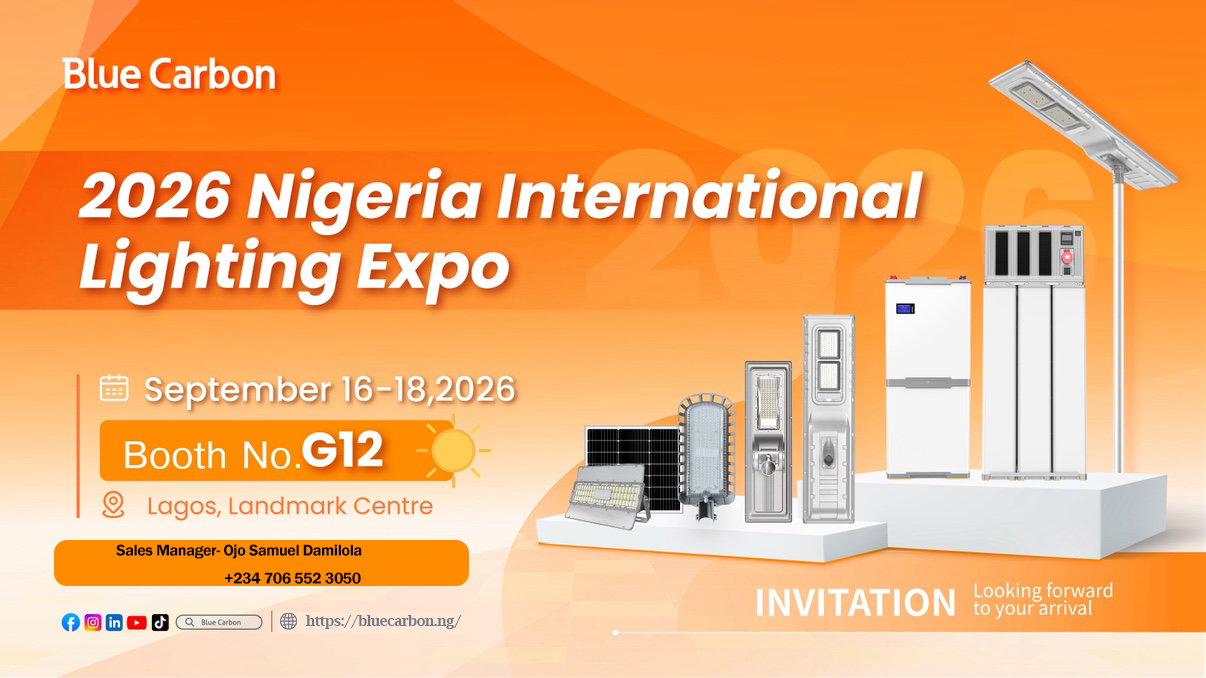
Blue Carbon Invites You to the 2026 Nigeria International Lighting Expo - September 16 - 18, 2026
High Voltage vs Low Voltage Energy Storage Systems: How to Choose the Right Solution with Blue Carbon
Register Your Blue Carbon Product for Warranty to Gain Access to Warranty Support