
Steps on How to Parallel and Connect Your Lithium Batteries with Your Inverter BMS
As solar energy adoption continues to grow in Nigeria and around the world, many homeowners and businesses are upgrading their energy systems to handle larger loads and longer backup times. One of the most effective ways to achieve this is by paralleling lithium batteries and connecting them properly to an inverter with a Battery Management System (BMS).
However,
improper battery connection can lead to:
- Poor performance
- Battery imbalance
- Communication failure
- Reduced lifespan
- Safety risks
Understanding
the correct process for connecting lithium batteries in parallel with your
inverter BMS is essential for achieving reliable performance, system stability,
and long-term durability.
In this
detailed guide, we will explain step-by-step how to safely parallel and connect
lithium batteries with your inverter BMS.
What Does
It Mean to Parallel Lithium Batteries?
Paralleling
batteries means connecting multiple batteries together to increase the total
battery capacity (Ah) while maintaining the same voltage.
Example:
If you
connect:
- Two 48V 100Ah batteries in
parallel
You will
get:
- 48V 200Ah system
The voltage
remains the same, but the storage capacity increases.
This allows:
- Longer backup time
- Increased energy storage
- Better support for heavy loads
Why
Parallel Lithium Batteries?
There are
several reasons users parallel lithium batteries.
Benefits
Include:
- Increased backup duration
- Higher energy storage capacity
- Improved load handling
- Easier future system expansion
- Better system flexibility
Paralleling
batteries is common in:
- Residential solar systems
- Commercial solar installations
- Industrial backup systems
Understanding
the Role of the BMS
The Battery
Management System (BMS) is one of the most important components in a
lithium battery system.
The BMS is
responsible for:
- Monitoring battery voltage
- Preventing overcharging
- Preventing deep discharge
- Balancing battery cells
- Protecting against overheating
and short circuits
When
batteries are connected in parallel, proper BMS communication ensures stable
and safe operation.
Things to
Check Before Connecting Lithium Batteries in Parallel
Before
starting the connection process, there are important factors to verify.
1. Use
Identical Batteries
Always use
batteries with:
- Same voltage
- Same capacity
- Same brand
- Same chemistry
- Same age (preferably)
Using
different batteries can cause imbalance and reduce system performance.
2. Ensure
Batteries Have Similar Voltage Levels
Before
connecting batteries together:
- Check each battery voltage using
a multimeter
Voltage
difference should be minimal.
Large
voltage differences may cause:
- Sudden current flow
- Damage to batteries
- BMS faults
3.
Confirm Parallel Support
Not all
lithium batteries support parallel connection.
Check:
- Manufacturer specifications
- User manual
- BMS compatibility
4. Use
Proper Cable Sizes
Incorrect
cable sizes can lead to:
- Overheating
- Voltage drop
- Power loss
Always use
high-quality cables rated for the system current.
5. Turn
Off All Equipment
Before
installation:
- Power off inverter
- Disconnect solar input
- Disconnect AC power
Safety
should always come first.
Tools and
Materials Needed
Before
starting, prepare the following:
Required
Tools:
- Battery cables
- Screwdrivers/spanners
- Multimeter
- Protective gloves
- Communication cables (CAN/RS485
if required)
- Circuit breakers or fuses
Step-by-Step
Guide to Parallel Lithium Batteries
Step 1:
Position the Batteries Properly
Place the
batteries:
- On a stable surface
- In a cool, dry, ventilated area
- Away from direct sunlight and
moisture
Proper
ventilation improves battery lifespan and safety.
Step 2:
Check Battery Voltage
Use a
multimeter to verify:
- All batteries have nearly
identical voltage
This is
critical before making connections.
Step 3:
Connect Positive Terminals Together
Using the
correct cable:
- Connect positive (+) terminal of
Battery 1 to positive (+) terminal of Battery 2
Repeat for
additional batteries if needed.
Step 4:
Connect Negative Terminals Together
Next:
- Connect negative (-) terminal of
Battery 1 to negative (-) terminal of Battery 2
This creates
the parallel connection.
Step 5:
Install Circuit Protection
Install:
- DC breakers
- Fuses
This
protects the system from:
- Short circuits
- Overcurrent conditions
Step 6:
Connect Batteries to the Inverter
Now connect
the battery bank to the inverter.
Connection
Process:
- Battery positive → inverter
positive
- Battery negative → inverter
negative
Ensure:
- Tight and secure connections
- Correct polarity
Wrong
polarity can damage the inverter instantly.
Step 7:
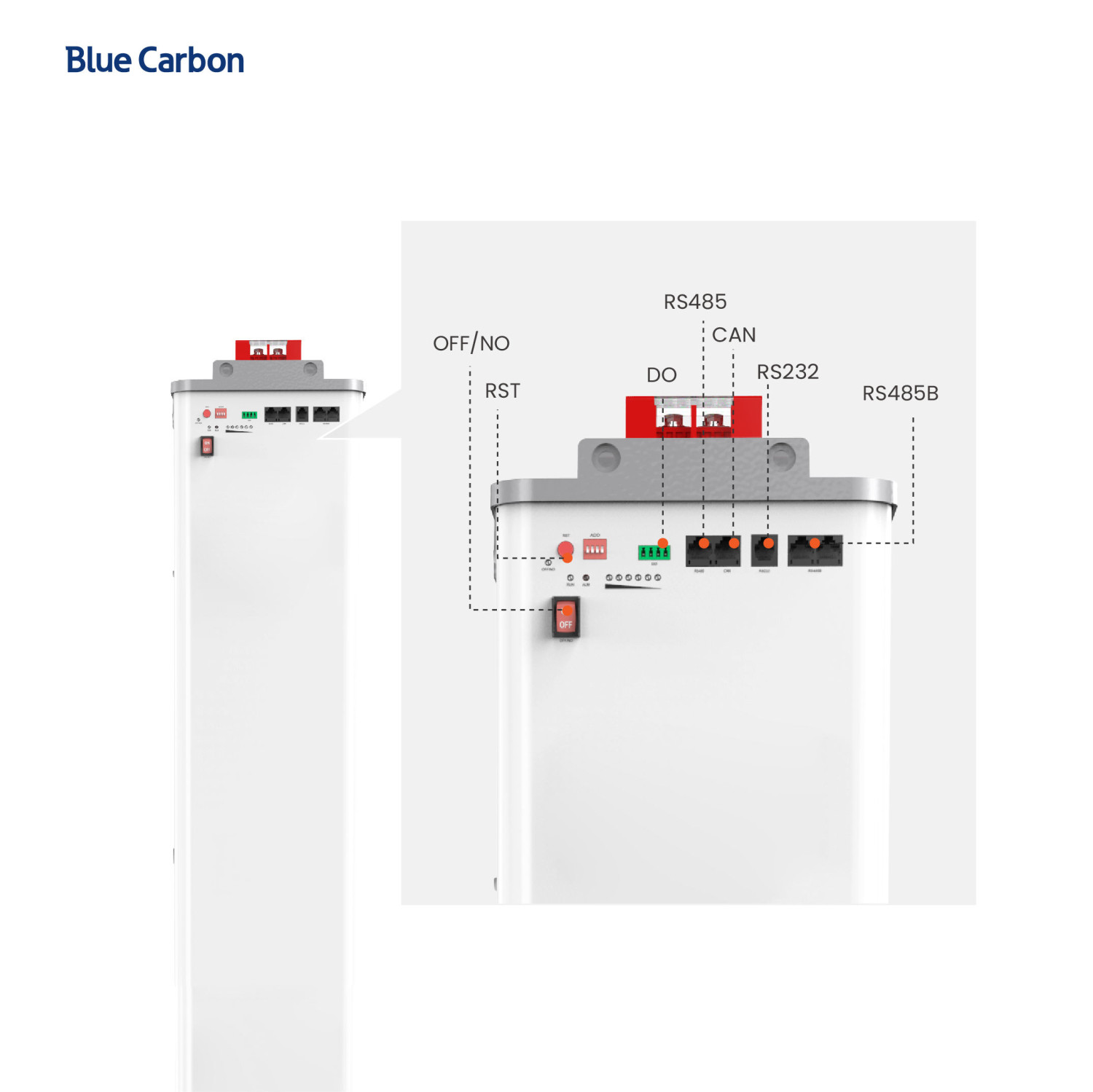
Connect Communication Cable (BMS Communication)
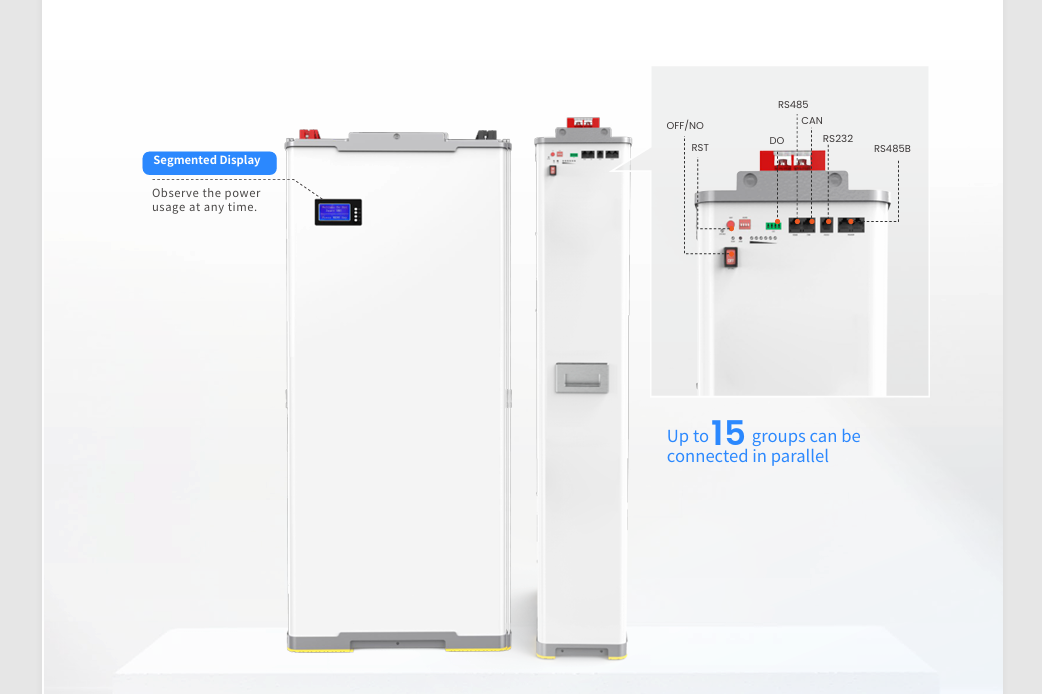
Most modern
lithium batteries require communication with the inverter through:
- CAN cable
- RS485 cable
This allows:
- Battery monitoring
- Smart charging control
- Fault communication
Step 8:
Configure Master and Slave Batteries (If Required)
Some lithium
battery systems require:
- One battery set as Master
- Others set as Slave
Follow
manufacturer instructions carefully.
Step 9:
Configure Inverter Battery Settings
Enter
inverter settings and configure:
- Battery type → Lithium
- Charging voltage
- Float voltage
- Maximum charging current
Proper
settings protect battery lifespan.
Step 10:
Power On the System
After
checking all connections:
1.
Turn
on batteries
2.
Turn
on inverter
3.
Monitor
startup process
Ensure:
- No error messages
- Stable voltage readings
- Proper communication between
battery and inverter
Importance
of BMS Communication with Inverter
BMS
communication allows the inverter to:
- Monitor battery status
- Adjust charging automatically
- Protect battery health
- Improve system efficiency
Without
communication, charging may become inaccurate.
Common
Mistakes to Avoid
1. Mixing
Different Battery Brands
Different
batteries may have:
- Different charging behavior
- Different BMS protocols
This can
cause communication problems.
2.
Ignoring Voltage Matching
Connecting
batteries with different voltages may damage them.
3. Using
Undersized Cables
Small cables
may overheat under heavy loads.
4. Wrong
Polarity Connection
Incorrect
positive/negative connections can destroy equipment.
5.
Skipping Circuit Protection
Always use:
- Breakers
- Fuses
- Disconnect switches
Benefits
of Proper Battery Parallel Connection
When
properly connected, parallel lithium batteries provide:
✔ Longer Backup Time
More stored
energy for longer operation.
✔ Better Load Handling
Supports
larger appliances and equipment.
✔ Improved System Reliability
Stable
energy delivery and safer operation.
✔ Easy Expansion
Additional
batteries can be added later.
Why
Lithium Batteries Are Ideal for Parallel Systems
Lithium
batteries are preferred because they offer:
- High efficiency
- Fast charging
- Long lifespan
- Stable voltage output
- Low maintenance
They are
especially suitable for modern solar systems.
Safety
Tips During Installation
Always:
- Wear protective equipment
- Use insulated tools
- Avoid short circuits
- Follow manufacturer instructions
- Work with qualified
professionals if unsure
Safety
should never be ignored.
When to
Hire a Professional Installer
Although
some users attempt DIY installations, professional installation is recommended
for:
- Large battery banks
- Commercial systems
- Three-phase inverters
- Complex BMS communication setups
Professionals
ensure:
- Correct configuration
- Safe installation
- Warranty protection
Conclusion
Paralleling
lithium batteries and connecting them properly to your inverter BMS is an
effective way to increase energy storage capacity and improve solar system
performance.
However,
success depends on:
- Using compatible batteries
- Correct wiring
- Proper BMS communication
- Accurate inverter settings
When done
correctly, parallel battery systems provide reliable backup power, longer
runtime, and improved energy efficiency.
Whether for
residential or commercial applications, understanding the correct installation
process helps maximize battery lifespan, system safety, and long-term
performance.
Recent Posts
Why Blue Carbon Products Have the Best Quality in the Nigerian Market: Making Blue Carbon the Most Preferred Choice
Blue Carbon Invites You to the 2026 Nigeria International Lighting Expo - September 16 - 18, 2026
High Voltage vs Low Voltage Energy Storage Systems: How to Choose the Right Solution with Blue Carbon

Register Your Blue Carbon Product for Warranty to Gain Access to Warranty Support