Why Blue Carbon Products Have the Best Quality in the Nigerian Market: Making Blue Carbon the Most Preferred Choice
Nigeria's
demand for dependable renewable energy products continues to grow as homes,
businesses, commercial facilities and industrial organizations look for better
ways to generate, store and manage electricity. Solar energy has become an
increasingly important part of this transition, but the success of a solar
installation depends on more than simply purchasing solar panels.
Product
quality matters.
The quality
of the lithium battery, inverter, solar panel, solar street light and other
components can directly influence system reliability, efficiency, safety,
maintenance requirements and long-term value.
This is
where Blue Carbon has positioned its product range around
quality-focused renewable energy solutions for residential, commercial and
industrial applications.
Blue
Carbon's official warranty documentation covers eligible LiFePO₄ lithium
batteries, residential/commercial/industrial energy-storage batteries, hybrid
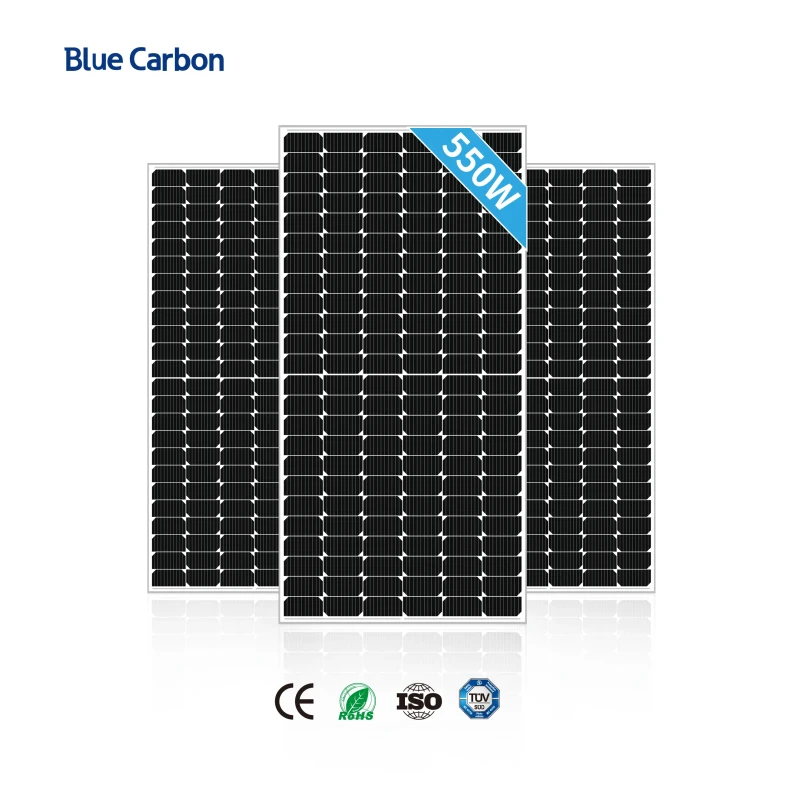
and off-grid inverters, monocrystalline and bifacial solar panels, and
integrated solar street lights. The published warranty schedule lists up to
10 years for eligible lithium batteries, 5 years for solar inverters, 15
years for solar panels and 10 years for solar street lights, subject to the
applicable product documentation and warranty terms. (bluecarbon.ng)
For
customers searching for quality solar products in Nigeria, the combination of
product technology, battery chemistry, intelligent management, warranty
structure, product variety and application flexibility makes Blue Carbon an
important brand to consider.
Why
Product Quality Matters in Nigeria's Solar Energy Market
A solar
energy system in Nigeria may operate under demanding conditions.
Depending on
the installation location, equipment may be exposed to:
- High ambient temperatures
- Dust
- Humidity
- Frequent grid outages
- Heavy daily energy consumption
- Frequent battery charging and
discharging
- Voltage fluctuations
- Generator integration
- Long operating hours
A solar
system therefore needs components that are appropriately designed, correctly
installed and properly maintained.
Buying a
cheaper component initially does not necessarily mean achieving the lowest
overall cost.
If a product
has a short service life, poor performance or inadequate technical support, the
customer may eventually spend more on repairs, replacements and downtime.
This is why quality,
compatibility, installation and after-sales support should all be
considered when selecting solar equipment.
1. Blue
Carbon Focuses on LiFePO₄ Lithium Battery Technology
One of the
major reasons Blue Carbon has built a strong position around energy storage is
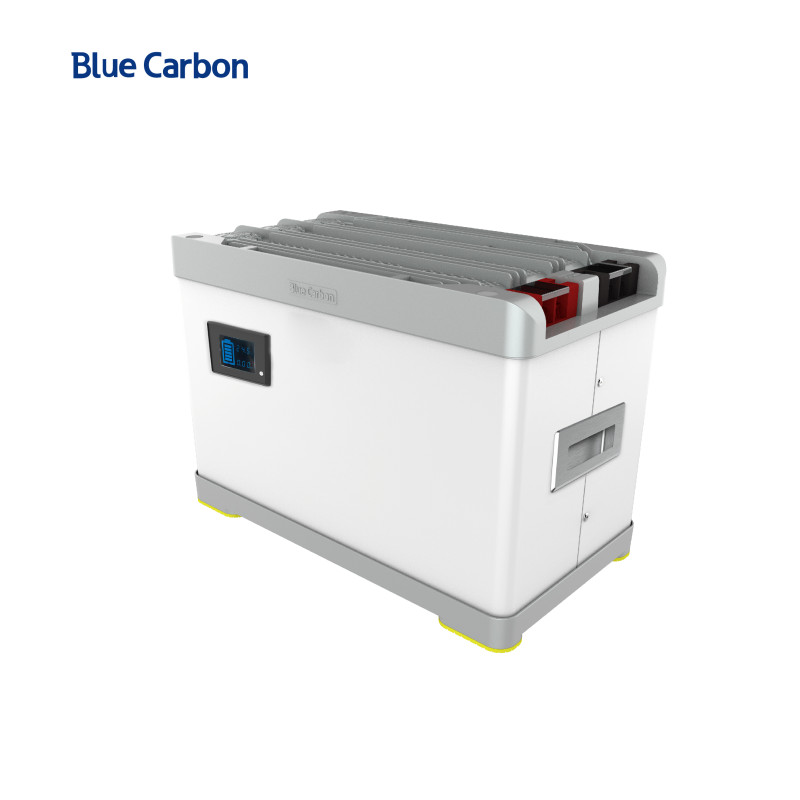
its use of Lithium Iron Phosphate (LiFePO₄) technology in its lithium
battery range.
LiFePO₄ is
widely used for stationary energy storage because of characteristics including:
- Long cycle life
- Thermal stability
- Good safety characteristics
- Efficient charging and
discharging
- Low maintenance requirements
Blue
Carbon's published product information highlights LiFePO₄ technology as a key
component of its lithium energy-storage products. (bluecarbon.ng)
For a solar
system that charges and discharges its battery regularly, battery chemistry is
an important consideration.
A properly
selected LiFePO₄ battery can provide a strong foundation for long-term solar
energy storage when operated within the manufacturer's recommended conditions.
2. Grade
A Cells for Reliable Energy Storage
The
individual cells inside a lithium battery are fundamental to the performance of
the complete battery pack.
Blue
Carbon's published information states that its lithium batteries use Grade A
LiFePO₄ cells. (bluecarbon.ng)
Quality
cells can contribute to:
- Consistent electrical
performance
- Stable voltage characteristics
- Reliable energy storage
- Efficient charging
- Efficient discharging
- Improved durability
- Better long-term performance
This is
particularly important because a battery is only as strong as the quality and
consistency of the components used to construct it.
For
customers comparing lithium batteries, looking beyond the battery's advertised
capacity is essential.
A 10kWh
battery, for example, should not be evaluated on capacity alone. Buyers should
also investigate:
Cell
quality + BMS + usable capacity + discharge capability + cycle life + warranty
+ installation requirements.
3.
Intelligent Battery Management System
Another
important part of a modern lithium battery is its Battery Management System
(BMS).
The BMS
monitors and manages important battery parameters and can provide protection
against conditions such as:
- Overcharging
- Over-discharging
- Excessive current
- Abnormal temperature
- Cell-voltage abnormalities
- Short-circuit conditions
Blue
Carbon's lithium battery information highlights intelligent BMS technology as
part of its energy-storage approach. (bluecarbon.ng)
The BMS is
especially important when batteries are being used regularly in solar
applications.
It helps the
battery operate within appropriate limits and can communicate important battery
information to compatible inverter systems where the required communication
protocol is supported.
4. Long
Cycle-Life Potential
One of the
most important specifications when evaluating a lithium battery is its cycle
life.
A cycle
generally refers to a complete charging and discharging process, although the
exact definition used in a product's technical documentation can vary.
Blue Carbon
states that selected lithium battery models are engineered for more than
6,000 charge-discharge cycles under recommended operating conditions. (bluecarbon.ng)
This is
particularly relevant for solar installations because batteries may be cycled
frequently.
For example,
a battery used every day in a solar system could experience hundreds of cycles
annually.
However,
cycle-life claims should always be interpreted alongside the manufacturer's
conditions, including:
- Depth of discharge
- Temperature
- Charge/discharge current
- Operating conditions
- Maintenance
- Installation quality
Blue
Carbon's warranty documentation also correctly notes that battery capacity
naturally changes with usage, age, temperature, depth of discharge and charging
conditions. (bluecarbon.ng)
5. A
Strong Warranty Structure
A quality
product should be supported by a clearly defined warranty.
Blue
Carbon's official warranty policy provides a published warranty framework for
eligible genuine products purchased through authorized channels. (bluecarbon.ng)
The current
recommended warranty schedule lists:
|
Blue
Carbon Product |
Published
Warranty Period |
|
Lithium
Batteries |
10 years |
|
Solar
Inverters |
5 years |
|
Solar
Panels |
15 years |
|
Solar
Street Lights |
10 years |
The
applicable warranty can depend on the exact product model, purchase
documentation, warranty certificate and applicable Blue Carbon policy.
This is
important because customers should never assume that every product has
identical warranty conditions.
The warranty
provides a framework for eligible defects in materials and workmanship, while
exclusions apply to circumstances such as incorrect installation, unauthorized
modification, physical damage and operation outside specified limits. (bluecarbon.ng)
6.
Quality Across More Than Just Lithium Batteries
When people
discuss Blue Carbon, lithium batteries are often one of the first products that
come to mind.
However, the
brand's product portfolio extends beyond batteries.
Blue
Carbon's official warranty documentation identifies four major product
categories:
Lithium
Batteries
Including
LiFePO₄ batteries and residential, commercial and industrial energy-storage
solutions.
Solar
Inverters
Including
hybrid, off-grid, solar and energy-storage inverter solutions.
Solar
Panels
Including
monocrystalline and bifacial photovoltaic modules.
Solar
Street Lights
Including
all-in-one integrated solar street lights and solar LED street-lighting
systems. (bluecarbon.ng)
This broader
product ecosystem gives customers the opportunity to build different types of
solar solutions around a compatible range of renewable-energy equipment.
7. Blue
Carbon Products Are Designed for Different Applications
A major
advantage of having a broad product range is the ability to address different
energy requirements.
Solar energy
requirements are not the same for every customer.
A small
residential building may require a relatively modest backup system.
A hotel,
office or commercial facility may require significantly more energy.
A factory or
industrial facility can require a large-scale energy-storage system capable of
supporting substantial loads.
Blue
Carbon's product information covers applications across:
- Residential energy storage
- Commercial energy storage
- Industrial energy storage
- Solar power systems
- Solar lighting
- Backup power
- Off-grid applications
Its warranty
documentation specifically identifies residential, commercial and industrial
energy-storage batteries. (bluecarbon.ng)
This
scalability is important for customers whose energy requirements may increase
over time.
8.
Large-Capacity Energy Storage for Commercial and Industrial Applications
Modern
businesses increasingly require reliable electricity to operate:
- Offices
- Shops
- Hotels
- Hospitals
- Schools
- Restaurants
- Warehouses
- Factories
- Data facilities
- Agricultural operations
Blue
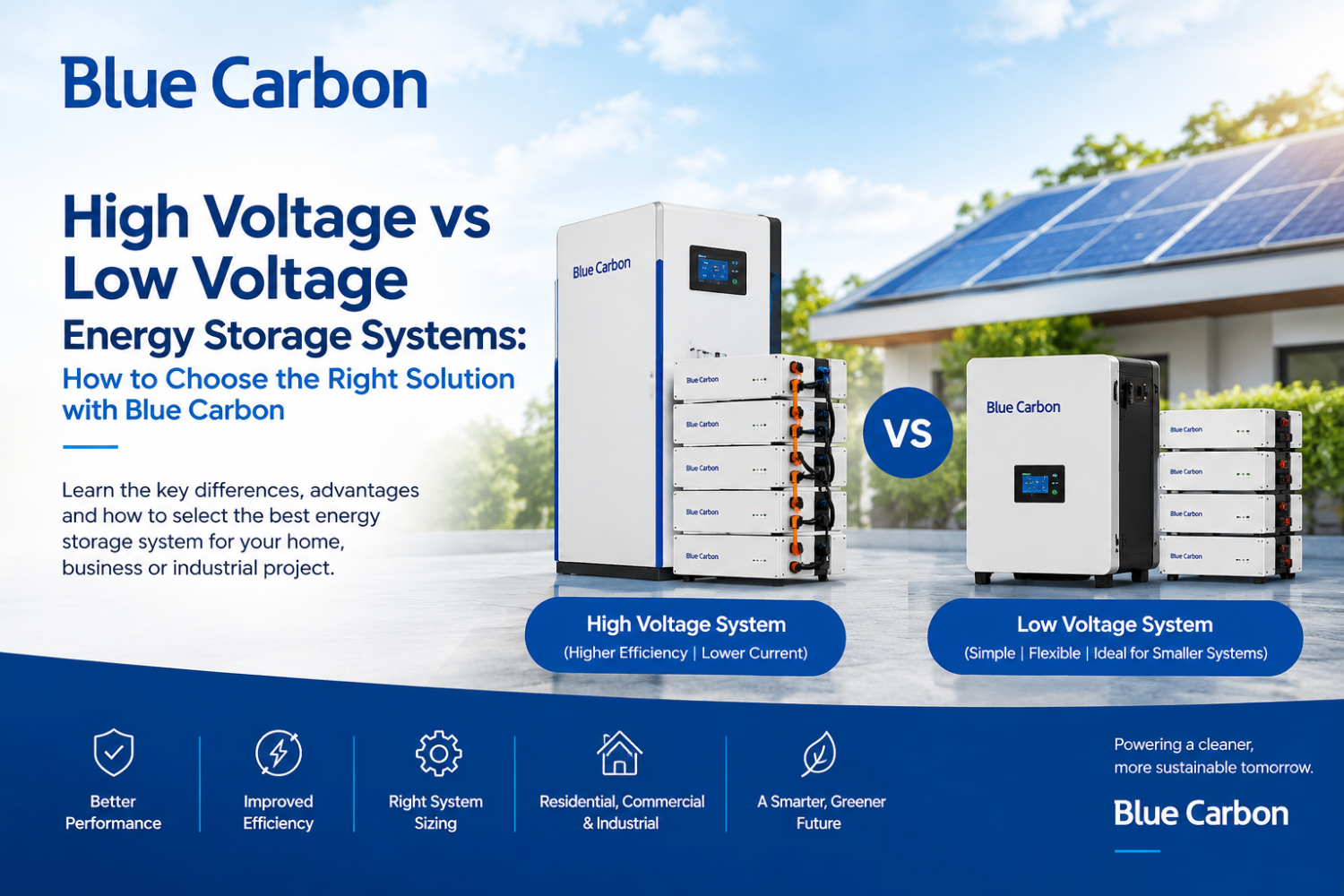
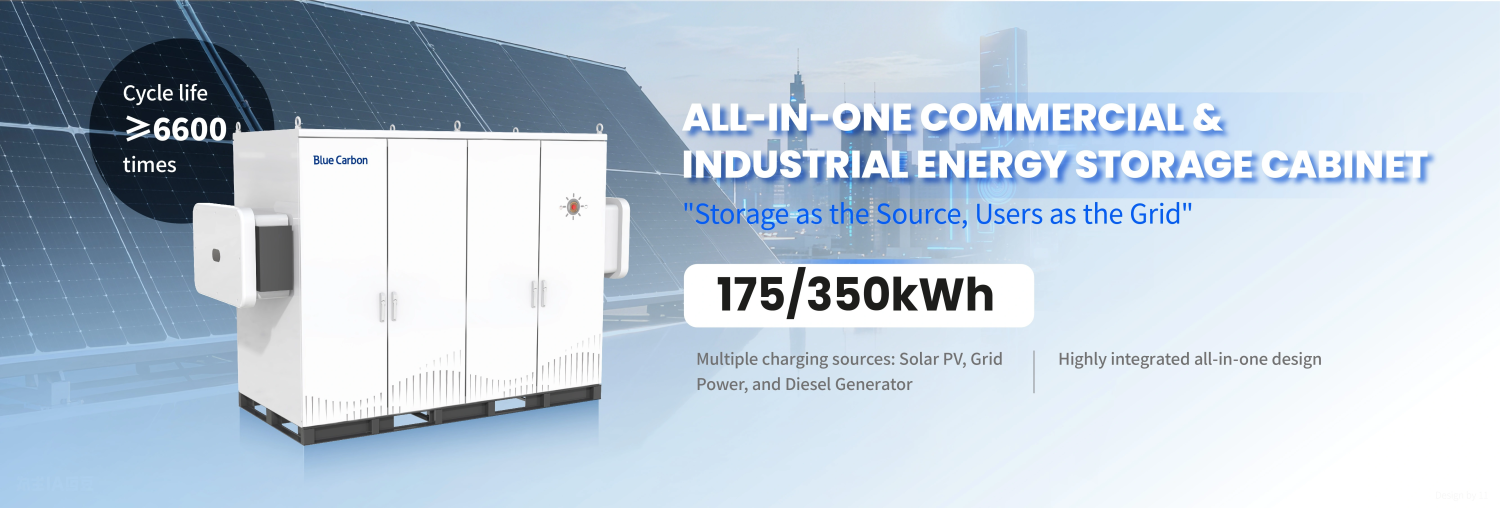
Carbon's portfolio includes high-capacity lithium energy-storage solutions
designed for applications beyond the typical household installation.
For example,
Blue Carbon has published information on a 15kWh lithium battery built
with Grade A LiFePO₄ cells and designed for residential, commercial and
industrial applications. The published information states that the selected
model is engineered for more than 6,000 charge-discharge cycles under
recommended operating conditions. (bluecarbon.ng)
This
demonstrates how lithium storage can be scaled according to the energy
requirements of different users.
9.
Product Quality Must Be Combined With Correct Installation
Even the
highest-quality solar equipment cannot perform properly if it is incorrectly
installed.
This is an
important point for anyone purchasing Blue Carbon products.
A quality
solar installation requires appropriate:
- Load calculation
- Inverter sizing
- Battery sizing
- Cable sizing
- Earthing
- Surge protection
- Circuit protection
- Battery configuration
- PV configuration
- Inverter settings
- BMS communication
- Ventilation and installation
clearances
Blue
Carbon's warranty documentation specifically identifies incorrect installation,
wiring, polarity, cable sizing, earthing, mounting and unsuitable electrical
conditions among circumstances that can affect warranty coverage. (bluecarbon.ng)
Therefore:
Quality
product + professional installation = better opportunity for reliable
performance.
10. Blue
Carbon Emphasizes Authentic Products and Authorized Channels
Another
important consideration in Nigeria's solar market is product authenticity.
Customers
should be careful when purchasing popular solar products because unauthorized
sellers or counterfeit products can create significant risks.
The Blue
Carbon warranty framework states that warranty coverage applies to eligible
genuine products purchased through authorized Blue Carbon distributors, dealers
or approved sales channels. (bluecarbon.ng)
This means
customers should verify:
- Product authenticity
- Serial number
- Purchase invoice
- Warranty documentation
- Seller authorization
- Product model
Buying from
a recognized channel also makes it easier to establish the purchase history if
warranty assistance becomes necessary.
11.
Warranty Registration Protects the Customer's Investment
Purchasing a
solar product is only the beginning of the ownership journey.
Customers
should keep:
- Original invoices
- Receipts
- Product serial numbers
- Warranty documents
- Installation information
- Product model information
Blue Carbon
encourages customers to register eligible products for warranty and support.
Its published guidance explains that registration creates a useful record
connecting the product with purchase and ownership information. (bluecarbon.ng)
This can
become particularly valuable for equipment expected to remain in service for
many years.
12. Blue
Carbon Supports Different Solar System Configurations
Modern solar
systems can operate in several configurations.
For example:
Off-Grid
Solar System
Solar panels
and batteries provide power without relying primarily on the national grid.
Hybrid
Solar System
Solar,
battery storage, grid electricity and potentially a generator can work together
according to the system design.
Grid-Connected
Energy Storage
Battery
storage can be integrated with grid power to improve energy management and
backup capabilities.
Commercial
and Industrial Energy Storage
Larger
battery systems can be designed to support substantial energy requirements.
Blue
Carbon's official product categories include hybrid, off-grid, solar and
energy-storage inverters, alongside different lithium battery configurations. (bluecarbon.ng)
13.
Designed Around Long-Term Energy Value
When
choosing solar equipment, customers should consider total cost of ownership,
rather than focusing only on the initial purchase price.
A cheaper
product may appear attractive initially, but frequent replacement can increase
the overall cost.
A
longer-lasting system can potentially provide better value when its purchase
price is considered alongside:
- Service life
- Maintenance
- Replacement frequency
- Warranty
- Energy performance
- Installation costs
- Downtime
- Technical support
Blue
Carbon's published warranty periods and selected battery cycle-life
specifications are designed to support a long-term ownership proposition. (bluecarbon.ng)
14.
Quality and Safety Go Together
Solar
batteries store substantial amounts of electrical energy.
Safety must
therefore be a major consideration.
LiFePO₄
chemistry is widely valued for its thermal stability and safety
characteristics, which are among the reasons it is commonly used in stationary
energy-storage applications.
Blue
Carbon's published information identifies LiFePO₄'s thermal stability and
safety characteristics as important attributes of its lithium battery
technology. (bluecarbon.ng)
However,
battery chemistry alone does not guarantee a safe installation.
Safety also
depends on:
- Correct battery configuration
- Appropriate BMS
- Correct inverter compatibility
- Proper cables
- Correct protection devices
- Proper installation
- Appropriate operating conditions
- Qualified technical work
15.
Quality Products Need Quality After-Sales Support
Solar
equipment can remain in operation for many years.
Customers
therefore need more than a product at the point of purchase.
They also
need access to:
- Technical guidance
- Troubleshooting
- Warranty information
- Product documentation
- Installation guidance
- Maintenance support
- Genuine replacement components
where applicable
Blue
Carbon's warranty framework establishes procedures for warranty claims,
including product information, proof of purchase, description of the problem
and technical assessment where necessary. (bluecarbon.ng)
This creates
a more structured ownership experience.
Why
Nigerian Customers Are Looking for Quality Solar Products
The Nigerian
energy market presents a strong case for durable solar technology.
Households
and businesses increasingly need solutions capable of supporting:
- Refrigeration
- Lighting
- Internet connectivity
- Security systems
- Air conditioning
- Water pumping
- Office equipment
- Manufacturing equipment
- Communication equipment
- Residential appliances
As energy
requirements increase, the consequences of equipment failure can also become
more significant.
For a
business, an unreliable battery can mean lost working hours.
For a home,
it can mean loss of refrigeration, lighting or essential appliances.
For an
industrial facility, inadequate energy storage can affect production.
This is why
product quality should be considered alongside price.
Why Blue
Carbon Is Becoming a Preferred Choice
The phrase "most
preferred" is ultimately a customer-market claim that can vary by
location, product category and individual requirements. However, several
objectively documented characteristics help explain why Blue Carbon positions
its products as a preferred option in Nigeria.
These
include:
1.
LiFePO₄ lithium battery technology
Designed for
long-term energy-storage applications. (bluecarbon.ng)
2. Grade
A cells
Blue Carbon
identifies Grade A cells as a key feature of selected lithium battery models. (bluecarbon.ng)
3.
Intelligent BMS
Designed to
monitor and protect battery operation. (bluecarbon.ng)
4. Long
cycle-life specifications
Selected
models are stated to offer more than 6,000 cycles under recommended operating
conditions. (bluecarbon.ng)
5.
Extended warranty coverage
The official
warranty schedule currently lists 10 years for eligible lithium batteries, 5
years for solar inverters, 15 years for solar panels and 10 years for solar
street lights. (bluecarbon.ng)
6.
Multiple product categories
Blue Carbon
covers batteries, inverters, solar panels and solar lighting. (bluecarbon.ng)
7.
Residential, commercial and industrial applications
The product
portfolio is intended for different scales of energy requirements. (bluecarbon.ng)
Choosing
Blue Carbon for Your Solar Project
When
selecting solar equipment, customers should look beyond marketing claims and
evaluate the specifications relevant to their project.
Ask
questions such as:
- What is the required battery
capacity?
- What is the maximum load?
- What inverter size is
appropriate?
- What battery chemistry is being
used?
- What cells are inside the
battery?
- What is the expected cycle life?
- Does the inverter communicate
with the BMS?
- What warranty applies to the
exact model?
- Is the product genuine?
- Who will install the system?
- What technical support is
available?
- Can the system be expanded
later?
Blue
Carbon's documented product and warranty information provides customers with
information that can be used as part of this evaluation process.
Blue
Carbon: Quality for Homes, Businesses and Industries
The future
of energy in Nigeria will require solutions that are not only available but
also reliable, scalable and appropriate for local operating conditions.
Blue
Carbon's product portfolio addresses multiple aspects of the renewable-energy
system, from energy generation through solar panels to energy conversion
through inverters, storage through lithium batteries and outdoor lighting
through solar street lights.
The
combination of LiFePO₄ technology, Grade A cells in selected battery models,
intelligent BMS technology, long cycle-life specifications, extensive product
categories and published warranty coverage gives Blue Carbon a strong
foundation for its quality-focused market positioning. (bluecarbon.ng)
Ultimately,
however, product quality works best when combined with proper system design,
professional installation, correct operation and regular maintenance.
Conclusion
Choosing the
right solar product is a long-term decision.
For Nigerian
homes, businesses and industries investing in renewable energy, the quality of
the equipment can have a major influence on the overall ownership experience.
Blue
Carbon has built its product proposition around quality-focused solar and
energy-storage technology, including LiFePO₄ lithium batteries, Grade A cells in selected models,
intelligent BMS technology, solar inverters, photovoltaic panels and solar
street lights. (bluecarbon.ng)
The brand's
official warranty schedule also provides extended coverage for eligible
products, with published periods of 10 years for lithium batteries, 5 years
for solar inverters, 15 years for solar panels and 10 years for solar street
lights, subject to the applicable product terms. (bluecarbon.ng)
For
customers looking for solar products in Nigeria, these characteristics make
Blue Carbon a brand worth considering when comparing energy-storage and
renewable-energy solutions.
The goal is
not simply to purchase a solar product. It is to invest in an energy system
that can provide dependable performance, appropriate safety, long-term value
and support throughout its service life.
Blue
Carbon quality-focused energy solutions for homes, businesses and industries.
Tags: Blue Carbon products Nigeria, best solar products in Nigeria, Blue Carbon lithium battery, quality solar products Nigeria, Blue Carbon solar energy
Recent Posts
48V Lithium Battery in Nigeria: Prices, Capacity, Lifespan & Best Uses
10kWh Lithium Battery Price in Nigeria: Capacity, Backup Time & Cost
15kWh Lithium Battery Price in Nigeria: What You Need to Know Before Buying
Lithium Battery Price in Nigeria 2026: Complete Buying Guide